
> New Molecule Discovery > Combinatorial Chemistry Methods > Accelerate Discovery: Mastering High-Throughput Chemical Synthesis
Accelerate Discovery: Mastering High-Throughput Chemical Synthesis
In the relentless pursuit of novel therapeutic agents, groundbreaking materials, and innovative agrochemicals, the traditional pace of chemical synthesis often proves to be a critical bottleneck. Imagine a methodology that amplifies synthetic throughput by orders of magnitude, transforming months or years of laboratory work into mere weeks. Welcome to the transformative realm of High-Throughput Chemical Synthesis (HTS).
This article dissects HTS, unveiling its core principles, revolutionary methodologies, and profound impact on accelerating discovery. We will illuminate how this approach dramatically enhances the efficiency and speed of creating vast molecular libraries, crucial for identifying compounds with desired biological activities. Prepare to decode the strategic advantages and overcome the inherent complexities. By understanding the intricate dance of automation, miniaturization, and parallel processing, we empower you to navigate this pivotal domain. We unveil the powerful techniques that underpin modern molecular exploration, directly contributing to advancements in areas explored by sophisticated chemical strategies for generating novel molecular libraries. Join us as we forge new frontiers in chemical innovation.

Defining High-Throughput Chemical Synthesis: A Paradigm Shift
High-Throughput Chemical Synthesis (HTS) represents a revolutionary paradigm shift from traditional, one-molecule-at-a-time synthesis to the simultaneous creation of hundreds, thousands, or even millions of discrete chemical compounds. This methodology fundamentally redefines the speed and scale at which chemists can generate molecular diversity, a cornerstone for new molecule discovery across industries.
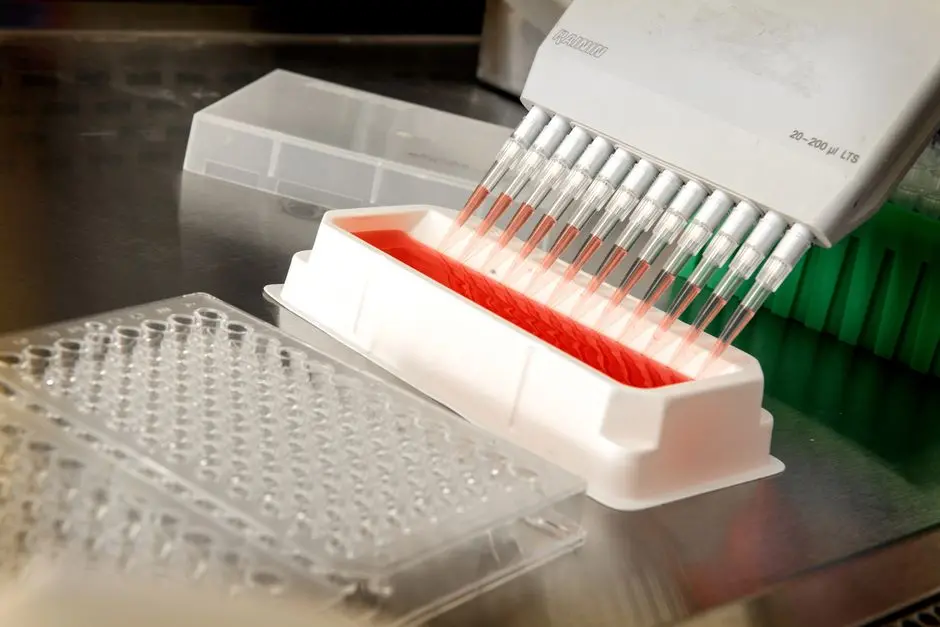
At its core, HTS leverages principles of parallel synthesis, automation, and miniaturization. Instead of sequential, labor-intensive reactions, HTS employs robotics and specialized instrumentation to perform numerous reactions concurrently in small volumes. This allows for the rapid generation of extensive chemical libraries, vastly expanding the chemical space explored in drug discovery, material science, and catalysis. We move beyond the bench-scale flask to microtiter plates, often featuring 96, 384, or even 1536 wells, each a tiny reactor. This approach drastically reduces material consumption, experimental time, and labor costs, democratizing access to broad chemical exploration.
The genesis of HTS lies in the urgent demand for accelerated discovery cycles, particularly within the pharmaceutical industry. Traditional synthetic routes, while robust, simply could not keep pace with the ever-growing need for novel lead compounds. HTS emerged as the indispensable answer, enabling researchers to quickly iterate through structural modifications and rapidly probe structure-activity relationships (SAR). We harness this power to systematically investigate molecular properties with unprecedented efficiency, transforming theoretical possibilities into tangible chemical entities at an unparalleled rate.

Core Methodologies: Architecting Molecular Diversity at Scale
To execute High-Throughput Chemical Synthesis effectively, we rely on a suite of sophisticated methodologies and technological platforms. The choice between synthesis approaches—solid-phase or solution-phase—is critical and dictated by the desired library characteristics, reaction complexity, and purification ease.
Solid-phase synthesis (SPS), pioneered by Merrifield, is a cornerstone of HTS. Here, the growing molecule is covalently attached to an insoluble polymeric support (e.g., resin beads). Reagents are added and removed simply by washing, eliminating chromatographic purification steps for intermediates. This makes SPS inherently amenable to automation and parallelization. We cyclically add building blocks, wash, and cleave the final product, achieving high purity with relative ease. Its strength lies in synthesizing peptides, oligonucleotides, and small organic molecules, providing excellent control over reaction conditions and facilitating the construction of complex structures.
Conversely, solution-phase synthesis (LPS) in a high-throughput format involves performing reactions in soluble phases, often in an array of individual reaction vessels (e.g., microtiter plates). While purification of intermediates can be more challenging, requiring techniques like liquid-liquid extraction or precipitation, LPS offers greater flexibility in reaction conditions and reagent choice. We often employ capture and release techniques or scavenging resins to simplify purification steps in this high-throughput context. Advances in automated liquid handling, robotic workstations, and sophisticated purification platforms have made both SPS and LPS viable, allowing us to select the optimal strategy for maximum synthetic efficiency and target compound diversity. We meticulously engineer each step to ensure seamless integration and maximal yield.

Strategic Applications: Driving Discovery Across Disciplines
High-Throughput Chemical Synthesis is not merely a laboratory technique; it is a strategic imperative that propels discovery across a multitude of scientific disciplines. Its most prominent application lies within drug discovery and development. Here, HTS is indispensable for generating diverse compound libraries used in high-throughput screening (HTS, note the double acronym) to identify novel lead compounds with desired biological activities. We systematically explore vast chemical spaces, accelerating the identification of potential therapeutics for diseases ranging from cancer to neurodegenerative disorders.
Beyond initial lead identification, HTS is critical for lead optimization. Once a promising lead is identified, HTS facilitates the rapid synthesis of analogs to conduct structure-activity relationship (SAR) studies. This iterative process allows us to fine-tune pharmacokinetic properties, improve potency, reduce toxicity, and enhance selectivity, systematically guiding the evolution of a promising hit into a viable drug candidate. We achieve this by quickly synthesizing and testing hundreds of subtly modified structures, rapidly converging on the optimal molecular architecture.
However, the impact of HTS extends far beyond pharmaceuticals. In material science, we employ HTS to discover new polymers, catalysts, and advanced functional materials with improved properties. By synthesizing and testing numerous formulations in parallel, we expedite the development of next-generation electronics, composites, and energy storage solutions. Similarly, in agrochemical research, HTS aids in the discovery of novel herbicides, insecticides, and fungicides, contributing to sustainable agriculture. We empower researchers to explore uncharted chemical territories with speed and precision, unlocking unprecedented opportunities for innovation across the scientific spectrum.
Overcoming Challenges: Ensuring Quality and Efficiency in HTS
While High-Throughput Chemical Synthesis offers unparalleled advantages, its implementation is not without significant challenges that demand meticulous attention and innovative solutions. One primary hurdle is maintaining compound purity and identity. With hundreds or thousands of reactions occurring simultaneously, robust analytical methods are paramount. We must rigorously verify the structure and purity of each synthesized compound, often relying on automated LC-MS, NMR, and UV/Vis spectroscopy integrated directly into the workflow.
Another common challenge lies in reaction optimization and reproducibility. Reactions optimized for a single-scale flask may not translate directly to miniaturized, parallel formats. Solvent choices, temperature control, and stirring efficiency can differ dramatically. We commit to developing robust reaction conditions that are tolerant of minor variations and scalable across the high-throughput platform. This often involves extensive preliminary screening of reaction parameters to ensure consistency and high yields.
Data management and integration also present a significant bottleneck. Generating vast amounts of synthetic, analytical, and biological data necessitates sophisticated laboratory information management systems (LIMS) and cheminformatics tools. We must seamlessly capture, store, analyze, and retrieve data to derive meaningful insights and make informed decisions. Furthermore, the capital investment in robotics, specialized instrumentation, and infrastructure for a fully integrated HTS platform can be substantial. We strategically plan our investments and workflows, focusing on modularity and adaptability to overcome these challenges, ensuring that the promise of HTS translates into tangible, high-quality discovery outputs.
The Future Horizon: AI, Machine Learning, and Next-Gen HTS
The trajectory of High-Throughput Chemical Synthesis continues to accelerate, with emerging technologies poised to revolutionize its capabilities even further. The integration of Artificial Intelligence (AI) and Machine Learning (ML) stands as the most transformative frontier. We are moving towards intelligent synthesis, where algorithms predict reaction outcomes, optimize conditions, and even design novel synthetic routes autonomously. ML models, trained on vast chemical databases, can guide the selection of reagents, solvents, and catalysts, drastically reducing the need for laborious empirical screening. This empowers us to navigate complex chemical spaces with unprecedented precision and foresight.
Another exciting development is the advent of self-optimizing reactors and autonomous synthesis platforms. These systems combine robotics with real-time analytical feedback and AI algorithms to adjust reaction parameters dynamically, driving towards optimal yield, purity, or selectivity without human intervention. Imagine a robot chemist performing experiments, learning from each iteration, and refining its approach in a continuous, closed-loop process. This pushes the boundaries of efficiency and discovery, allowing for the exploration of previously inaccessible reaction landscapes.
Furthermore, the convergence of HTS with microfluidics and flow chemistry continues to advance. These technologies enable precise control over reaction conditions, rapid mixing, and efficient heat transfer in extremely small volumes, opening avenues for safer, greener, and even faster syntheses. We envision a future where chemists, empowered by AI-driven HTS, can design, synthesize, and test new molecules with a fluidity and speed that was once unimaginable, fundamentally reshaping the timeline and scope of new molecule discovery. We are not just performing reactions faster; we are thinking and discovering smarter.
Key Takeaways
Definition and Core Principles
High-Throughput Chemical Synthesis (HTS) is a methodology for parallel synthesis of numerous compounds simultaneously, leveraging automation and miniaturization to dramatically accelerate molecular discovery. It shifts from sequential, individual reactions to concurrent processes in arrays, like microtiter plates.
Key Methodologies
HTS primarily utilizes Solid-Phase Synthesis (SPS) for easier purification and control, especially for peptides and small molecules, and Solution-Phase Synthesis (LPS) in high-throughput formats, which offers greater flexibility with specialized purification strategies like scavenging resins.
Strategic Applications
HTS is crucial in drug discovery for identifying novel lead compounds and optimizing them through rapid Structure-Activity Relationship (SAR) studies. Its utility extends to material science for new polymers and catalysts, and agrochemical research for novel pesticides, driving innovation across various sectors.
Challenges and Best Practices
Key challenges include ensuring compound purity, robust reaction reproducibility at scale, and effective data management. Best practices involve integrated analytical workflows, rigorous reaction optimization for high-throughput conditions, and sophisticated LIMS for data handling.
Future Directions
The future of HTS is heavily influenced by Artificial Intelligence (AI) and Machine Learning (ML) for reaction prediction and autonomous optimization. Self-optimizing reactors and the integration with microfluidics further promise to enhance speed, efficiency, and the scope of molecular discovery.
FAQ
-
What is the primary advantage of High-Throughput Chemical Synthesis over traditional methods?
The primary advantage is a dramatic increase in speed and efficiency. HTS allows for the simultaneous synthesis of hundreds to thousands of compounds, enabling rapid exploration of chemical space and acceleration of lead discovery and optimization cycles, which would be prohibitively slow and expensive with traditional, one-by-one approaches.
-
How does automation contribute to HTS?
Automation is fundamental to HTS. Robotic liquid handlers, automated reaction platforms, and integrated analytical instruments minimize human intervention, ensuring precision, reproducibility, and the ability to perform a large number of reactions in parallel. This significantly reduces labor costs and experimental errors.
-
What are common challenges in implementing HTS?
Common challenges include maintaining high compound purity across numerous reactions, developing robust reaction conditions that scale to high-throughput formats, managing the vast amounts of data generated, and the significant initial capital investment required for specialized equipment and infrastructure. Rigorous analytical validation is also critical.
-
Can HTS be used for complex molecule synthesis, such as natural products?
While HTS is most commonly associated with small molecule libraries and peptides, its principles are increasingly applied to more complex targets. Advances in automated protecting group strategies, sophisticated reaction methodologies, and flow chemistry are expanding HTS applicability to include fragments of natural products or even more intricate synthetic pathways, though full natural product total synthesis in a high-throughput array remains a significant challenge.
-
What role does AI play in the future of HTS?
AI and Machine Learning are set to revolutionize HTS by enabling intelligent synthesis. AI can predict reaction outcomes, optimize experimental parameters, design novel molecules, and even guide robotic systems in real-time, leading to autonomous reaction discovery and optimization. This accelerates the scientific process and enhances the efficiency of exploring new chemical space.