
> New Molecule Discovery > Combinatorial Chemistry Methods > Forge Superior Compound Libraries: Catalyzing New Molecule Discovery
Forge Superior Compound Libraries: Catalyzing New Molecule Discovery
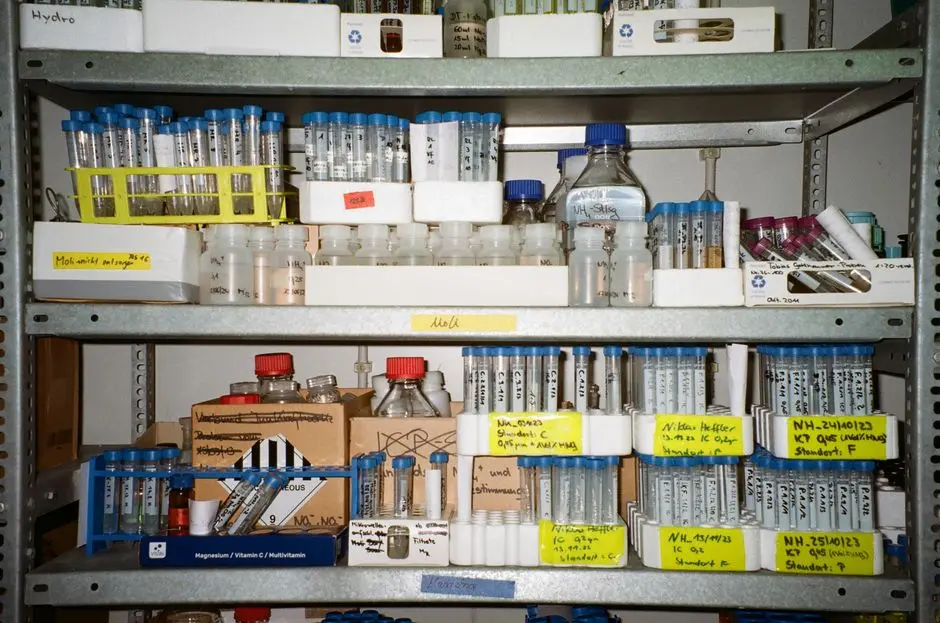
In the relentless pursuit of novel therapeutics, the compound library stands as the bedrock of discovery. It is the molecular arsenal from which we unearth groundbreaking medicines, agrochemicals, and materials. Yet, merely possessing a collection of molecules offers no guarantee of success. The true power lies in the intrinsic quality and strategic design of that library.
We embark on an exploration into the core principles that elevate a simple collection of compounds into a potent engine for innovation. This deep dive reveals the critical criteria defining a truly 'good' compound library – one engineered for maximum hit rates, druggability, and ultimate translational success. Understanding these facets equips us to navigate the complex landscape of drug discovery with precision, transforming empirical screening into a targeted, efficient process. We illuminate how a meticulously curated library doesn't just accelerate discovery; it fundamentally reshapes our capacity for it, leveraging advanced
chemical strategies for generating novel molecular libraries to unlock unprecedented therapeutic potential.
Let us forge a path toward unparalleled molecular exploration.
Cultivate Diversity and Novelty: The Chemical Space Imperative
A cornerstone of any exceptional compound library is its inherent diversity and the novelty it brings to the chemical landscape. We recognize that true innovation stems from exploring uncharted molecular territories, not merely re-deriving known scaffolds. Our primary objective in library design must be to maximize the
structural diversity, ensuring a broad representation of chemical space. This encompasses not only varied core structures (scaffolds) but also a rich assortment of functional groups, stereocenters, and linker chemistries.
A common pitfall is to create libraries saturated with easily accessible, yet chemically redundant, molecules. Instead, we champion the inclusion of novel chemical entities (NCEs) – compounds that present fresh structural motifs, often derived from unique synthetic routes or natural product mimetics. This strategic infusion of novelty directly correlates with the potential to discover first-in-class drugs acting via unprecedented mechanisms. While lead-like properties are crucial, an overly constrained diversity sacrifices the very chance of breakthrough. We demand libraries that challenge the boundaries of established chemical space, allowing us to uncover unexpected biological activities and drive genuine advancement. The metric here is not sheer compound count, but rather the effective coverage of diverse chemical topologies, often quantified through advanced cheminformatics tools that assess scaffold diversity, atom pair descriptors, and Tanimoto similarity scores. We must proactively seek out and integrate compounds that offer distinct pharmacological profiles and avoid the redundancy that dilutes true discovery potential.
Optimize Druggability and ADME Profile: Engineering for Biological Relevance
Beyond mere novelty, a superior compound library is meticulously engineered for druggability, embedding favorable Absorption, Distribution, Metabolism, and Excretion (ADME) properties from the outset. We challenge the traditional paradigm of fixing ADME issues downstream, recognizing this as a costly and time-consuming endeavor. Instead, we proactively integrate principles of medicinal chemistry into library design.
Key criteria include adherence to guidelines like Lipinski's Rule of Five (molecular weight < 500 Da, logP < 5, hydrogen bond donors < 5, hydrogen bond acceptors < 10), which are powerful predictors of oral bioavailability. However, we do not stop there. We also assess for optimal solubility (e.g., >10 µM in aqueous buffer) and permeability, ensuring compounds can reach their biological targets effectively. Factors such as polar surface area, number of rotatable bonds, and specific structural alerts (PAINS – Pan Assay Interference Compounds) are rigorously evaluated to minimize false positives and compounds with inherent liabilities.
Our focus extends to lead-likeness, aiming for compounds that, while diverse, possess characteristics suitable for lead optimization, avoiding excessively complex or fragile structures. This forward-thinking approach significantly reduces attrition rates in later development stages. We consider metabolic stability, aiming for molecules with predictable and manageable metabolic pathways, and we rigorously exclude compounds with known genotoxicity or promiscuous binding tendencies. By embedding these properties into the library itself, we accelerate the transition from hit to viable drug candidate, making every screening effort more impactful.
Uphold Purity, Characterization, and Stability: The Foundation of Reliable Data
The integrity of screening data hinges entirely on the quality of the compounds themselves. We declare that a good compound library demands uncompromising standards in purity, comprehensive characterization, and long-term stability. Contaminated or misidentified compounds generate misleading results, wasting precious resources and diverting discovery efforts down unproductive avenues. Our mandate is clear: every compound entering the library must undergo rigorous analytical validation.
We implement a multi-faceted approach to quality control. High-performance liquid chromatography (HPLC) with mass spectrometry (MS) detection is non-negotiable for purity assessment, typically demanding >95% purity for screening, with higher purity (>98%) for confirmed hits. Nuclear Magnetic Resonance (NMR) spectroscopy provides definitive structural confirmation, eliminating ambiguities. Additionally, we require accurate molecular weight determination to ensure the correct compound identity. Data associated with these analytical results must be meticulously documented and readily accessible.
Equally critical is compound stability. Molecules must maintain their chemical integrity under various storage conditions (e.g., -20°C in DMSO) and during assay incubation. We proactively assess for degradation pathways, sensitivity to light, air, or moisture, and thermal stability. Libraries containing unstable compounds are a liability, as their effective concentration in an assay can fluctuate, leading to irreproducible data and false negatives or positives. A robust quality control regimen, including periodic re-analysis of library aliquots, safeguards the reliability of our entire discovery pipeline, ensuring that every biological observation is truly attributable to the intended molecule.

Implement Accessibility and Robust Management: Catalyzing Workflow Efficiency
An exceptional compound library is not merely a collection of molecules; it is a meticulously managed and accessible resource designed to maximize operational efficiency. We recognize that the physical and digital infrastructure surrounding the library profoundly impacts its utility. Our focus is on enabling seamless access and intelligent deployment of compounds.
This entails establishing a robust inventory management system (IMS) that tracks every compound from synthesis or acquisition through screening and hit validation. Each molecule requires a unique identifier, precise location data (plate, well, concentration), and comprehensive metadata (structure, purity, ADME predictions, synthesis route). The IMS must integrate seamlessly with robotic liquid handlers and screening platforms, facilitating automated plate preparation and data capture. We ensure that library compounds are stored in formats conducive to high-throughput screening, typically as standardized DMSO solutions in multi-well plates (e.g., 96- or 384-well), with clearly defined concentrations and volumes.
Accessibility extends beyond physical location. We demand user-friendly interfaces for query and retrieval, allowing researchers to quickly identify compounds based on structural motifs, physicochemical properties, or previous screening results. A well-managed library also includes a robust system for replenishing or expanding its contents, ensuring that valuable hits can be rapidly re-tested or subjected to further investigation. The ultimate goal is to minimize manual intervention, reduce errors, and accelerate the entire discovery workflow, transforming the library into a dynamic, responsive asset for new molecule discovery. We continuously audit and optimize these processes to ensure peak operational performance and data integrity.

Leverage Strategic Design and Computational Augmentation: Precision in Exploration
The evolution of a good compound library transcends passive accumulation; it demands strategic design informed by biological objectives and augmented by advanced computational methods. We differentiate between broad, diversity-oriented libraries aimed at unbiased exploration and focused or targeted libraries, meticulously designed for specific biological targets or pathways (e.g., G-protein coupled receptors, kinases, proteases).
For diversity libraries, cheminformatics tools are indispensable, allowing us to computationally map chemical space, identify regions of low coverage, and prioritize synthesis of novel scaffolds. For targeted libraries, we leverage structure-based drug design (SBDD), ligand-based drug design (LBDD), and virtual screening to enrich the library with molecules predicted to interact with a specific target. This precision-driven approach significantly increases the probability of identifying active compounds by biasing the library towards relevant chemical space. We integrate concepts like fragment-based drug discovery (FBDD), building smaller, simpler fragments into the library to exploit their high ligand efficiency and then elaborating them into more complex leads.
Furthermore, an excellent library is not static; it is a living entity that evolves. We implement iterative design cycles, where screening results and emerging biological insights feed back into the library design process. Computational models, such as machine learning algorithms, learn from screening data to predict optimal physicochemical properties and even synthesize new virtual compounds for prioritization. This continuous feedback loop allows for intelligent expansion, refinement, and diversification of the library, ensuring its enduring relevance and maximizing its potential as a powerful engine for precise molecular exploration and accelerated drug discovery.
Key Takeaways
Key Pillars of a Superior Compound Library
We identify five critical pillars defining a good compound library:
- Diversity & Novelty: Maximize structural variety and introduce novel chemical entities to explore uncharted chemical space.
- Druggability & ADME: Engineer compounds with favorable ADME properties (e.g., Lipinski's Rule of Five adherence, solubility) and lead-likeness from inception.
- Purity & Characterization: Ensure uncompromising compound purity (>95%), definitive structural characterization (NMR, MS, HPLC), and long-term stability.
- Accessibility & Management: Implement robust inventory systems, standardized formats, and seamless integration with screening workflows for efficient access and deployment.
- Strategic Design & Computational Augmentation: Employ targeted design, cheminformatics, and virtual screening to guide library expansion and iterative optimization, leveraging biological insights.
Strategic Imperatives in Library Construction
- Proactive Quality Control: Integrate rigorous analytical validation at every stage to prevent data integrity issues.
- Forward-Thinking Design: Prioritize lead-likeness and druggability early to reduce attrition in development.
- Dynamic Evolution: Treat the library as a living asset, continuously optimizing its content based on screening feedback and computational insights.
- Resource Optimization: Balance library size with quality and diversity to ensure efficient chemical space coverage without redundancy.
FAQ
-
What is the ideal size for a compound library in drug discovery?
There is no single 'ideal' size; rather, the optimal library size is a strategic balance between breadth of chemical space exploration and manageable logistics. For initial broad screening, libraries can range from tens of thousands to millions of compounds. However, we prioritize quality over sheer quantity. A smaller, highly diverse, and well-characterized library (e.g., 50,000-200,000 compounds) with excellent druggability profiles often yields better hit rates and more tractable leads than a vast, poorly curated collection. For focused libraries targeting specific protein families, sizes may be much smaller, from hundreds to thousands, but with very high predicted affinity and selectivity.
-
How do diversity and novelty differ in the context of a compound library?
Diversity refers to the breadth of structural variations within a library, ensuring that it covers a wide range of chemical space. It's about having many different types of molecules. Novelty, on the other hand, specifically addresses the uniqueness of compounds relative to known drugs or active molecules. A library can be diverse, containing many distinct chemical types, but still lack novelty if those types are already well-explored in existing therapeutic areas. We strive for both: a diverse library that also includes compounds with unprecedented scaffolds and unique mechanisms of action to open new therapeutic avenues.
-
Why is 'lead-likeness' a crucial criterion for a good compound library?
Lead-likeness is crucial because it refers to the optimal physicochemical and structural properties that make a compound suitable for further development into a drug lead. Compounds that are 'lead-like' often have lower molecular weight, fewer rotatable bonds, and more balanced lipophilicity compared to typical drug candidates. Incorporating lead-like compounds into a library increases the probability that initial hits will have manageable ADME properties, higher synthetic tractability, and fewer liabilities for subsequent optimization. This foresight significantly reduces the time, cost, and risk associated with lead optimization, accelerating the entire drug discovery pipeline.