
> New Molecule Discovery > Combinatorial Chemistry Methods > Sculpting Novelty: Eradicating Redundancy in Chemical Libraries
Sculpting Novelty: Eradicating Redundancy in Chemical Libraries
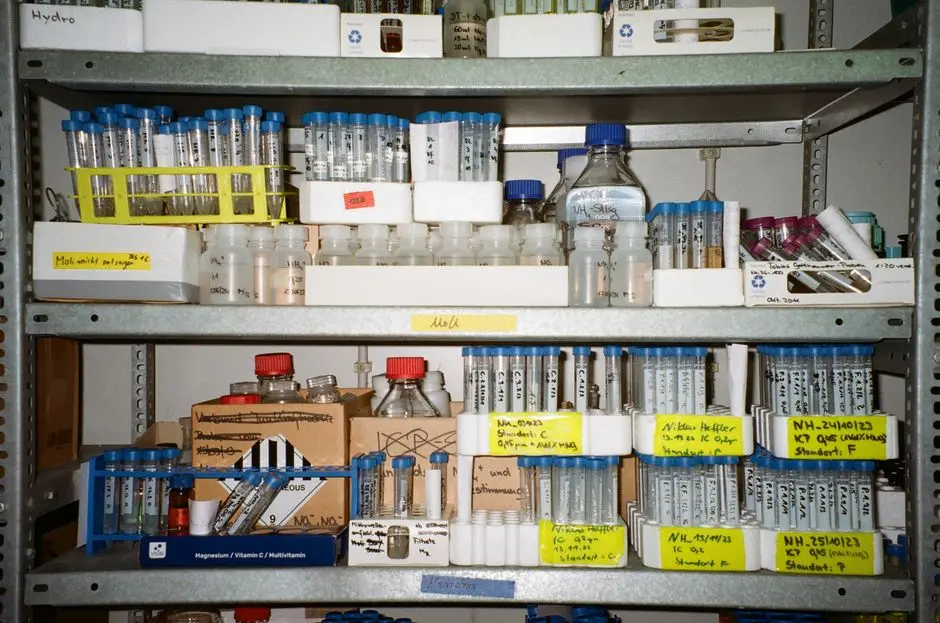
The relentless pursuit of new therapeutics demands an arsenal of innovative molecules. Yet, within the vast landscapes of chemical space, redundancy often lurks, a silent inhibitor to progress and a drain on invaluable resources. We stand at a critical juncture where the sheer volume of potential compounds necessitates acute strategic discernment. This article equips us with the indispensable knowledge to transcend mere volume, empowering us to forge highly efficient and truly diverse chemical libraries. We unravel the complexities of identifying and eradicating redundant structures, transforming our approach from a broad sweep to a precision strike.
Mastering this art is paramount for accelerating drug discovery, ensuring every synthesized molecule contributes uniquely to our understanding and potential breakthroughs. We explore the cutting-edge methodologies that revolutionize how we construct our molecular toolkits, enabling us to advance the frontiers of drug development with unparalleled efficiency and insight. This crucial step complements foundational principles in crafting effective molecular collections, pushing the boundaries of what is chemically possible and biologically relevant. Join us as we sculpt the future of molecular innovation, one optimized library at a time.
The Imperative of Non-Redundant Libraries: Unearthing Value in Diversity
In the high-stakes arena of new molecule discovery, the foundational challenge lies not merely in synthesizing compounds, but in ensuring each synthesized entity contributes unique value. Redundancy within chemical libraries—the presence of structurally or functionally similar molecules—is a silent saboteur, quietly eroding efficiency and inflating costs. We confront this reality head-on. Consider the immense financial investment: each molecule synthesized, characterized, and screened represents significant resource allocation. When a substantial portion of a library duplicates existing knowledge or offers marginal structural variations, we squander precious time, materials, and human capital.
Defining redundancy transcends simple exact duplication. It encompasses a spectrum: exact structural isomers, molecules with identical scaffolds but minor, insignificant substitutions, or even compounds that, despite structural differences, exhibit highly similar biological activities or physicochemical properties. The biological imperative here is crystal clear: diverse molecules explore chemical space more effectively. A library rich in genuine diversity offers a higher probability of uncovering novel mechanisms of action, unique pharmacophores, and leads with superior developability profiles. Conversely, a redundant library biases our exploration towards already well-trodden paths, reducing the likelihood of serendipitous discoveries and hindering our ability to map the true structure-activity relationships.
We must operate with surgical precision. Every molecule in our library should be a deliberate, distinct probe into chemical space, designed to maximize information gain. The opportunity cost of a redundant molecule is profound; it represents a missed chance to explore an unchartered region, to find a truly novel lead. Eliminating this redundancy is not just an optimization; it is a strategic imperative that directly impacts the pace and success of drug discovery. We demand more from our libraries: not just quantity, but unparalleled quality and innovative breadth.

Strategic Approaches to Library Design: Sculpting Chemical Space with Precision
Forging truly non-redundant libraries commences not in the lab with synthesis, but at the drawing board with intelligent design. We implement pre-synthesis strategies that act as formidable gatekeepers, ensuring only the most promising and diverse molecular blueprints proceed. Central to this is cheminformatics, our compass in the vast chemical landscape. We harness molecular descriptors—numerical representations of a molecule's properties (e.g., QED scores for drug-likeness, various topological indices for shape, electronic properties)—to quantify and compare compounds. These descriptors fuel sophisticated algorithms designed to identify and quantify diversity.
Our arsenal includes:
- Clustering Algorithms: Techniques like k-means, hierarchical clustering, or self-organizing maps group similar molecules, allowing us to select representative compounds from each cluster, thus minimizing intra-cluster redundancy.
- Diversity Selection Algorithms: MaxMin, OptiSim, or sphere exclusion algorithms actively select molecules that are maximally dissimilar from each other, ensuring broad coverage of chemical space.
- Fingerprinting and Similarity Metrics: Using structural fingerprints (e.g., ECFP4, Morgan fingerprints) combined with Tanimoto similarity coefficients, we quantify the structural resemblance between compounds, enabling the exclusion of highly similar structures before synthesis.
Beyond computational filtering, we embed design principles directly into our synthetic strategies. Diversity-Oriented Synthesis (DOS), in contrast to target-oriented synthesis, focuses on generating a wide array of structurally complex and diverse molecules from simple starting materials, inherently minimizing redundancy by exploring varied reaction pathways and scaffolds. We also leverage the concept of privileged structures—molecular frameworks known to exhibit biological activity across multiple targets—but with a keen eye on decorating them uniquely to prevent functional redundancy. Moreover, early-stage computational filtering for undesirable physicochemical properties, such as Lipinski's Rule of Five violations or potential toxicity alerts, ensures that only compounds with a higher probability of drug-likeness enter the synthesis pipeline. We are architects, not mere assemblers, meticulously sculpting our chemical space with every strategic choice.
Advanced Methodologies for Redundancy Elimination: Precision Engineering Post-Synthesis
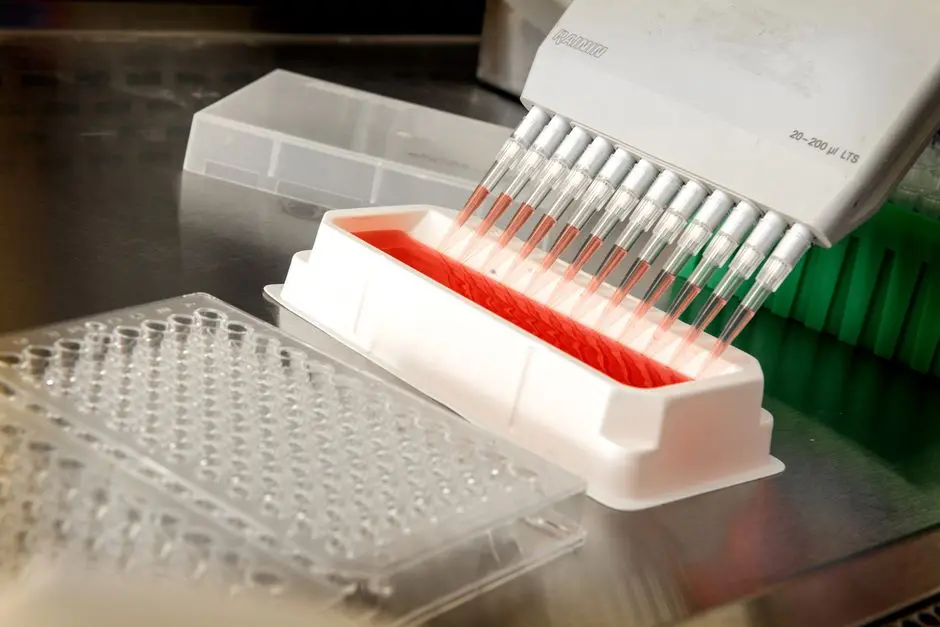
While intelligent design minimizes redundancy upfront, the realities of chemical synthesis and unexpected side reactions necessitate rigorous post-synthesis validation. We deploy advanced analytical and computational methodologies to perform a critical dereplication process, ensuring that what we intended to create is precisely what we have. High-throughput analytical techniques are our eyes and ears:
- Liquid Chromatography-Mass Spectrometry (LC-MS): Provides indispensable information on molecular weight, purity, and fragmentation patterns, quickly identifying identical or closely related compounds.
- Nuclear Magnetic Resonance (NMR) Spectroscopy: Offers detailed structural elucidation, confirming molecular identity and stereochemistry, crucial for distinguishing subtle structural differences.
- Fourier-Transform Infrared (FT-IR) Spectroscopy: Useful for identifying functional groups and confirming the presence or absence of specific bonds, adding another layer of structural confirmation.
The sheer volume of data generated by these techniques demands sophisticated data processing. This is where machine learning (ML) applications become indispensable. We leverage ML for:
- Unsupervised Learning: Clustering algorithms (e.g., hierarchical, k-means) can automatically group analytical spectra or molecular fingerprints, identifying potential duplicates or highly similar structures without prior knowledge.
- Supervised Learning: Predictive models can be trained to flag compounds likely to be redundant based on their analytical signatures or predicted properties.
- Generative Models: Advanced models (e.g., variational autoencoders, generative adversarial networks) are increasingly used not just for de novo design, but also to identify novel chemical entities by contrasting generated structures against existing libraries, highlighting areas of overrepresentation.
Crucially, robust data management and informatics systems underpin these efforts. We enforce FAIR (Findable, Accessible, Interoperable, Reusable) data principles, creating standardized databases that seamlessly integrate synthetic, analytical, and biological data. This holistic view is vital for identifying functional redundancy, where structurally distinct molecules exhibit identical biological profiles. Common pitfalls we actively mitigate include batch effects in analytical data, reliance on single metrics for similarity, and overlooking the dynamic nature of chemical space. A truly optimized library requires a continuous feedback loop between design, synthesis, and meticulous analytical validation.
Forging Future Libraries: Best Practices and Evolving Paradigms for Sustained Innovation
The quest for non-redundant chemical libraries is an evolving journey, demanding continuous refinement of our methodologies. We embrace an integrated workflow, a seamless orchestration of in silico design, efficient synthesis, and rigorous analytical validation. This holistic approach ensures that each stage informs and optimizes the next, creating a virtuous cycle of innovation. Consider the transformative power of Artificial Intelligence (AI) in generative chemistry. AI algorithms are no longer simply filtering existing compounds; they are designing novel molecules de novo, often with explicit instructions to maximize diversity and avoid known structures. This proactive generation inherently reduces the risk of redundancy by exploring entirely new regions of chemical space that human intuition or traditional combinatorial methods might overlook.
We also cultivate adaptive libraries, where the composition dynamically evolves based on real-time screening results. Compounds showing promising activity are prioritized for further derivatization, while redundant or inactive structures are deprioritized or removed. This iterative process, often guided by multi-objective optimization algorithms, balances the competing demands of diversity, novelty, synthesizability, and desired ADMET properties. We precisely define and measure the success of our efforts through robust metrics for diversity and novelty, such as Shannon entropy to quantify structural variety, or analyzing the distribution of Tanimoto similarity values to benchmark against known chemical space. These metrics provide quantitative benchmarks, allowing us to continually assess and improve our library quality.
The human factor remains paramount. Our expert domain knowledge, coupled with collaborative interdisciplinary teams—chemists, biologists, informaticians—is essential for interpreting complex data and making informed strategic decisions. We are not just building libraries; we are building ecosystems of discovery that learn and adapt. The future beckons with promise: the integration of quantum chemistry for highly accurate property predictions, advanced robotics for autonomous synthesis, and ever more sophisticated AI, all converging to empower us to forge molecular libraries of unprecedented novelty and biological relevance. We are not merely reducing redundancy; we are engineering a future where every molecule counts.
Key Takeaways
The Strategic Imperative of Non-Redundant Libraries
Redundancy in chemical libraries is a major impediment to efficient drug discovery, draining resources and limiting the exploration of novel chemical space. Our goal is to forge libraries where every molecule offers unique value, maximizing the probability of discovering novel therapeutics and accelerating the drug development timeline. This requires a proactive, strategic approach from inception to validation.
Integrated Design & Pre-Synthesis Optimization
Effective redundancy reduction begins with intelligent library design. We leverage advanced cheminformatics tools, including molecular descriptors, clustering algorithms, and diversity selection methods, to sculpt chemical space pre-synthesis. Strategies like Diversity-Oriented Synthesis (DOS) and the careful application of privileged structures ensure the creation of intrinsically diverse molecular scaffolds.
Post-Synthesis Validation with Precision Analytics and AI
Even with rigorous design, post-synthesis validation is crucial. High-throughput analytical techniques (LC-MS, NMR) confirm structural integrity and purity, while machine learning algorithms aid in sophisticated dereplication. These tools identify and eliminate duplicates or highly similar compounds, ensuring the library's integrity and maximizing its true diversity.
Forging the Future: AI, Adaptive Libraries, and Continuous Improvement
The future of non-redundant libraries lies in integrating AI for de novo molecular design, developing adaptive libraries that evolve with screening data, and applying multi-objective optimization. Quantifiable metrics for diversity and novelty guide continuous improvement, pushing the boundaries of chemical innovation and ensuring every synthesized molecule contributes meaningfully to discovery.
FAQ
-
What constitutes chemical redundancy in a library?
Chemical redundancy refers to the presence of molecules that are either identical, structurally highly similar (e.g., isomers, minor substitutions on a common scaffold), or functionally similar (exhibiting identical biological activity/physicochemical properties despite structural differences) within a chemical library. It diminishes the effective diversity of the library.
-
Why is reducing redundancy critical for new molecule discovery?
Reducing redundancy is critical because it optimizes resource allocation (time, chemicals, screening capacity), accelerates the exploration of novel chemical space, increases the hit rate for genuinely new lead compounds, and enhances the efficiency of structure-activity relationship (SAR) studies. Redundant molecules waste resources and skew data.
-
How do computational methods help in minimizing library redundancy?
Computational methods, such as cheminformatics, molecular descriptors, clustering algorithms, and diversity selection algorithms, enable us to analyze, categorize, and select compounds virtually before synthesis. They identify and group similar structures, allowing us to choose a maximally diverse set of molecules, thereby proactively minimizing redundancy.
-
What are common pitfalls to avoid when trying to reduce redundancy?
Common pitfalls include over-filtering, which can inadvertently remove valuable, unique compounds; relying solely on a single similarity metric; failing to account for stereochemical differences; poor data quality or inconsistent analytical methods leading to misclassification; and neglecting the biological context, potentially overlooking functional redundancy.
-
Can Artificial Intelligence (AI) completely eliminate redundancy in chemical libraries?
AI, particularly generative chemistry and machine learning, significantly reduces redundancy by designing novel molecules with inherent diversity and by more accurately identifying similar structures through advanced pattern recognition. While it may not eliminate all forms of redundancy due to unforeseen interactions or subtle functional similarities, AI offers powerful tools to approach near-complete optimization and sustain innovation.