
> New Molecule Discovery > Combinatorial Chemistry Methods > Unlocking New Medicines: Combinatorial Chemistry in Compound Library Generation
Unlocking New Medicines: Combinatorial Chemistry in Compound Library Generation
The quest for novel therapeutics propels biological research into uncharted territories, demanding relentless innovation in molecule discovery. Traditional, one-by-one synthesis methods proved insufficient for the vast chemical space awaiting exploration, creating a bottleneck in the drug development pipeline. This article delves into the transformative power of combinatorial chemistry, a pivotal methodology that revolutionized how we identify potential drug candidates.
We will dissect the core principles and sophisticated techniques that empower scientists to construct vast and diverse compound libraries with unprecedented speed and efficiency. Understand how this strategic approach moves beyond mere synthesis, embracing a philosophy of parallel creation to accelerate discovery. Through meticulous design and high-throughput execution, combinatorial chemistry directly addresses the imperative to explore a multitude of molecular architectures rapidly. Join us as we explore the strategies that underpin modern chemical strategies for generating novel molecular libraries, illuminating the intricate processes that forge the molecular foundations of tomorrow's medical breakthroughs. We will uncover the secrets to generating compound diversity, offering crucial insights for researchers and enthusiasts alike.
The Foundation of Molecular Exploration: What is Combinatorial Chemistry?
Combinatorial chemistry represents a paradigm shift from the conventional one-compound-at-a-time synthesis to the parallel or simultaneous creation of vast collections of distinct chemical compounds, known as compound libraries. This methodology emerged in the late 20th century, primarily driven by the escalating demand for new therapeutic agents and the limitations of traditional drug discovery approaches. Historically, synthesizing and testing individual compounds was a laborious and time-consuming endeavor, drastically slowing down the identification of biologically active molecules.
Our mission is clear: accelerate the molecular discovery process. Combinatorial chemistry achieves this by generating molecular diversity on an industrial scale. Imagine synthesizing thousands, even millions, of unique compounds in a fraction of the time it would take using conventional methods. This is the essence of combinatorial chemistry. It leverages systematic variations in reactant combinations, reaction conditions, and scaffold structures to produce an expansive array of structurally related but chemically distinct molecules. The core principle lies in creating a highly diverse collection of molecules from a smaller set of building blocks, maximizing the probability of discovering a compound with desired biological activity.
We utilize robust chemical reactions that are amenable to automation and high-throughput processing. The power resides in the methodical assembly of compounds, allowing us to explore vast chemical spaces effectively. This approach is not merely about making more compounds; it is about making them intelligently and efficiently, ensuring that each library member contributes to a systematic exploration of molecular space, dramatically boosting the odds of uncovering the next groundbreaking medicine. We are not just synthesizing; we are strategizing molecular exploration.
Architecting Diversity: Core Methodologies for Library Construction
To forge diverse compound libraries, combinatorial chemistry employs several powerful methodologies, each optimized for specific objectives and scales. We primarily focus on three foundational approaches: solid-phase synthesis, solution-phase synthesis, and the cutting-edge DNA-encoded libraries (DELs).
- Solid-Phase Synthesis (SPS): Pioneered by R. Bruce Merrifield, SPS is the cornerstone for creating peptide and oligonucleotide libraries. We anchor a starter molecule to an insoluble polymeric resin bead. This immobilization simplifies purification; after each reaction step, unreacted reagents and by-products are simply washed away, leaving the desired compound attached to the solid support. The elegance of SPS lies in the 'split-and-pool' method: beads are split into multiple reaction vessels, reacted with different building blocks, and then pooled again. Repeating this process generates an exponential increase in library complexity. For example, with 3 building blocks (A, B, C) and 3 reaction steps, we can generate 3^3 = 27 unique compounds, each on a separate bead. This method is highly effective for generating high-purity, small-molecule libraries.
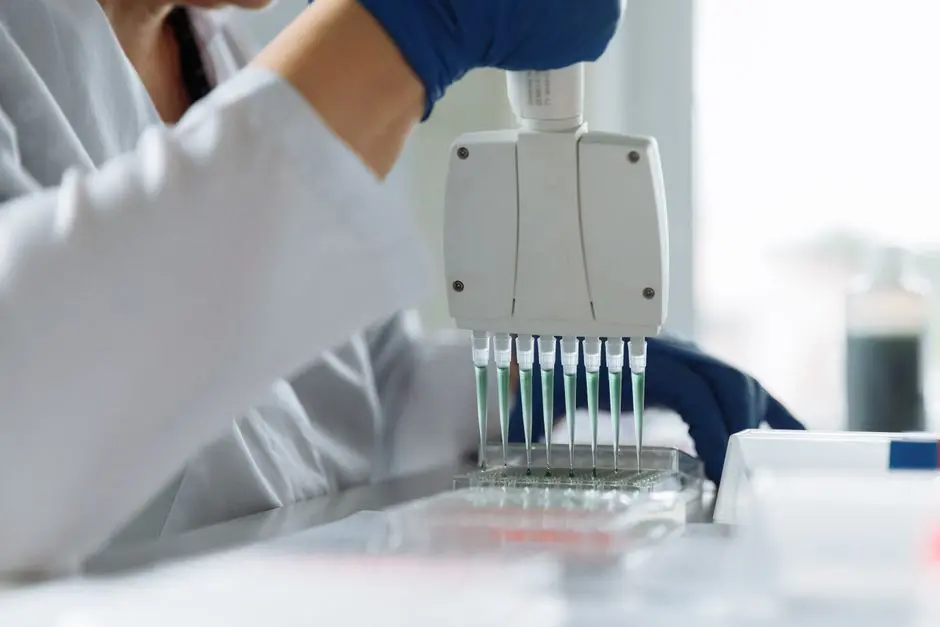
- Solution-Phase Synthesis: While SPS excels in purity, large-scale production and certain chemical transformations are often better suited for solution-phase methods. We execute reactions in a homogeneous phase, allowing for standard reaction conditions and often higher yields. To manage purification challenges, we employ techniques like parallel synthesis, where multiple reactions run simultaneously in separate vessels, often in arrays or microtiter plates. We also leverage methods like solid-supported reagents or scavengers to remove impurities efficiently, making solution-phase chemistry increasingly viable for combinatorial library production. This approach maximizes scalability for certain compound classes.
- DNA-Encoded Libraries (DELs): This advanced technique marries the power of combinatorial chemistry with genetic encoding. Each synthesized compound is covalently linked to a unique DNA tag that serves as its 'barcode'. We perform reactions on a vast scale, often with billions of distinct compounds in a single mixture. During selection, target proteins bind to specific compounds. The non-binding compounds are washed away, and the DNA tags of the binders are amplified via PCR and sequenced. This decodes the identity of the most potent binders directly from a highly diverse mixture. DELs enable the screening of libraries orders of magnitude larger than traditional methods, pushing the boundaries of chemical space exploration. We actively deploy DELs to navigate complex biological systems and accelerate hit identification.
Each methodology offers unique advantages, and we strategically combine them to optimize our library generation efforts, ensuring maximum diversity and efficiency in the pursuit of novel molecules.

From Concept to Compound: The Strategic Workflow of Library Generation
Generating a high-quality compound library is not merely a synthetic exercise; it is a meticulously planned strategic workflow that we execute with precision. Our process begins long before the first reaction, focusing on intelligent design and extends through rigorous validation.
- Library Design Principles: We initiate with a clear understanding of the biological target and the desired chemical space. This involves defining the molecular scaffold – the core structure – and the diversity points where different building blocks will attach. We employ computational tools and cheminformatics to guide this design, ensuring drug-likeness, lead-likeness, and optimal physicochemical properties (e.g., molecular weight, logP, hydrogen bond donors/acceptors) to enhance the probability of biological activity and bioavailability. The goal is to maximize 'relevant diversity' rather than just sheer numbers, focusing on chemical novelty while respecting pharmaceutical guidelines.
- Building Block Selection: The quality and diversity of our building blocks (e.g., amino acids, amines, carboxylic acids, aldehydes) are paramount. We meticulously curate these components, prioritizing commercial availability, chemical stability, reactivity under mild conditions, and structural uniqueness. A strategic set of diverse building blocks forms the foundation for a truly expansive library.
- Synthesis Strategies and Automation: We transition to the laboratory, implementing the chosen synthetic methodology (SPS, solution-phase, DELs). Automation is key to our efficiency. Robotic synthesis platforms allow us to precisely dispense reagents, control reaction conditions (temperature, stirring, time), and perform high-throughput purification. This minimizes human error, increases reproducibility, and dramatically scales up throughput. For instance, using multi-well plate formats, we can perform hundreds or thousands of reactions in parallel.
- Post-Synthesis Validation and Characterization: A library's value hinges on the accurate identification and purity of its members. We deploy advanced analytical techniques such as mass spectrometry (LC-MS), nuclear magnetic resonance (NMR), and high-performance liquid chromatography (HPLC) to confirm the structure and purity of a representative subset of compounds. For DELs, we sequence the DNA tags to ensure accurate encoding. This rigorous characterization is non-negotiable; it ensures that the compounds we screen are indeed what we intended to synthesize, providing a solid foundation for subsequent biological evaluation.
By adhering to this comprehensive workflow, we ensure that our generated compound libraries are not just collections of molecules, but strategically designed assets poised to accelerate drug discovery.
Navigating the Landscape: Advantages, Challenges, and Pitfalls in Library Synthesis
Combinatorial chemistry offers unparalleled opportunities, but navigating its landscape demands awareness of both its strengths and inherent challenges. We leverage its advantages while actively mitigating its common pitfalls.
- Key Advantages:
- Speed and Efficiency: We dramatically reduce the time required to synthesize a large number of diverse compounds, accelerating the hit identification phase of drug discovery.
- Chemical Space Exploration: We systematically explore vast regions of chemical space, increasing the probability of finding novel structures with desired biological activities that might be missed by conventional methods.
- Cost-Effectiveness: While initial setup can be intensive, the high-throughput nature and reduced manual labor often translate into lower per-compound synthesis costs in the long run.
- Diversity: We generate libraries rich in structural diversity, crucial for overcoming issues like target selectivity or resistance development.
- Challenges and Considerations:
- Purity: One of the most critical challenges, especially in solution-phase combinatorial libraries, is ensuring the purity of individual compounds. Side reactions and incomplete reactions can lead to complex mixtures. We deploy robust purification strategies and advanced analytical validation to address this.
- Characterization: Fully characterizing every compound in a large library can be resource-intensive, even impractical. We rely on statistical sampling and high-resolution analytical techniques for representative members.
- Chemical Space Bias: The choice of building blocks and reaction chemistries can inadvertently bias the chemical space explored, potentially missing valuable molecular architectures. We combat this by diversifying our synthetic routes and building block sources.
- 'Dark Matter' Compounds: Some compounds synthesized in a library might be unstable or unreactive, forming 'dark matter' that complicates screening and interpretation. We prioritize robust, well-established chemistries.
- Scalability of Hits: While combinatorial chemistry is excellent for generating leads, scaling up the synthesis of a single, promising hit molecule often requires re-optimization of the synthetic route, which can be a significant hurdle.
- Insider Tips and Best Practices:
- Prioritize Reaction Robustness: We select reactions that are high-yielding, tolerant to various functional groups, and operate under mild conditions to minimize side products.
- Smart Diversity, Not Just Vastness: We focus on designing libraries that offer intelligent diversity, exploring relevant chemical neighborhoods rather than simply generating a maximum number of compounds without strategic rationale.
- Integrate Quality Control Early: We embed analytical checkpoints throughout the synthesis workflow, not just at the end, to catch and address issues proactively.
- Embrace Automation: We leverage automation not just for speed, but for reproducibility and precision, which are crucial for library quality.
By understanding and actively managing these aspects, we transform potential obstacles into opportunities for refined molecular discovery.

Forging the Future: Optimizing Compound Libraries for Next-Generation Drug Discovery
The evolution of combinatorial chemistry is relentless. We are constantly innovating, pushing beyond current limitations to forge smarter, more effective compound libraries that will define the future of medicine. Our focus shifts towards integrating advanced technologies and refining our strategic approach.
- Advanced Encoding Strategies: While DNA-encoded libraries are powerful, we are exploring new encoding methods, such as peptide-encoded libraries or libraries encoded with non-biological polymers, to expand the chemical versatility and stability of the tags. These innovations aim to make encoding compatible with an even broader range of chemistries and screening conditions.
- AI and Machine Learning in Library Design: The future of library generation is intrinsically linked to artificial intelligence. We are developing and deploying AI algorithms to predict synthetic accessibility, evaluate drug-likeness, and intelligently navigate chemical space for optimal scaffold and building block selection. AI can identify hidden correlations and predict the biological activity of hypothetical compounds, guiding us to design libraries with a higher probability of success, reducing the synthesis of inactive or problematic molecules. This shifts us from 'brute force' diversity to 'intelligent' diversity.
- Microfluidics and Miniaturization: We are embracing microfluidic technologies to perform reactions on nanoliter scales. This drastically reduces reagent consumption, increases throughput, and enables the synthesis of highly complex libraries with minimal material. Miniaturization also facilitates integration with high-throughput screening platforms, creating a seamless 'synthesize-and-screen' pipeline.
- Targeted Libraries and Personalized Medicine: Moving forward, we are increasingly focused on generating 'focused libraries' – smaller, highly curated collections of compounds designed to interact with specific biological targets or pathways relevant to particular diseases. This approach, informed by structural biology and computational modeling, aligns perfectly with the burgeoning field of personalized medicine, where therapeutic interventions are tailored to an individual's genetic makeup and disease profile.
- Integration with Phenotypic Screening: While target-based screening remains dominant, we recognize the value of phenotypic screening – identifying compounds that elicit a desired cellular response without knowing the exact target. Combinatorial libraries, especially those designed with broad diversity, are invaluable for this approach, allowing us to uncover novel mechanisms of action and first-in-class drugs.
We are not merely generating compounds; we are engineering molecular solutions. By embracing these advancements, we actively optimize our compound libraries, ensuring they remain at the forefront of the quest for potent, selective, and innovative therapies. Our commitment to bio-optimization propels us to continually refine these strategies, ensuring that each molecule forged contributes meaningfully to the future of health.
Key Takeaways
Combinatorial Chemistry: A Paradigm Shift in Molecular Discovery
Combinatorial chemistry revolutionized drug discovery by moving from single-compound synthesis to the high-throughput generation of vast, diverse compound libraries. This approach significantly accelerates the exploration of chemical space, increasing the odds of identifying novel therapeutic agents efficiently.
Core Methodologies: Solid-Phase, Solution-Phase & DNA-Encoded Libraries
Key methods include Solid-Phase Synthesis (SPS) with 'split-and-pool' for high-purity small molecules, Solution-Phase Synthesis for scalability, and DNA-Encoded Libraries (DELs) for ultra-large library screening via DNA tagging, each offering distinct advantages for generating molecular diversity.
Strategic Workflow: From Design to Validation
Effective library generation follows a meticulous workflow: informed design using cheminformatics, careful building block selection, automated synthesis for precision and scale, and rigorous post-synthesis analytical validation (LC-MS, NMR) to ensure compound purity and identity. We prioritize 'relevant diversity'.
Advantages and Challenges
Combinatorial chemistry offers speed, vast chemical space exploration, and cost-effectiveness. Challenges include maintaining compound purity, comprehensive characterization, mitigating chemical space bias, handling 'dark matter' compounds, and ensuring scalability of hits. Robust QA/QC and smart design mitigate these risks.
Future Directions: AI, Microfluidics, and Targeted Libraries
The future of combinatorial chemistry integrates AI for intelligent library design, microfluidics for miniaturized high-throughput synthesis, and focuses on generating targeted libraries for specific biological pathways or personalized medicine. These advancements propel us toward more efficient and predictive molecular discovery.
FAQ
-
What is the primary goal of combinatorial chemistry in drug discovery?
The primary goal is to rapidly and efficiently synthesize a vast, diverse collection of chemical compounds (a compound library) to maximize the probability of identifying molecules with desired biological activity, thereby accelerating the drug discovery process and exploring broad chemical space. -
How does solid-phase synthesis contribute to combinatorial library generation?
Solid-phase synthesis anchors the growing molecule to an insoluble resin bead, simplifying purification at each step. Using the 'split-and-pool' method, it enables the generation of an exponential number of diverse compounds, each on a separate bead, making it highly effective for complex library creation. -
What are DNA-encoded libraries (DELs) and why are they significant?
DELs are compound libraries where each molecule is attached to a unique DNA sequence serving as its identifier. They are significant because they allow the synthesis and screening of billions of compounds in a single reaction vessel, drastically increasing the scale of chemical space exploration and accelerating the discovery of high-affinity binders to target proteins. -
What are common challenges in generating combinatorial compound libraries?
Common challenges include ensuring the purity of individual compounds, thorough characterization of all library members, avoiding chemical space bias, dealing with 'dark matter' (inactive/unstable compounds), and effectively scaling up the synthesis of identified hits. We address these with rigorous QC and smart design. -
How is AI impacting the future of combinatorial chemistry?
AI and machine learning are transforming library design by predicting synthetic accessibility, optimizing physicochemical properties, and intelligently guiding scaffold and building block selection. This enables the creation of more focused, relevant libraries with a higher probability of biological activity, moving towards 'intelligent diversity' rather than just vast numbers.