
> New Molecule Discovery > Combinatorial Chemistry Methods > Unlocking Potentials: Confronting Solid-Phase Synthesis Limitations
Unlocking Potentials: Confronting Solid-Phase Synthesis Limitations
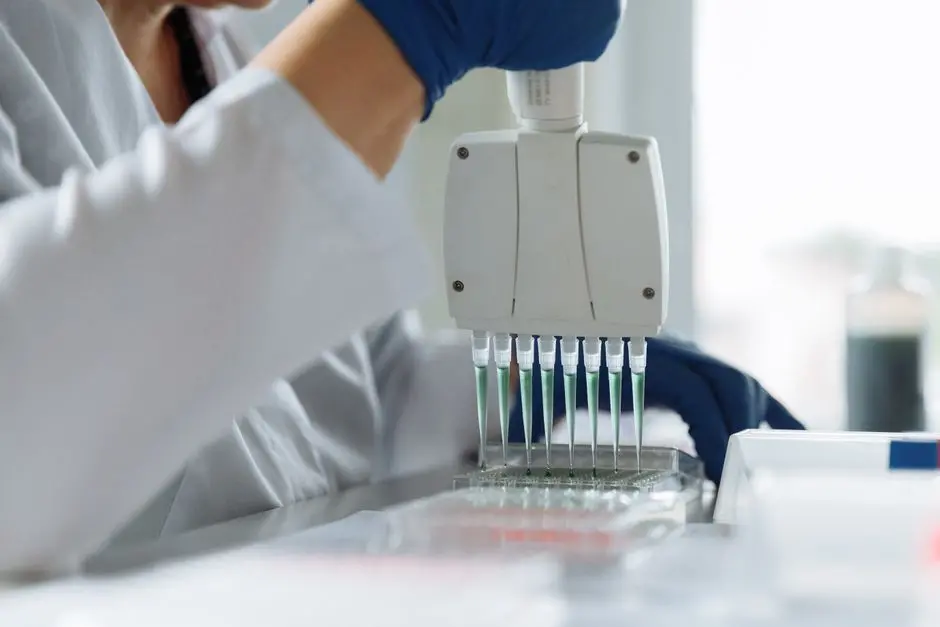
The quest for novel molecules—the bedrock of drug discovery, advanced materials, and biological probes—often pivots on the efficiency and versatility of synthetic methods. Solid-phase chemical synthesis (SPCS) emerged as a revolutionary force, transforming combinatorial chemistry and accelerating the generation of vast molecular libraries. Yet, even the most powerful tools possess inherent limitations. To truly master molecular innovation, we must confront these challenges head-on, transforming obstacles into strategic advantages.
This article delves into the critical constraints of solid-phase chemical synthesis, illuminating the hidden pitfalls and systemic bottlenecks that can impede progress in new molecule discovery. We dissect the core issues—from the intricacies of heterogeneous reaction environments to the complexities of analytical monitoring and scalability. By understanding these limitations, we empower ourselves to forge more robust synthetic strategies and optimize our approach to the chemical strategies that underpin the generation of novel molecular libraries. We will equip you with the expert insights needed to navigate these complexities, ensuring your molecular expeditions are both productive and precise. Prepare to optimize your synthetic campaigns, unlocking new frontiers in chemical innovation with informed decision-making.
Decoding Inherent Constraints of Heterogeneous Reaction Environments
Solid-phase chemical synthesis, while transformative, anchors reactions to an insoluble support, fundamentally altering reaction dynamics. This heterogeneous environment presents immediate and profound limitations. We confront significant mass transfer limitations; reagents must diffuse from the bulk solution through the solvent-swollen resin matrix to reach the active sites on the polymer beads. This diffusion process is often slower than solution-phase reactions, leading to decreased reaction rates and, critically, incomplete conversions, even with prolonged reaction times.
Furthermore, the swelling properties of polymeric resins are highly solvent-dependent. Inconsistent swelling can lead to variable accessibility of reactive sites, causing heterogeneous reaction kinetics across different beads or even within a single bead. This variability complicates reaction optimization and reproducibility. We observe that active sites embedded deep within a resin bead might react slower or less completely than those near the surface, necessitating larger stoichiometric excesses of reagents than typically required in solution. This fundamental constraint forces chemists to adopt strategies that account for these diffusion barriers and the often-unpredictable microenvironment of the resin-bound substrate. Overcoming these initial barriers is paramount for achieving high yields and product purity in multi-step syntheses.

Navigating the Analytical Labyrinth and Purity Paradox
One of the most profound limitations of solid-phase synthesis lies in the analytical challenges associated with reaction monitoring. Unlike solution-phase chemistry where real-time spectroscopic techniques (e.g., NMR, IR, UV-Vis) provide immediate feedback on reaction progress, 'on-resin' analysis is significantly hampered. Directly characterizing resin-bound intermediates is often difficult, if not impossible, due without specialized and often destructive techniques.
To assess conversion, chemists often resort to cleaving small aliquots of resin-bound material for analysis, a time-consuming, labor-intensive, and sometimes unreliable process. This lack of direct, real-time feedback makes troubleshooting and optimizing reaction conditions particularly arduous. The 'purity paradox' then emerges: while SPCS facilitates the rapid generation of diverse compounds, purifying the final product after cleavage often becomes a complex bottleneck. Unreacted starting materials, truncated sequences (due to incomplete reactions), and side products accumulate on the resin throughout multiple synthesis steps. These impurities are co-cleaved with the desired product, necessitating elaborate and often low-yield purification strategies, such as preparative HPLC. We must therefore strategize from the outset to minimize side reactions and maximize conversion at each step to simplify downstream purification and ensure the integrity of our molecular targets.
Scalability, Economic Realities, and Stoichiometric Demands
While solid-phase synthesis excels at generating small libraries and milligram-scale quantities for discovery, its scalability to larger production volumes presents significant economic and practical hurdles. The primary driver of this limitation is the stoichiometric demand for reagents. To force heterogeneous reactions to completion, we routinely employ large excesses (often 5-20 molar equivalents) of expensive reagents, solvents, and catalysts. This dramatically increases the 'cost per gram' of the synthesized compound, especially when compared to optimized solution-phase routes.
The environmental footprint is also substantial, as large quantities of solvents are used for washing steps and subsequent reagent disposal. Scaling up from milligrams to gram- or kilogram-scale production introduces additional engineering complexities. Efficient mixing and heat dissipation within large resin beds become critical issues, potentially leading to localized hot spots and uncontrolled reactions. Furthermore, the cost of the polymeric resin itself, and the challenges associated with its recycling or disposal, add to the overall economic burden. We must meticulously weigh the benefits of rapid library generation against the downstream costs and environmental impact, designing strategies that balance efficiency with sustainability and economic viability for larger-scale endeavors.
Expanding Chemical Horizons: Overcoming Restricted Reaction Scope
Solid-phase synthesis, despite its versatility, imposes inherent restrictions on the types of chemical reactions and functional groups that can be successfully employed. The heterogeneous nature of the reactions and the physical properties of the resin itself limit the reaction scope. Many reactions that are routine in solution-phase chemistry—especially those requiring extremely harsh conditions (e.g., very strong acids or bases, high temperatures), specific gaseous reagents, or precise phase separation—may be incompatible with the resin support or the linker used to attach the substrate.
Furthermore, the polymer support can physically restrict access for bulky reagents or hinder certain transition states, altering reaction pathways or significantly reducing yields. Sensitivity of various functional groups to protecting group strategies or cleavage conditions presents ongoing challenges. For instance, epimerization of chiral centers can be a significant concern during certain coupling or deprotection steps on solid phase. We must therefore select our synthetic routes with extreme care, often adapting established solution-phase methodologies or developing entirely new reactions specifically tailored for the solid support. Innovation in linker chemistry and the development of novel resin materials that offer broader chemical compatibility are critical areas of ongoing research to expand the chemical horizons of this powerful synthetic methodology.
Key Takeaways
Core Limitations of Solid-Phase Synthesis
Solid-phase chemical synthesis (SPCS) revolutionized molecular discovery but faces critical limitations:
- Heterogeneous Reaction Environments: Mass transfer issues, solvent-dependent resin swelling, and slower kinetics lead to incomplete reactions and necessitate large reagent excesses.
- Analytical & Purity Hurdles: Real-time on-resin monitoring is challenging, leading to reliance on indirect, disruptive methods. Complex purification is often required post-cleavage due to accumulated impurities.
- Scalability & Economic Realities: High reagent consumption and resin costs escalate expenses. Scaling up presents engineering challenges for mixing and heat dissipation, alongside increased environmental impact.
- Restricted Reaction Scope: Not all solution-phase reactions are compatible due to resin properties, harsh conditions, or functional group sensitivity, limiting chemical diversity.
Strategic Approaches for Optimization
To overcome these limitations, we implement strategic approaches:
- Maximize Conversion: Employ high reagent excesses, optimized reaction conditions, and multiple coupling cycles.
- Advance Analytics: Utilize indirect on-resin monitoring techniques and invest in novel, non-destructive analytical methods under development.
- Process Optimization: Carefully select resins and linkers, and integrate hybrid synthetic strategies for improved scalability and cost-efficiency.
- Expand Reaction Compatibility: Innovate in linker and resin design to enable a broader range of chemical transformations and functional group tolerance.
FAQ
-
How do we mitigate incomplete reactions in solid-phase synthesis?
We employ several strategies to combat incomplete reactions. Foremost among these is the use of high stoichiometric excesses of reagents, typically 5-20 equivalents, to drive the equilibrium towards product formation. Optimizing reaction times and temperatures is also crucial. For critical steps, double or even triple coupling cycles are often implemented, ensuring maximum conversion. Additionally, the development of 'scavenging' reagents to remove unreacted starting materials on-resin can enhance purity post-cleavage.
-
What are the main analytical challenges unique to solid-phase synthesis?
The primary analytical challenge is the difficulty of direct, real-time monitoring of reactions on the solid support. Standard solution-phase techniques like NMR or IR are not easily applied to resin-bound species. We often rely on indirect methods, such as cleaving small resin samples for analysis (e.g., mass spectrometry, HPLC, solution-phase NMR), which are labor-intensive and interruptive. Characterizing impurities while they are still resin-bound also presents a significant hurdle, making troubleshooting during synthesis complex.
-
Is solid-phase synthesis still relevant despite its limitations?
Absolutely. Despite its limitations, solid-phase synthesis remains an indispensable tool, particularly for combinatorial chemistry and the rapid generation of diverse molecular libraries. Its efficiency for parallel synthesis and purification simplification (by washing away soluble reagents) is unmatched for discovery-phase research. Continuous innovation in novel resin materials, advanced analytical techniques for on-resin monitoring, and hybrid synthetic strategies (combining solid-phase and solution-phase steps) actively mitigate its drawbacks, ensuring its continued relevance and evolution in new molecule discovery.