
> New Molecule Discovery > Combinatorial Chemistry Methods > Forge Elite Collections: Mastering Diversity and Quality in Drug Discovery
Forge Elite Collections: Mastering Diversity and Quality in Drug Discovery
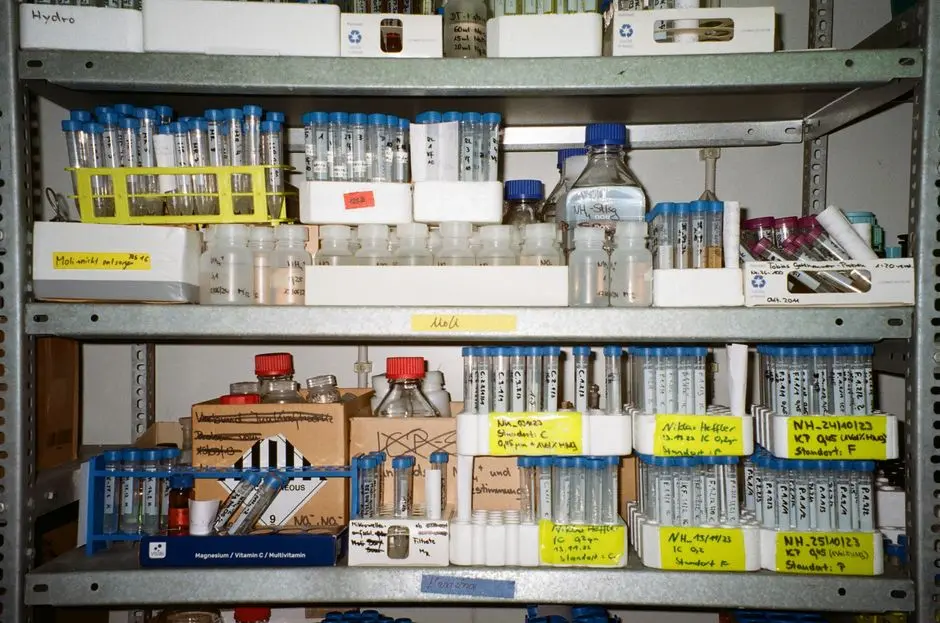
In the relentless pursuit of novel therapeutics, the design and construction of compound collections stand as a pivotal determinant of success. We navigate a complex landscape where the sheer volume of chemical space clashes with the urgent need for biologically relevant and developable molecules. The fundamental challenge lies in striking an exquisite balance: ensuring broad chemical diversity to explore new biological mechanisms, while simultaneously upholding stringent quality standards to generate viable drug candidates.
This article unveils the strategic imperatives and advanced methodologies crucial for optimizing compound libraries. We dissect the core principles governing both diversity and quality, offering actionable insights and best practices honed from the forefront of drug discovery. Prepare to elevate your approach, transforming mere collections into powerful arsenals for innovation. Mastering this equilibrium is not just an advantage; it is an absolute necessity for pioneering breakthroughs. We unlock the secrets to crafting superior libraries, including advanced methodologies that leverage
innovative chemical strategies for generating novel molecular libraries to propel your discovery efforts beyond current limitations.

Laying the Foundation: Defining Diversity and Quality in Compound Collections
We initiate our journey by establishing a precise understanding of diversity and quality, the two cornerstones of any successful compound collection. Diversity, at its core, represents the breadth of chemical structures present within a library. It is not merely about having many compounds, but about maximizing the dissimilarity between them, exploring vast swathes of chemical space. We quantify diversity through various metrics, including Tanimoto similarity indices, structural fingerprints, and pharmacophore feature counts. A highly diverse library dramatically increases the probability of encountering novel chemotypes that interact with previously unexplored biological targets or pathways, a critical factor for addressing unmet medical needs and circumventing patent challenges. We forge this understanding to ensure our collections offer true novelty.
Conversely, quality encompasses the drug-likeness and developability of the compounds. This facet includes properties such as solubility, permeability, metabolic stability, absence of reactive functional groups, and favorable ADME (Absorption, Distribution, Metabolism, Excretion) profiles. A compound's quality directly impacts its potential to progress through the drug discovery pipeline, minimizing attrition rates in later, more costly stages. We employ rules such as Lipinski's Rule of Five, Ghose filters, and other cheminformatic tools to prescreen for desirable properties. The synergy between high diversity and high quality dictates the overall utility and impact of a chemical library. We must engineer collections where every molecule holds genuine promise, propelling us closer to groundbreaking therapies.
Architecting Diversity: Strategic Approaches for Chemical Space Exploration
To engineer truly diverse compound collections, we deploy a multifaceted strategic arsenal designed to explore chemical space with maximum efficiency and impact. One primary approach involves the judicious selection of building blocks for combinatorial synthesis. By varying core scaffolds, linker chemistries, and peripheral substituents, we can generate vast permutations that span diverse structural motifs. We prioritize building blocks with known synthetic accessibility and orthogonality, ensuring high yields and purities. Scaffold hopping, a powerful technique, replaces core structures while retaining overall shape and electronic properties, enabling us to discover novel intellectual property. We constantly seek novel and unexplored synthetic routes that provide access to unique chemical entities, moving beyond the well-trodden paths.
Virtual screening, coupled with advanced computational methods, offers another potent avenue for diversity. We leverage docking simulations, pharmacophore matching, and shape-based screening to identify compounds from vast virtual libraries (often > 10^9 molecules) that are predicted to interact with our target. This allows us to rapidly filter and select for structural novelty and potential biological activity before any synthesis occurs. Fragment-based drug discovery (FBDD) also contributes to diversity by identifying small, weakly binding fragments that can then be grown or linked into potent lead compounds, often revealing unusual binding modes. We challenge existing paradigms, consistently pushing the boundaries of chemical synthesis and computational design to unveil unprecedented molecular architectures.
Elevating Quality: Integrating Drug-Likeness and Developability Filters
While diversity expands our reach, quality ensures our efforts yield tangible progress. We meticulously integrate a series of filters and predictive models to imbue our compound collections with superior drug-likeness and developability. The process begins with early-stage computational filters that assess physicochemical properties: molecular weight, cLogP (lipophilicity), topological polar surface area (TPSA), and hydrogen bond donors/acceptors. We establish stringent thresholds based on empirical data from successful drugs, proactively flagging compounds likely to exhibit poor absorption or permeability. Ignoring these early warnings guarantees costly failures later. We demand excellence from every molecule.
Beyond basic physicochemical parameters, we scrutinize compounds for potential liabilities such as reactive functional groups (e.g., electrophiles, redox-active moieties), known pan-assay interference compounds (PAINS), and structural alerts indicative of toxicity or metabolic instability. We deploy sophisticated in silico toxicology prediction models, leveraging machine learning algorithms trained on extensive toxicity databases. Furthermore, synthetic accessibility becomes a critical quality metric; a highly diverse but synthetically challenging compound offers little practical value. We prioritize structures that can be synthesized reliably and economically, often in multi-gram quantities. This rigorous gatekeeping ensures that only the most promising candidates progress, maximizing our resource allocation and accelerating the discovery timeline. We transform potential liabilities into strategic advantages, building robust and resilient molecular pipelines.
The Art of Equilibrium: Multi-Objective Optimization for Balanced Libraries
Achieving the optimal balance between diversity and quality is not a simple either/or proposition; it is a complex, multi-objective optimization problem requiring sophisticated strategies. We reject simplistic trade-offs, instead embracing an integrated design philosophy. The initial step involves clearly defining our discovery objectives: Are we seeking first-in-class molecules with high novelty, or optimizing existing lead series? This dictates the relative weighting of diversity versus quality metrics. For early-stage exploration, diversity often receives higher emphasis, while later-stage optimization prioritizes quality and potency. We continually refine our objective function, adapting to the evolving project needs. We master this delicate dance, guiding our collections with precision.
Advanced computational tools play a pivotal role in this equilibrium. Multi-objective genetic algorithms, for instance, can simultaneously optimize for desired physicochemical properties, structural diversity, and predicted biological activity. These algorithms generate Pareto fronts, allowing medicinal chemists to visualize the trade-offs and make informed decisions, selecting compounds that represent the best compromise. Iterative design cycles, where initial screens inform subsequent library design, are also crucial. We analyze hits, identify common scaffolds or pharmacophores, and then design focused libraries with increased quality filters around these promising motifs, while still ensuring sufficient diversity to avoid local optima. We cultivate a culture of continuous improvement, where data-driven insights fuel the iterative refinement of our molecular arsenals. This iterative refinement is the crucible where true balance is forged.

Advanced Strategies and Future Horizons: AI, ML, and Experimental Validation
We propel our compound collection strategies into the future by integrating cutting-edge technologies like Artificial Intelligence (AI) and Machine Learning (ML), alongside robust experimental validation. AI/ML models are revolutionizing library design by enabling the de novo generation of molecules with specific desired properties, simultaneously balancing diversity and quality. Generative adversarial networks (GANs) and variational autoencoders (VAEs) can learn complex chemical distributions and propose novel structures that adhere to drug-likeness criteria while exploring uncharted chemical space. We train these models on vast datasets of known drugs and biologically active compounds, leveraging their pattern recognition capabilities to identify optimal molecular features. This empowers us to predict and design, rather than merely screen. We seize these technological advancements as catalysts for unparalleled discovery.
However, computational predictions remain hypotheses until experimentally validated. We meticulously design and execute high-throughput screening (HTS) campaigns to assess the biological activity of our balanced libraries against target proteins or cellular pathways. Crucially, we couple HTS with orthogonal assays for ADME-Tox profiling early in the process. This integrated experimental feedback loop is vital: it not only validates our in silico predictions but also provides invaluable data to retrain and refine our AI/ML models, creating a virtuous cycle of design, synthesis, testing, and learning. We champion a symbiotic relationship between advanced computation and rigorous experimentation, ensuring our compound collections are not just theoretically promising, but demonstrably effective. We transform theory into tangible therapeutic potential, forging a new era of drug discovery.
Key Takeaways
Defining & Quantifying Diversity and Quality
Diversity: Maximizing structural dissimilarity to explore chemical space. Measured by Tanimoto similarity, fingerprints. Crucial for novel chemotypes and IP.
Quality: Drug-likeness and developability (solubility, permeability, metabolic stability, ADME, lack of reactive groups). Assessed via Lipinski's Rule of Five, Ghose filters, in silico tox prediction. Minimizes attrition.
Strategies for Diversity Enhancement
Building Block Selection: Varying core scaffolds, linkers, substituents in combinatorial synthesis. Prioritize synthetic accessibility.
Scaffold Hopping: Replacing core structures to retain activity but gain novelty.
Virtual Screening: Computational methods (docking, pharmacophore matching) to identify diverse, predicted active compounds from vast virtual libraries.
Fragment-Based Drug Discovery (FBDD): Identifying small fragments to grow/link into leads, exploring unique binding modes.
Strategies for Quality Enhancement
Physicochemical Filters: Early computational assessment of molecular weight, cLogP, TPSA, H-bond donors/acceptors against drug-like thresholds.
Liability Screening: Identifying reactive functional groups, PAINS, toxicity alerts via in silico models.
Synthetic Accessibility: Prioritizing structures that are reliably and economically synthesizable in required quantities.
Achieving Equilibrium: Multi-Objective Optimization
Define Objectives: Tailor diversity/quality emphasis based on project stage (early exploration > diversity; late optimization > quality).
Advanced Algorithms: Use multi-objective genetic algorithms to simultaneously optimize properties, diversity, and activity, generating Pareto fronts for informed decision-making.
Iterative Design: Analyze screening hits to refine subsequent libraries, focusing on promising motifs while maintaining diversity to avoid local optima.
Future Directions: AI, ML, and Experimental Validation
AI/ML Integration: De novo molecule generation (GANs, VAEs) for balanced diversity/quality, learning from vast chemical data.
Experimental Validation: High-throughput screening (HTS) for biological activity, coupled with early ADME-Tox profiling. Crucial feedback loop to refine computational models and validate predictions. Synergistic approach is key.
FAQ
-
Why is balancing diversity and quality so critical in compound collections?
Balancing diversity and quality is paramount because diversity expands the probability of discovering novel biological interactions and intellectual property, while quality ensures that these discoveries are chemically viable and developable into actual drugs. Without diversity, we risk exploring only known chemical space and missing groundbreaking therapies. Without quality, even active compounds will fail in later development stages due to poor drug-likeness, toxicity, or synthetic challenges, leading to significant resource waste and project attrition. We must optimize for both to maximize discovery success.
-
What are the common pitfalls in compound library design?
Common pitfalls include an overemphasis on either diversity or quality at the expense of the other. For instance, creating libraries with high diversity but poor quality often yields many hits that are undruggable or toxic. Conversely, libraries with high quality but low diversity may fail to explore novel biological mechanisms, leading to 'me-too' drugs or missing entirely new target classes. Other errors involve using unreliable synthetic routes, failing to adequately filter for promiscuous binders (PAINS), or neglecting synthetic accessibility in the design phase. We must actively avoid these traps through rigorous design and validation.
-
How do computational methods contribute to balancing diversity and quality?
Computational methods are indispensable. They enable us to:
- Quantify: Measure diversity using fingerprints and similarity metrics.
- Filter: Apply virtual screening and physicochemical property filters (e.g., Lipinski's Rule of Five) to enhance quality.
- Generate: Employ AI/ML models (GANs, VAEs) to de novo design molecules with desired property profiles, balancing novelty and drug-likeness.
- Optimize: Utilize multi-objective optimization algorithms (e.g., genetic algorithms) to explore trade-offs and identify optimal compound sets simultaneously satisfying diversity and quality criteria.
-
What is the role of experimental validation in ensuring balance?
Experimental validation is the ultimate arbiter of success. While computational predictions guide our design, real-world biological activity and ADME-Tox profiles are determined experimentally. High-throughput screening (HTS) confirms activity against targets, while early ADME-Tox assays identify liabilities. This experimental feedback loop is critical. It validates our in silico design principles, identifies unexpected issues, and provides essential data to refine our computational models and iterative design cycles. Without rigorous experimental validation, even the most elegantly designed computational libraries remain theoretical constructs. We insist on empirical proof to solidify our discoveries.
-
What emerging trends will impact compound collection design in the future?
The future of compound collection design will be profoundly shaped by:
- Advanced AI/ML: Further integration of generative chemistry for designing highly optimized and novel molecular scaffolds.
- Automated Synthesis & Robotics: Enabling faster, more complex, and diverse compound generation with higher reproducibility.
- Big Data Analytics: Leveraging vast chemical and biological datasets to inform design decisions, predict properties with greater accuracy, and identify new chemical motifs.
- Phenotypic Screening: Designing libraries specifically for complex cellular assays to discover novel mechanisms of action beyond single-target approaches.
- Fragment-Based and Covalent Drug Discovery Integration: More sophisticated integration of these strategies for expanding chemical space and improving target engagement.