
> New Molecule Discovery > Combinatorial Chemistry Methods > Optimize Discovery: Solid-Phase Synthesis Powers Molecule Innovation
Optimize Discovery: Solid-Phase Synthesis Powers Molecule Innovation
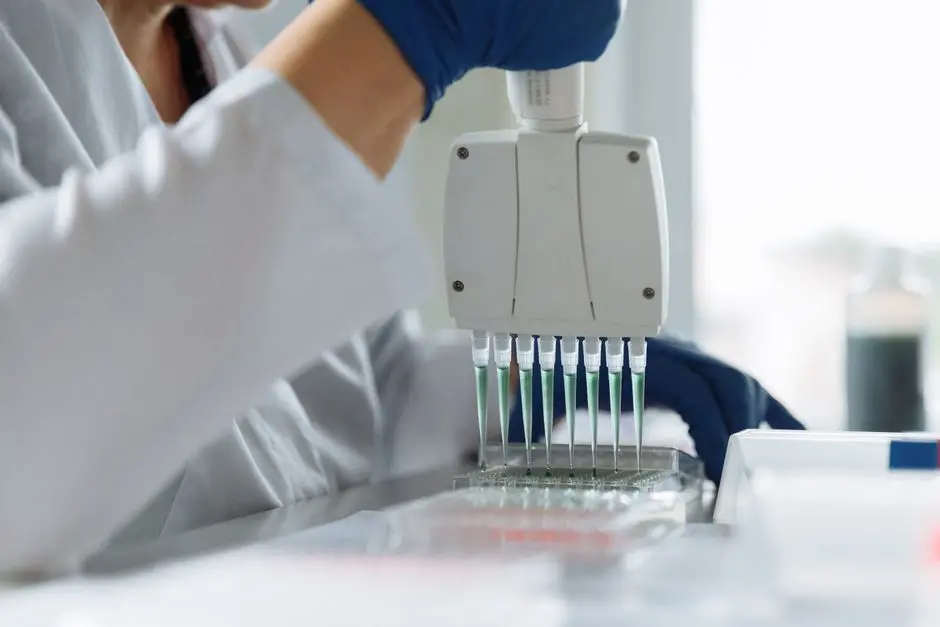
The quest for novel molecules defines the frontier of biological innovation. Each new compound holds the potential to unlock treatments, revolutionize diagnostics, or advance our fundamental understanding of life's intricate mechanisms. Yet, navigating the vast chemical space to identify and synthesize these elusive entities presents formidable challenges. Traditional synthetic methodologies often grapple with complex purifications, laborious work-ups, and limited scalability, bottlenecks that can critically impede the pace of discovery.
This article cuts through these challenges, illuminating how solid-phase synthesis (SPS) emerges as a cornerstone strategy, fundamentally transforming the landscape of modern chemical biology. We delve into the core advantages that position SPS as an indispensable tool, enabling rapid access to diverse molecular architectures and accelerating drug discovery pipelines. Prepare to command mastery over the efficiencies and strategic applications that distinguish this technique, driving unprecedented breakthroughs in new molecule identification. We shall forge pathways toward enhanced molecular exploration, building upon advanced chemical strategies for generating novel molecular libraries. We optimize the very essence of molecular creation.

Forge Foundations: Unlocking Efficiency with Solid-Phase Synthesis Core Principles
We commence our exploration by dissecting the fundamental principles that elevate solid-phase synthesis (SPS) above traditional solution-phase methods. At its heart, SPS involves covalently anchoring a growing molecular chain to an insoluble polymeric support, typically a resin bead. This immobilization represents a paradigm shift: instead of purifying intermediates after each reaction step, excess reagents and soluble by-products are simply washed away from the solid support. This dramatically simplifies and accelerates the purification process, eliminating the need for laborious extractions, crystallizations, or chromatographic separations at every stage. Consider the impact: we bypass numerous time-consuming operations, directly translating into accelerated synthetic campaigns.
The physical separation of the reaction product from impurities, inherent to SPS, underpins its unparalleled efficiency. Imagine a reaction vessel where the desired product remains fixed, while everything else is flushed away. This elegant simplicity minimizes product loss, enhances yields for complex multi-step syntheses, and significantly reduces the consumption of purification solvents. Furthermore, the ability to drive reactions to completion by using excess reagents, which are then easily removed, ensures high purity and consistency across multiple synthetic sequences. We are not merely performing chemistry; we are engineering an environment where purification becomes an intrinsic part of the process, rather than a subsequent hurdle. This inherent advantage positions SPS as a non-negotiable strategy for modern molecule discovery, enabling chemists to focus on reaction design rather than separation nightmares. We optimize the reaction environment to conquer synthetic bottlenecks, making each step a definitive advance towards our target molecule.
This method's robustness allows for the use of diverse reagents and conditions, often harsher than those tolerated in solution, without compromising downstream purification. We harness this flexibility to expand the scope of accessible chemical transformations. The resin itself acts as a handling tool, facilitating rapid transfers between reaction vessels and allowing for parallel processing of multiple compounds. This foundational shift in methodology liberates discovery efforts from the historical constraints of iterative purifications, propelling us into an era of more agile and productive molecular exploration. We seize this core advantage to command a higher rate of successful synthetic outcomes.
Accelerate Discovery: High-Throughput Screening and Automation Synergy
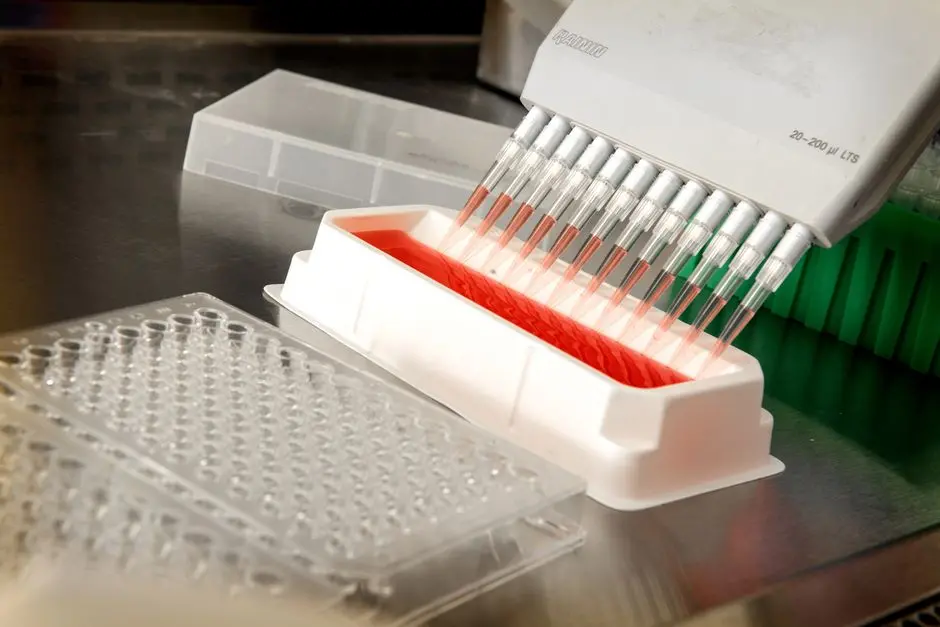
The true power of solid-phase synthesis unfolds when integrated with high-throughput methodologies and automation. SPS is uniquely poised to facilitate the simultaneous synthesis of hundreds, even thousands, of distinct compounds in parallel, forming diverse molecular libraries. This capability is paramount in modern drug discovery, where the rapid exploration of chemical space is critical for identifying novel lead compounds. We exploit this parallel processing capability, leveraging a split-and-pool or parallel synthesis approach, to generate vast arrays of compounds with varying structural motifs on a single resin batch or across multiple reaction wells.
Automation is the natural extension of SPS's inherent advantages. Robotic platforms, specifically designed for solid-phase chemistry, execute repetitive tasks such as reagent additions, washing steps, and cleavage, with unparalleled precision and reproducibility. This eliminates human error, significantly boosts throughput, and liberates skilled chemists to focus on design and analysis rather hand on synthesis. Imagine a discovery pipeline where hundreds of reactions proceed concurrently, day and night, without manual intervention. This is the reality SPS enables. For example, the synthesis of large peptide libraries, once a monumental task, becomes routine through automated peptide synthesizers employing SPS principles. This directly translates into an exponential increase in the number of compounds available for biological screening, dramatically improving the odds of discovering a potent therapeutic agent. We are not just building molecules; we are building entire arsenals of potential drug candidates at an unprecedented pace.
The precise control offered by automated SPS systems ensures consistent reaction conditions across all synthesized compounds, a crucial factor for reliable structure-activity relationship (SAR) studies. This consistency accelerates the lead optimization phase, allowing chemists to systematically modify molecular structures and evaluate their biological impact with confidence. Moreover, the capacity for miniaturization inherent in SPS, where reactions can occur on very small scales (micromole quantities), conserves precious reagents and reduces waste, further enhancing cost-effectiveness in large-scale discovery programs. We command this synergy of high-throughput and automation to push the boundaries of molecular exploration, converting ambitious discovery goals into tangible results. This operational efficiency is a direct pathway to market acceleration and scientific leadership.
Conquer Complexity: Expanding Chemical Space and Overcoming Synthetic Hurdles
Solid-phase synthesis is not merely an efficient technique; it is a strategic tool for conquering the synthesis of highly complex and challenging molecular architectures. Traditional solution-phase chemistry often falters when dealing with molecules prone to aggregation, degradation, or multi-step reactions requiring protection/deprotection strategies. By immobilizing the growing chain on a resin, SPS effectively isolates the reactant, preventing intermolecular reactions that can lead to aggregation or side product formation, especially prevalent in peptide and oligonucleotide synthesis. This confinement minimizes steric hindrance issues for specific reaction types, enabling the assembly of intricate structures with greater control and higher purity.
Consider the synthesis of long peptides or oligonucleotides, fundamental building blocks in biology. SPS is the gold standard for these biopolymers because it allows for stepwise addition of monomers in a highly controlled and efficient manner. Each amino acid or nucleotide can be added, reacted, and washed, without isolating and purifying the intermediate, which would be impractical, if not impossible, in solution. This method has extended to the synthesis of non-natural polymers, peptoids, and other complex scaffolds, dramatically expanding the synthetic chemist's toolkit. We are not limited by solubility or the physical properties of intermediates; the resin provides a consistent, manageable environment for constructing elaborate molecular machines.
Furthermore, SPS often allows for the use of excess reagents to drive reactions to completion, without the associated purification burden. This is critical when dealing with less reactive functional groups or when aiming for very high yields in each step of a multi-step sequence. While specific challenges like resin swelling or incomplete reactions exist, the advantages for accessing previously unattainable chemical space are undeniable. We leverage this robustness to generate novel scaffolds, explore uncharted territories of chemical diversity, and create molecules with unique biological properties that would be intractable by other means. This capability directly fuels innovation in medicinal chemistry and materials science, enabling us to design and synthesize molecules tailored to specific biological targets or material functions. We assert control over complexity, transforming synthetic barriers into opportunities for discovery.

Strategize Success: Best Practices and Future Directions in SPS Integration
To maximize the impact of solid-phase synthesis, strategic integration and adherence to best practices are paramount. A common pitfall for new practitioners involves overlooking the critical role of resin selection. The choice of resin (e.g., polystyrene, TentaGel, PEGA) and its functionalization (linker) dictates swelling characteristics, loading capacity, and chemical compatibility, directly influencing reaction kinetics and cleavage efficiency. Incorrect resin selection can lead to incomplete reactions, premature cleavage, or difficulties in product recovery. We emphasize that understanding the interplay between resin, linker, and reaction chemistry is not a detail, but a foundational requirement for success. For instance, peptide synthesis typically benefits from resins that swell well in common organic solvents to facilitate reagent access, while oligonucleotide synthesis demands specific controlled pore glass (CPG) supports.
Another critical area is the monitoring of reaction completeness. While SPS simplifies purification, it can obscure the progress of individual reaction steps. Techniques such as FTIR, ninhydrin tests (for amines), or quantitative cleavage of small aliquots provide invaluable real-time feedback, enabling chemists to optimize reaction times and reagent stoichiometry. Ignoring these checks is a common error, leading to the accumulation of deletion sequences or truncated products, drastically reducing final product purity and yield. We must adopt a proactive monitoring strategy, transforming potential failures into data-driven optimizations.
The future of SPS is vibrant, with advancements continually pushing its boundaries. The emergence of flow chemistry in conjunction with solid supports offers benefits such as enhanced heat transfer, precise residence time control, and even greater automation potential, leading to more efficient and safer syntheses. New linker technologies are enabling milder cleavage conditions, expanding the range of sensitive molecules that can be accessed. Furthermore, the development of novel resins with improved properties, such as enhanced loading capacities or better resistance to degradation, promises to unlock even more complex synthetic routes. We must stay abreast of these innovations, integrating them judiciously into our discovery pipelines. By mastering these best practices and embracing emerging technologies, we not only optimize our current synthetic efforts but also pave the way for future breakthroughs. We are not just performing chemistry; we are constantly refining our mastery over the tools that define the next generation of molecular discovery.
Key Takeaways
Simplified Purification & Unrivaled Efficiency
Solid-phase synthesis (SPS) fundamentally simplifies purification by immobilizing the growing molecule on a resin. This allows for easy washing away of excess reagents and by-products after each step, eliminating laborious intermediate purifications. This core advantage accelerates multi-step syntheses, minimizes product loss, and reduces solvent usage, making SPS an exceptionally efficient methodology for molecule creation.
High-Throughput & Automated Discovery
SPS excels in high-throughput applications, enabling the parallel synthesis of vast molecular libraries. Its compatibility with automation and robotic platforms drastically increases throughput, reproducibility, and precision, allowing hundreds to thousands of compounds to be generated simultaneously. This accelerates lead identification, optimization, and the overall pace of drug discovery by providing extensive chemical diversity for screening.
Conquering Molecular Complexity
SPS is indispensable for synthesizing complex molecular architectures, especially biopolymers like peptides and oligonucleotides. By confining the reaction to the solid support, it mitigates issues like aggregation and provides a controlled environment for stepwise monomer addition. This allows access to diverse chemical spaces and intricate structures that are often intractable via traditional solution-phase methods.
Strategic Implementation for Maximum Impact
Maximizing SPS benefits requires strategic choices, including careful resin and linker selection, robust reaction monitoring (e.g., FTIR, ninhydrin tests), and precise optimization of reaction conditions. Adhering to these best practices and embracing emerging technologies like flow chemistry integration and advanced resin designs are crucial for enhancing purity, yield, and expanding the technique's utility in modern discovery pipelines.
FAQ
-
What is the primary advantage of solid-phase synthesis over solution-phase methods?
The primary advantage of solid-phase synthesis (SPS) is the immense simplification of purification. By anchoring the growing molecule to an insoluble resin, excess reagents and soluble by-products can be easily washed away after each reaction step, eliminating the need for laborious intermediate purifications characteristic of solution-phase chemistry. This dramatically accelerates multi-step syntheses and reduces product loss. -
How does SPS contribute to high-throughput molecule discovery?
SPS significantly boosts high-throughput discovery by enabling parallel synthesis. Hundreds or thousands of compounds can be synthesized simultaneously on different resin beads or in separate wells. This, combined with automation, allows for the rapid generation of diverse molecular libraries, crucial for efficiently screening and identifying novel drug candidates. -
Can SPS be used to synthesize very complex molecules?
Absolutely. SPS is particularly advantageous for synthesizing complex molecules, especially biopolymers like peptides and oligonucleotides. The immobilization prevents aggregation and simplifies multi-step additions, allowing for the precise, sequential assembly of intricate structures that would be extremely challenging or impossible to synthesize efficiently in solution. -
What are some common challenges or considerations when performing solid-phase synthesis?
Common challenges include selecting the appropriate resin and linker, ensuring complete reactions at each step (which can be hard to monitor directly), managing resin swelling, and preventing premature cleavage. Best practices involve careful planning of reaction conditions, utilizing monitoring techniques, and optimizing washing protocols to ensure high purity and yield. -
What future advancements are anticipated for solid-phase synthesis?
Future advancements in SPS include its integration with flow chemistry for improved reaction control and efficiency, the development of new linker chemistries allowing for milder cleavage conditions, and the creation of novel resin supports with enhanced properties (e.g., higher loading capacity, better swelling characteristics). These innovations will further broaden the scope and efficiency of SPS in molecule discovery.