
> Basic Biology Concepts > Introduction to Biological Information Systems > Amplify AI: Biological Knowledge Powers Life Science Innovation
Amplify AI: Biological Knowledge Powers Life Science Innovation
In the relentless pursuit of breakthroughs in life sciences, Artificial Intelligence emerges as a transformative force. Yet, the true power of AI within this domain isn't unleashed by algorithms alone; it hinges critically on an intimate understanding of biology. We stand at the precipice of a new era, where deep biological insights are not just supplementary but foundational to architecting AI systems that truly comprehend and interact with the complexities of living systems. This article dissects how biological knowledge acts as the indispensable operating system for AI in fields ranging from drug discovery to personalized medicine, driving unprecedented accuracy and predictive power. Deciphering the intricate mechanisms of life, from the fundamental processes governing the biological information flow from DNA to function, provides the foundational bedrock for intelligent systems. We will explore how leveraging biology transforms AI from a mere data cruncher into a strategic partner, capable of unveiling profound biological truths and accelerating innovation. Prepare to redefine your perspective on biological intelligence powering artificial minds.
Forge a Symbiotic Imperative: Biology Fuels AI's Life Science Conquest
We initiate our journey by establishing the undeniable truth: AI's triumph in life sciences is inextricably linked to robust biological knowledge. Without this foundational understanding, AI risks becoming a powerful but misguided tool, prone to identifying superficial correlations rather than causal biological mechanisms. Consider the immense complexity of a cell, a tissue, or an entire organism. Each comprises billions of intricate interactions, governed by laws of chemistry, physics, and evolution. An AI system, purely data-driven, might infer statistical patterns from gene expression data, but without a biologist's understanding of gene regulatory networks, protein-protein interactions, or metabolic pathways, those patterns remain abstract. Biological knowledge provides the essential context, the 'ground truth,' enabling AI to move beyond correlation to causation, from prediction to genuine insight.
We harness this synergy to guide AI in formulating hypotheses, designing experiments, and interpreting results with biological relevance. For instance, in drug discovery, an AI might predict a molecule's binding affinity to a target protein. However, biological expertise informs whether that protein is a viable drug target, considering its role in disease pathology, off-target effects, and potential toxicity pathways. We equip AI with the principles of molecular biology, genetics, and physiology, transforming its statistical power into biologically informed intelligence. This fusion prevents common pitfalls like developing models that are technically accurate but biologically irrelevant, or chasing 'signals' that lack real-world biological significance. Our objective is clear: elevate AI from a computational engine to a true scientific collaborator, deeply embedded in the biological narrative.

Decode Life's Blueprint: Architecting Data for AI Intelligence
To unleash AI's potential, we must master the art of decoding and structuring life's blueprint – the vast and heterogeneous biological data. This isn't merely about gathering data; it's about curating, contextualizing, and transforming it into a format AI can intelligently process. Consider the deluge of data: genomics (DNA sequencing, epigenetics), transcriptomics (RNA expression), proteomics (protein structure and function), metabolomics (metabolite profiles), imaging data (microscopy, radiology), and clinical patient records. Each dataset holds crucial pieces of the biological puzzle, but they are often disparate, noisy, and challenging to integrate.
Our strategic approach involves robust data engineering and the application of biological ontologies and knowledge graphs. We don't just feed raw sequences to an AI; we enrich them with functional annotations, pathway information, and disease associations derived from decades of biological research. For example, gene expression data gains profound meaning when linked to biological processes via ontologies like GO (Gene Ontology) or pathways in KEGG. This structured knowledge acts as a navigational map for AI, guiding it through the complex landscape of biological interactions. Common errors include neglecting data provenance, failing to normalize diverse data types, or overlooking batch effects, all of which can lead to spurious AI findings. We champion rigorous data curation, establishing clear data standards, and leveraging expert knowledge to build cohesive, biologically informed datasets that truly reflect the intricate nature of life.

Engineer Molecules to Machines: AI Applications Driven by Biological Insight
With biologically enriched data and a profound understanding of life's processes, we transition to engineering AI applications that revolutionize life sciences. This isn't theoretical; it's the operational core of modern biomedical innovation. In drug discovery, AI, informed by structural biology, medicinal chemistry principles, and ADME (Absorption, Distribution, Metabolism, Excretion) predictions, accelerates target identification, lead compound generation, and optimization. We empower AI to predict molecular properties, simulate drug-target interactions at atomic resolution, and even design novel molecules with desired pharmacological profiles, all guided by constraints and knowledge derived from pharmacology and biochemistry. Without biological insight into receptor binding sites, enzyme kinetics, or cellular uptake mechanisms, AI's search space would be overwhelmingly vast and inefficient.
In personalized medicine, AI leverages individual genomic, proteomic, and clinical data to predict disease susceptibility, stratify patients for optimal treatment, and forecast drug response. Biological understanding of genetic variants' functional impact, immune system interactions, and metabolic pathways allows AI to craft tailored therapeutic strategies. Similarly, in disease mechanism elucidation, AI models, grounded in systems biology, reconstruct complex regulatory networks from multi-omics data, revealing previously hidden pathways contributing to pathology. This is where biology validates AI's output; an AI predicting a novel disease pathway must align with known cellular functions and experimental observations. We transform AI from a black box into an explainable engine, delivering biologically plausible and actionable insights, fundamentally reshaping how we diagnose, treat, and understand disease.
Architect Intelligent Biological Systems: Best Practices & Future Frontiers
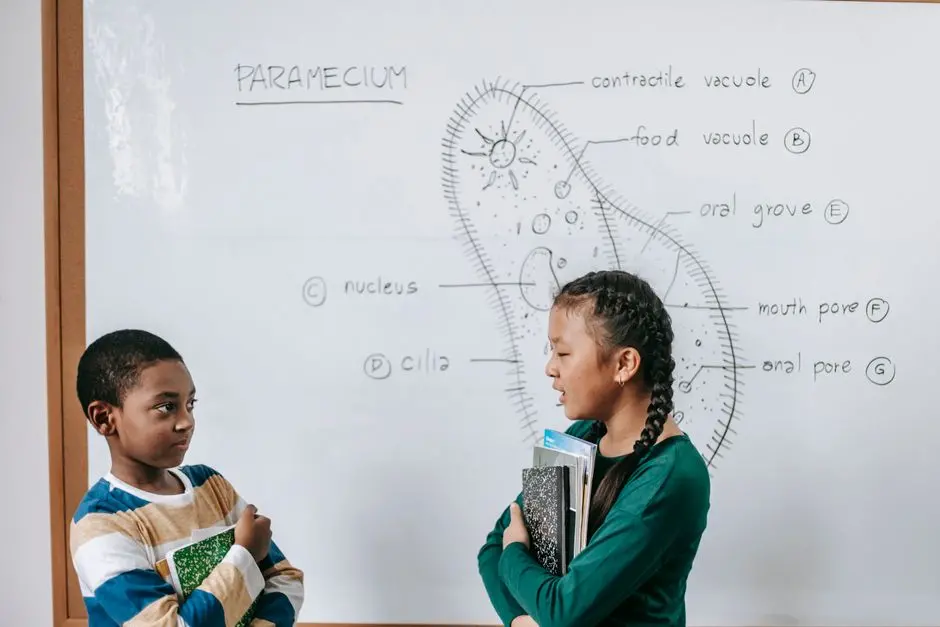
Architecting truly intelligent biological systems demands a strategic framework and a forward-looking perspective. We advocate for a best practice rooted in interdisciplinary collaboration: fostering seamless integration between biologists, data scientists, and AI/ML engineers. This partnership ensures that AI models are not only computationally sound but also biologically meaningful and experimentally testable. A common pitfall arises when AI models, though statistically robust, lack biological plausibility, leading to misinterpretations or failed experimental validation. We must ensure continuous feedback loops, where biological insights refine AI models, and AI predictions guide biological experimentation.
The future beckons with exciting frontiers. We propel the development of Explainable AI (XAI) in biology, demanding transparency into AI's decision-making process. Understanding *why* an AI predicts a certain drug target or patient outcome is paramount for clinical adoption and scientific trust. Furthermore, we champion advanced multimodal data integration, fusing diverse data types (genomics, imaging, wearables, clinical notes) to build a holistic patient or biological system representation, overcoming the limitations of single-modality analyses. Ethical considerations, including data privacy and bias in biological datasets, also stand as critical pillars for responsible AI deployment. Our mission is to continuously optimize this bio-AI synergy, pushing the boundaries of discovery and accelerating the translation of insights into tangible health benefits, forging a future where biological intelligence and artificial intelligence converge seamlessly.
Key Takeaways
The Indispensable Role of Biology in AI's Life Science Conquest
AI in life sciences is not merely about algorithms; it requires deep biological context to move beyond superficial correlations to causal biological mechanisms. Biology guides AI in hypothesis generation, experimental design, and results interpretation, preventing biologically irrelevant findings.
Decoding Life's Data Blueprint for AI
Success hinges on effectively curating and structuring vast, heterogeneous biological data (genomics, proteomics, imaging, clinical). Leveraging biological ontologies and knowledge graphs is crucial for transforming raw data into AI-intelligible, interconnected knowledge, serving as a vital navigational map for AI.
Driving AI Applications with Biological Insight
Biological knowledge fundamentally powers AI applications in drug discovery (target ID, lead optimization) and personalized medicine (patient stratification, treatment prediction). It ensures AI-generated solutions are biologically plausible and clinically actionable, reflecting true molecular and physiological realities.
Best Practices for Bio-AI Synergy and Future Frontiers
Effective integration demands interdisciplinary collaboration. Future directions focus on Explainable AI (XAI) for transparency, advanced multimodal data integration for holistic understanding, and addressing ethical considerations to ensure responsible AI deployment in biology.
FAQ
-
Why is biological knowledge crucial for AI in life sciences?
Biological knowledge provides the essential context and 'ground truth' for AI models. It transforms AI from a tool that identifies mere statistical correlations into one that can infer causal biological mechanisms, ensuring that AI predictions are biologically relevant, plausible, and actionable. Without it, AI risks generating scientifically unsound or misleading results.
-
How does biological data specifically support AI algorithms?
Biological data, from genomics to proteomics and metabolomics, enriches AI by offering diverse inputs for training. Beyond raw data, biological ontologies and knowledge graphs provide structured information, guiding AI in understanding relationships between genes, proteins, pathways, and diseases. This structured knowledge allows AI to learn more effectively and make biologically informed predictions.
-
What are the common challenges when integrating biology and AI?
Key challenges include the heterogeneity and noise of biological data, the difficulty of integrating diverse data types, and ensuring biological plausibility in AI models. Overcoming these requires robust data engineering, interdisciplinary collaboration between biologists and AI experts, and a focus on explainable AI to ensure transparent and trustworthy results.