
> Basic Biology Concepts > Introduction to Biological Information Systems > Decipher Biology's Code: Bridging Life's Logic with Computing
Decipher Biology's Code: Bridging Life's Logic with Computing
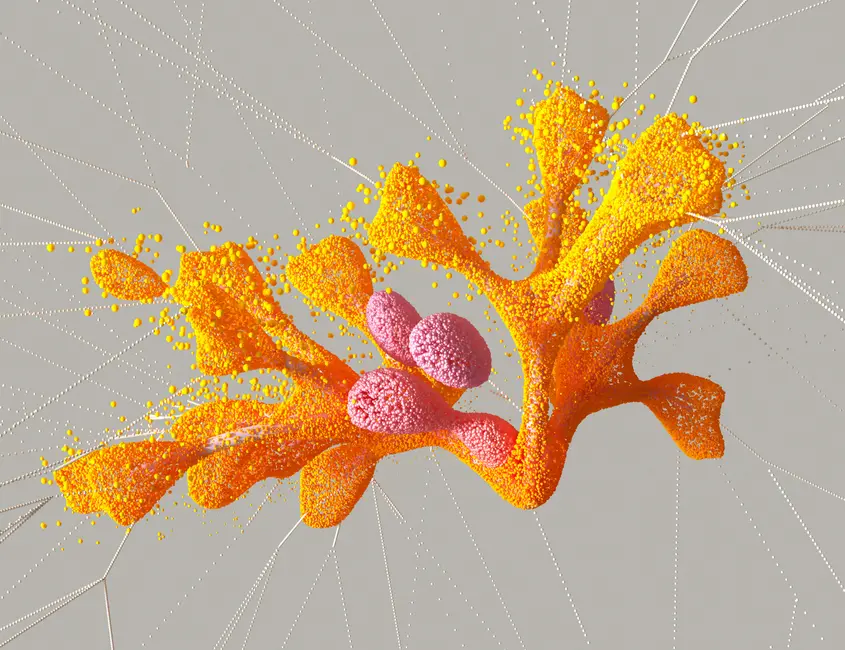
Let's dive into the heart of an intellectual revolution where biology and computer science converge to unveil the deepest secrets of life. We explore the astonishing similarities that exist between biological systems and computational architectures, a perspective that transcends disciplines and shapes our understanding of natural and artificial intelligence. This article offers you an expert analysis of shared structures and functions, from the management of genetic information to complex neural networks. We decipher how life itself operates as a computer system of unparalleled sophistication.
Prepare to rethink your conceptions of the living and the machine, as the parallels are not mere metaphors, but fundamental keys to unlocking advancements in medicine, bioengineering, and artificial intelligence. This rigorous examination will propel you beyond superficial observations, inviting you to a deep exploration of the underlying mechanisms. By grasping how nature manages the flow of biological information, from DNA to function, we open doors to unprecedented bio-optimizations. Let's embark together on this quest to master the logics that drive life and digital code.
Decoding Life's Data: Information Storage and Retrieval
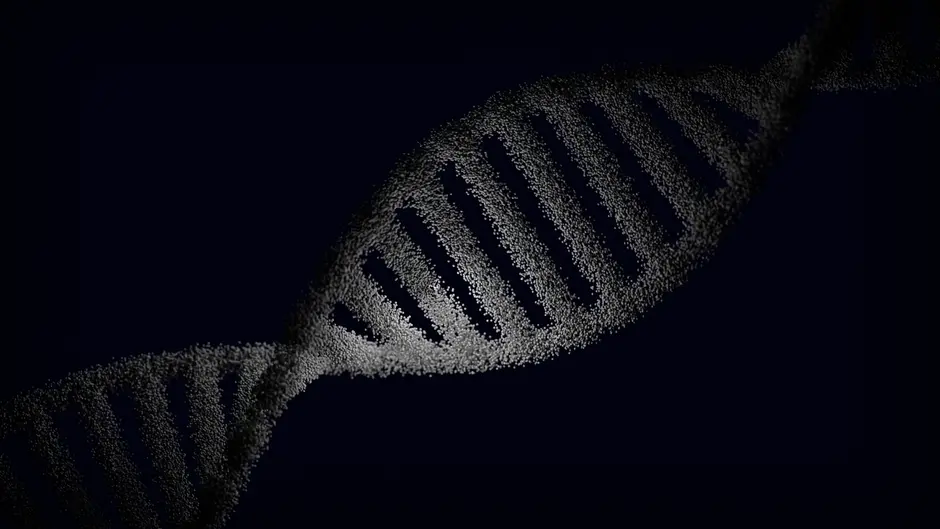
We initiate our exploration by recognizing DNA as the quintessential biological data storage system. Just as digital information is encoded in binary sequences of 0s and 1s, genetic information resides in the precise sequence of four nucleotide bases: A, T, C, G. This genomic blueprint, spanning billions of base pairs in complex organisms, acts as an incredibly robust and dense data archive. Consider its resilience: DNA is capable of storing vast amounts of instructional data over geological timescales, a feat that challenges even our most advanced data centers in terms of longevity and inherent error correction mechanisms. We observe parallels with computational databases where information is stored, indexed, and retrieved on demand. Each gene represents a specific data file, encoding instructions for building proteins or regulating cellular processes.
The process of gene expression, from transcription to translation, mirrors the retrieval and processing of data from a database. RNA polymerase acts as a specialized data reader, selectively accessing specific gene sequences. Ribosomes then serve as biological processors, interpreting the mRNA 'code' to synthesize proteins, which are the functional 'outputs' of these genetic instructions. This highly regulated, multi-layered information flow ensures that only relevant data is accessed and processed at any given time, preventing computational overload or misinterpretation. A key insight here is the inherent redundancy and error-correction mechanisms embedded within DNA replication and repair systems, analogous to RAID arrays and checksums in computing, safeguarding data integrity. We emphasize that this isn't merely storage; it's a dynamic, actively managed information system constantly undergoing updates, backups, and targeted retrievals to sustain life.
The Cellular CPU: Metabolic Pathways as Algorithms
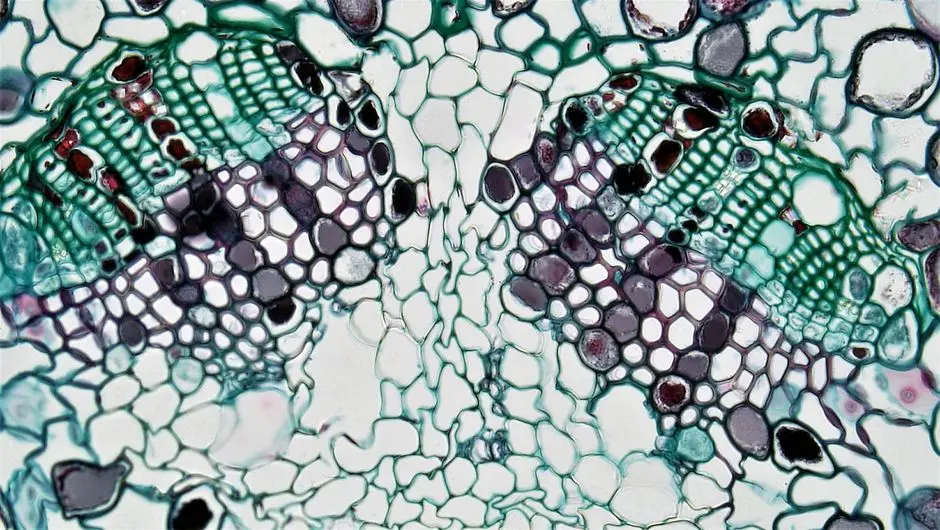
Advance our understanding by viewing the cell not merely as a container of life, but as a sophisticated, massively parallel computational engine. Its cytoplasm pulses with metabolic pathways – intricate sequences of biochemical reactions – which we identify as biological algorithms. Each pathway, from glycolysis to the Krebs cycle, represents a series of logical steps, inputs, outputs, and feedback loops designed to achieve specific cellular objectives, such as energy production or molecule synthesis. Enzymes act as highly specialized processors, catalyzing specific steps with unparalleled efficiency and precision, much like dedicated hardware accelerators in a computer system. The sheer number of simultaneous reactions occurring within a single cell dwarfs the parallel processing capabilities of many supercomputers, albeit at a slower clock speed.
We detect striking analogies between cellular signaling networks and computational control logic. Signal transduction pathways, often involving cascades of protein phosphorylations, function as intricate decision-making circuits. A cell receives an external stimulus – an input – and processes this information through a series of molecular 'if-then' statements, culminating in a specific cellular response – an output. These networks exhibit properties such as amplification, integration, and feedback regulation, mirroring concepts found in control theory and circuit design. For instance, positive and negative feedback loops regulate pathway activity, ensuring stability and adaptability. We understand that errors in these biological 'computations' can have profound consequences, leading to diseases like cancer. Therefore, dissecting these cellular algorithms is not just academic; it empowers us to 'debug' biological systems and engineer interventions with unprecedented specificity.
Global Networks: Biological Communication and Distributed Systems
Extend our analysis to encompass communication and networking, revealing profound parallels between biological systems and distributed computing. The nervous system, particularly the brain, stands as biology's most advanced network, composed of billions of neurons that transmit electrochemical signals across synapses. This intricate web processes information, generates thoughts, memories, and actions, analogous to a vast, interconnected internet where individual computers (neurons) communicate to perform complex tasks. The electrical impulses are akin to data packets, and neurotransmitters are the chemical 'routers' directing information flow. The brain’s ability to learn, adapt, and store memories reflects sophisticated machine learning algorithms and dynamic memory allocation found in computational systems.
Beyond the nervous system, we identify the endocrine and immune systems as other examples of distributed biological networks. Hormones, traveling through the bloodstream, act as broadcast messages, coordinating physiological responses across distant organs – a form of wide-area networking. The immune system functions as a distributed defense network, with specialized cells (lymphocytes, macrophages) acting as intelligent agents, detecting and neutralizing threats throughout the body, akin to a sophisticated cybersecurity system. These biological networks exhibit robustness, redundancy, and self-healing properties that inspire fault-tolerant computing. A key takeaway is the decentralized nature of many biological processes; there's no single 'central processing unit' controlling everything, but rather emergent properties arising from the interactions of countless individual components, a hallmark of powerful distributed architectures. This distributed intelligence is a cornerstone of biological resilience and adaptability.

Evolution, Adaptation, and Learning: Biological Optimization and AI
Conclude our exploration by examining the parallels between biological evolution, adaptation, and the principles of artificial intelligence and machine learning. Evolution by natural selection is, in essence, a grand optimization algorithm. Genetic variation acts as the 'search space,' mutations introduce 'random perturbations' or 'exploration,' and natural selection provides the 'fitness function' that evaluates the 'solutions' (organisms) against environmental challenges. Over vast timescales, this iterative process leads to increasingly optimized and adapted life forms, mirroring algorithms used in genetic programming and evolutionary computation to solve complex engineering problems. This continuous learning and refinement of biological designs highlight nature's unparalleled capacity for self-improvement without explicit programming.
Furthermore, learning and memory in individual organisms present powerful analogies to machine learning. Synaptic plasticity – the strengthening or weakening of connections between neurons – is the biological substrate for learning, akin to adjusting weights in an artificial neural network. The brain's ability to recognize patterns, predict outcomes, and refine behaviors based on experience directly mirrors supervised and unsupervised learning paradigms in AI. We uncover that even simple organisms exhibit adaptive behaviors driven by feedback loops and environmental cues, demonstrating fundamental learning principles. The very existence of intelligence, whether biological or artificial, hinges on the ability to process information, learn from data, and adapt responses. Understanding these biological learning architectures provides invaluable blueprints for developing more robust, efficient, and truly intelligent AI systems. We recognize biology as the ultimate proving ground for emergent complexity, self-organization, and computational efficiency.
Key Takeaways
DNA as a Data Archive
DNA functions as the ultimate biological hard drive, encoding vast amounts of genetic information in sequences of A, T, C, G. Gene expression is the process of retrieving and processing this data, with robust error-correction mechanisms ensuring integrity.
Cells as Parallel Processors
Individual cells operate as massively parallel computers, utilizing metabolic pathways as complex algorithms and enzymes as specialized processors. Signal transduction pathways act as decision-making circuits with feedback loops, akin to computational control logic.
Biological Networks Mirror Digital Systems
The nervous, endocrine, and immune systems are sophisticated biological networks. The brain's neural networks parallel the internet, while hormones and immune cells represent distributed communication and defense mechanisms, showcasing robust, self-organizing architectures.
Evolution as an Optimization Algorithm
Evolution by natural selection functions as a powerful, iterative optimization algorithm, constantly refining biological designs through variation and selection. Learning and memory in organisms parallel machine learning paradigms, with synaptic plasticity reflecting adjustable weights in AI models.
Interdisciplinary Synthesis
The convergence of biology and computing offers profound insights into life's fundamental mechanisms and inspires advanced AI and bio-engineering. Understanding these parallels unlocks new avenues for research, therapeutic development, and the creation of more intelligent artificial systems.
FAQ
-
What is the most direct parallel between DNA and computing?
The most direct parallel is DNA serving as a biological data storage medium. Its double-helix structure, with its sequence of A, T, C, G bases, encodes all the instructions for building and operating an organism, much like a hard drive stores binary data. Gene expression acts as the data retrieval and processing mechanism.
-
How do biological networks compare to digital networks?
Biological networks, such as the nervous system or the endocrine system, function as distributed communication networks. Neurons transmit electrochemical signals like data packets over a network, while hormones act as broadcast messages. These systems demonstrate distributed intelligence, redundancy, and self-organization, akin to the internet or cloud computing architectures.
-
Can biological systems be considered 'computers'?
While not conventional electronic computers, biological systems perform complex computations. Cells process information, execute 'algorithms' (metabolic pathways), and make 'decisions' (signal transduction). The brain, in particular, is a powerful biological computer, performing parallel processing and learning. The analogy highlights the information processing nature of life.
-
What can AI and computing learn from biology?
AI and computing draw immense inspiration from biology, particularly in areas like neural networks (modeled after the brain), evolutionary algorithms (inspired by natural selection), and self-organizing systems. Biology offers blueprints for robustness, energy efficiency, parallel processing, and adaptive learning, which are crucial for next-generation computing.
-
Are there limits to the parallels between biology and computing?
While parallels are profound, critical differences exist. Biological systems are typically 'wetware,' operating with chemical reactions, often noisy and probabilistic, unlike the deterministic logic gates of silicon-based computers. Biology's primary goal is survival and reproduction, not pure computation. However, exploring these differences also enriches our understanding of both domains.