
> Basic Biology Concepts > Introduction to Biological Information Systems > Mastering Life's Blueprint: Nucleotide Sequences and Genetic Instructions
Mastering Life's Blueprint: Nucleotide Sequences and Genetic Instructions
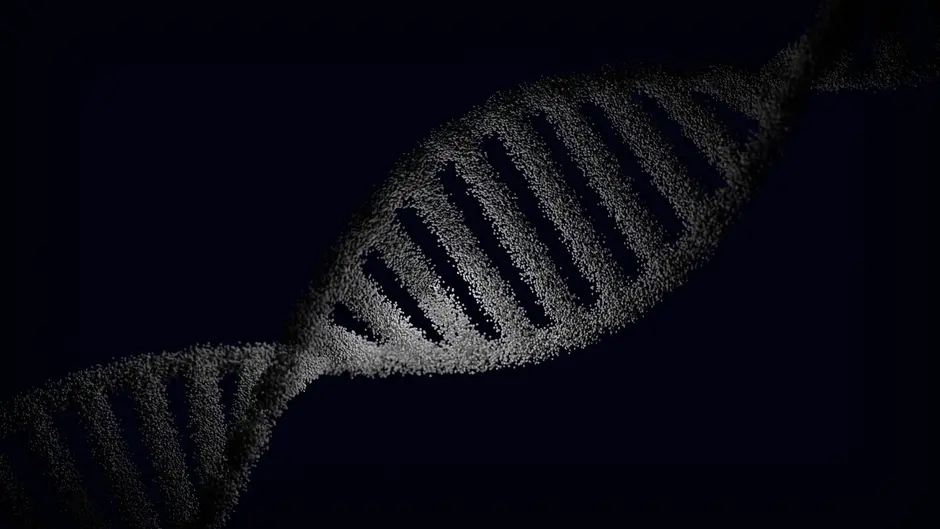
Unlock the foundational secrets of life itself. We embark on a crucial exploration into the very essence of genetic information: why nucleotide sequences are the unparalleled architects of genetic instructions. This deep dive reveals not just how DNA and RNA carry the code, but why their specific molecular structure and properties render them the ultimate biological information systems. Prepare to dissect the intricate design principles that allow these molecules to store, transmit, and express the entirety of life's complexity.
Every living organism, from the simplest bacterium to the most complex mammal, operates under the precise directives encoded within its nucleic acids. Grasping this fundamental mechanism is paramount for anyone navigating the vast landscape of biology. This article serves as your indispensable guide, forging a clear understanding of the molecular logic that underpins all hereditary processes. We illuminate the strategic advantages of nucleotides as the chosen medium for biological information, revealing the robustness, fidelity, and evolutionary adaptability baked into their very design. Dive in and discover how these microscopic sequences orchestrate the grand symphony of life, establishing the critical principles of the biological information flow from DNA to function.
We dissect the molecular engineering that ensures accurate replication and precise protein synthesis, equipping you with an expert-level comprehension of the genetic imperative. Forge ahead and command this vital knowledge.
The Nucleotide: Molecular Architect of Life's Code
We initiate our strategic analysis by isolating the fundamental building block: the nucleotide. This is not merely a component; it is a precisely engineered molecular module comprising three critical elements: a phosphate group, a five-carbon sugar (deoxyribose in DNA, ribose in RNA), and a nitrogenous base. This tripartite structure is no accident; it represents an evolutionary triumph in information storage.
Consider the alternative. Proteins, with their diverse amino acid side chains, offer immense structural complexity and catalytic power, yet their capacity for stable, self-replicating information storage is inherently limited. Lipids, while vital for membranes and energy, lack the sequential variability and robust polymerization necessary for encoding complex instructions. Carbohydrates, similarly, are optimized for energy and structural support, not for the precise, linear instruction sets required by life.
The brilliance of the nucleotide lies in its elegant simplicity and its profound capacity for polymerization. Each nucleotide, through phosphodiester bonds, links to the next, forming an unbranched, linear chain. This linearity is absolutely crucial. It establishes a 'readout' sequence, much like words in a sentence, where the order dictates meaning. We forge this understanding: without this fundamental linear arrangement, the concept of a genetic 'code' – a sequence-dependent instruction manual – would simply collapse.
Furthermore, the consistent sugar-phosphate backbone provides a remarkably stable scaffold. This structural regularity ensures that the diverse nitrogenous bases, which carry the actual information, are presented uniformly for interaction, recognition, and copying. This uniformity is a cornerstone for high-fidelity replication and transcription. We identify this design as a prime example of biological optimization: a stable, versatile monomer designed for robust, information-rich polymer formation. This initial insight underpins our entire comprehension of genetic instruction.
Precision and Stability: The Backbone of Genetic Integrity
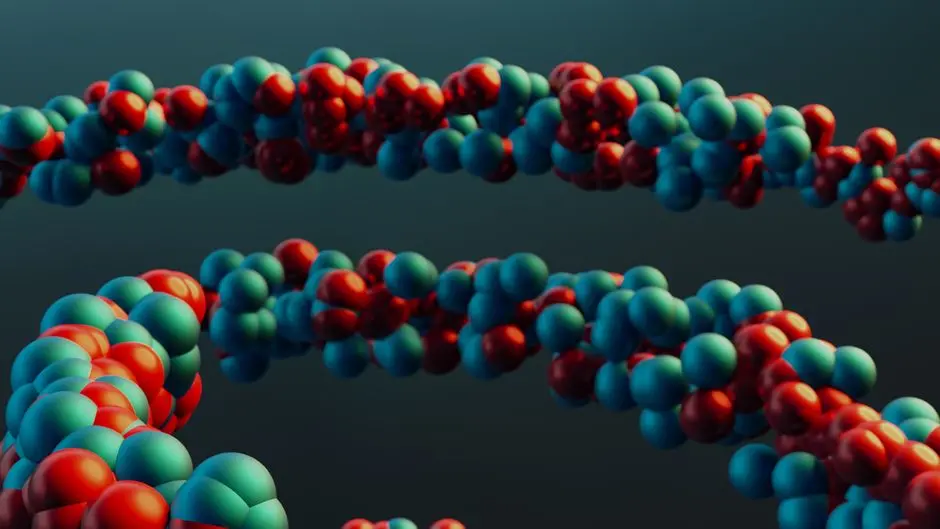
We delve deeper into the architectural genius of nucleic acids, focusing on the twin pillars of precision and stability. The phosphodiester backbone, formed by covalent bonds between the phosphate of one nucleotide and the sugar of the next, constitutes an exceptionally robust molecular chain. This backbone is the unyielding fortress protecting life's most valuable asset: genetic information.
Its chemical stability ensures that the genetic blueprint remains intact across countless cellular divisions and throughout an organism's lifespan, resilient against common enzymatic degradation and environmental fluctuations. This stability is not merely a convenience; it is an evolutionary imperative. Without it, the integrity of genetic instructions would be compromised, leading to catastrophic errors in protein synthesis and ultimately, organismal dysfunction or extinction. We acknowledge this as a critical design feature for biological continuity.
Complementing this robust backbone are the hydrogen bonds that dictate specific base pairing: adenine (A) always pairs with thymine (T) in DNA (or uracil (U) in RNA), and guanine (G) always pairs with cytosine (C). This complementary base pairing is the bedrock of genetic fidelity. During DNA replication, the double helix unwinds, and each strand serves as a precise template for the synthesis of a new complementary strand. The strict A-T and G-C pairing rules ensure that the newly synthesized DNA molecule is an exact replica of the original. This mechanism minimizes errors, guaranteeing that genetic instructions are passed down accurately from one generation to the next, from cell to cell. We optimize our understanding here: this pairing mechanism is a self-correction and self-duplication engine, critical for sustaining life's complexity. The double helix, therefore, is not just a structure; it is a dynamic information security system, allowing controlled access while maintaining unparalleled informational integrity.
The Universal Language: Encoding Information Through Sequence Variation
We now unlock the profound mechanism by which the limited set of four nitrogenous bases (A, T, C, G) translates into the boundless complexity of life. The magic resides in their linear sequence. Each nucleotide base acts as a 'letter' in an alphabet, and their precise order forms 'words' and 'sentences' that constitute the genetic instructions. This combinatorial power is staggering.
The genetic code operates on the principle of triplets, or 'codons'. Every sequence of three consecutive nucleotides specifies either a particular amino acid or a signal to stop protein synthesis. With four possible bases at each of the three positions in a codon (4^3), there are 64 possible unique codons. This numerical capacity is far greater than the 20 common amino acids used in protein synthesis, leading to the concept of 'degeneracy' or 'redundancy' in the genetic code. This degeneracy is a strategic advantage: multiple codons can specify the same amino acid, providing a crucial buffer against point mutations. A single base change might not alter the resulting amino acid, thereby safeguarding protein function. We identify this as an elegant error-correction strategy embedded within the code itself.
Furthermore, the universality of the genetic code across nearly all life forms is a testament to its evolutionary success and fundamental efficiency. From bacteria to humans, the same codons largely specify the same amino acids, highlighting a shared ancestry and an optimal solution for genetic encoding. This universality facilitates genetic engineering, allowing genes from one species to be expressed in another. This system represents an exceptionally high information density: a vast library of complex instructions compressed into the relatively compact form of a nucleic acid strand. We emphasize this: the sequence is not arbitrary; it is a meticulously crafted, information-rich blueprint that translates directly into biological function.
Dynamic Instruction Sets: From Storage to Function
Having established how nucleotide sequences store information, we now pivot to the dynamic process by which these latent instructions are activated and translated into functional components. The journey from genetic blueprint to active protein involves two fundamental cellular processes: transcription and translation. This is where the static information becomes kinetic biological action.
Transcription involves synthesizing an RNA molecule from a DNA template. Specific nucleotide sequences within the DNA, known as promoter regions, signal where transcription should begin. The sequence of bases in the DNA dictates the complementary sequence of bases in the messenger RNA (mRNA) molecule. This mRNA then carries the genetic instructions out of the nucleus to the ribosomes, the cellular machinery for protein synthesis. This step is a critical control point, determining which genes are expressed and when.
Translation is the process where the nucleotide sequence of the mRNA is decoded into a sequence of amino acids, forming a polypeptide chain. Each mRNA codon is recognized by a complementary anticodon on a transfer RNA (tRNA) molecule, which carries a specific amino acid. The ribosome facilitates the sequential addition of amino acids, dictated precisely by the mRNA sequence. The resulting polypeptide then folds into a specific three-dimensional protein structure, which dictates its biological function – be it an enzyme, a structural component, or a signaling molecule.
Therefore, the nucleotide sequence directly dictates the primary structure (amino acid sequence) of a protein, which, in turn, determines its complex tertiary and quaternary structures, ultimately defining its function. Any alteration in the nucleotide sequence – a mutation – can lead to an altered amino acid sequence, potentially resulting in a misfolded, non-functional, or even harmful protein. We recognize this direct correlation as the unequivocal proof of why nucleotide sequences encode genetic instructions: they are the master script for all protein synthesis and, by extension, all cellular function and organismal traits. We must understand this workflow as a continuum, not discrete steps, where precision at each molecular junction is paramount for biological integrity.
Evolutionary Imperatives and Future Trajectories of Genetic Information
We conclude our strategic overview by reflecting on the profound evolutionary imperative that solidified nucleotide sequences as life's chosen genetic instruction medium, and then project this understanding into future biological frontiers. The selection of DNA and RNA as informational macromolecules was not random; it was the result of billions of years of evolutionary refinement, favoring systems that offered superior stability, replicative fidelity, and adaptability.
The inherent redundancy of the genetic code, where multiple codons specify the same amino acid, exemplifies an evolutionary buffer against mutations. Furthermore, the semi-conservative replication mechanism of DNA ensures that one original strand is always preserved, reducing the chance of complete information loss and facilitating repair mechanisms. This robustness, coupled with the capacity for occasional, beneficial mutations that drive evolution, positions nucleotides as the optimal substrate for encoding life's instructions. Proteins, while functionally diverse, lack the straightforward templating mechanism for self-replication that DNA possesses. Lipids and carbohydrates are simply too structurally limited to carry complex, sequential information efficiently.
Our understanding of why nucleotide sequences encode genetic instructions propels us into groundbreaking fields. In synthetic biology, we engineer custom DNA sequences to program cells for novel functions, such as producing biofuels or targeted therapeutics. In CRISPR gene editing, we precisely alter nucleotide sequences to correct genetic defects, offering revolutionary treatments for inherited diseases. In personalized medicine, sequencing an individual's genome provides a tailored blueprint for disease risk assessment and drug response prediction, optimizing health interventions.
We command this knowledge not just to comprehend life, but to actively sculpt its future. The mastery of nucleotide sequences is the gateway to bio-optimization at its most profound level – from understanding the resilience of biological systems to engineering novel ones. This foundational comprehension empowers us to decode, repair, and even rewrite the very source code of life itself. We envision a future where this strategic insight continues to unlock unparalleled advancements in health, agriculture, and environmental sustainability, continuously expanding the realm of what is biologically possible.
Key Takeaways
The Nucleotide: The Foundational Unit
Nucleotides, composed of a phosphate, a sugar, and a nitrogenous base, are the optimal monomers for genetic information. Their linear polymerization via phosphodiester bonds creates a stable, sequential chain, essential for encoding instructions, unlike other macromolecules such as proteins or lipids.
Stability and Fidelity: Core Principles
The robust sugar-phosphate backbone provides chemical stability, protecting genetic information. Complementary base pairing (A-T, G-C) ensures high-fidelity replication, minimizing errors and maintaining the integrity of genetic instructions across generations.
Encoding Capacity: The Genetic Code
The linear sequence of four bases (A, T, C, G) forms a combinatorial code based on triplets (codons). With 64 possible codons for 20 amino acids, the genetic code is degenerate, offering protection against mutations, and largely universal across all life forms, demonstrating high information density.
From Blueprint to Function: Gene Expression
Nucleotide sequences direct protein synthesis through transcription (DNA to mRNA) and translation (mRNA to protein). This pathway ensures that the genetic instructions are accurately converted into functional proteins, where the sequence directly determines protein structure and biological activity. Any error in sequence can disrupt function.
Evolutionary Triumph and Future Impact
DNA and RNA's selection as genetic material is an evolutionary success, balancing stability, replicative fidelity, and adaptability. This understanding underpins fields like synthetic biology, gene editing (CRISPR), and personalized medicine, empowering us to manipulate and optimize life's genetic blueprint.
FAQ
-
Why are proteins not suitable for encoding genetic information?
While proteins are incredibly diverse and perform most of the cell's functions, they lack a simple, high-fidelity mechanism for self-replication or templating the synthesis of new proteins directly from their own sequence. Their complex three-dimensional structures are challenging to copy accurately. Nucleotides, with their linear sequence and complementary base pairing rules, provide a far more efficient and robust system for storing and transmitting information across generations.
-
What is the significance of the genetic code being 'degenerate'?
The degeneracy of the genetic code means that multiple different codons (three-nucleotide sequences) can specify the same amino acid. This is a crucial evolutionary advantage, as it provides a buffer against the detrimental effects of point mutations. If a single base pair is changed due to a mutation, it might still result in the same amino acid being incorporated into the protein, thus preventing a change in protein structure and function. This enhances the resilience and stability of genetic information.