
> Basic Biology Concepts > Introduction to Biological Information Systems > Unraveling DNA: The Ultimate Biological Data Repository
Unraveling DNA: The Ultimate Biological Data Repository
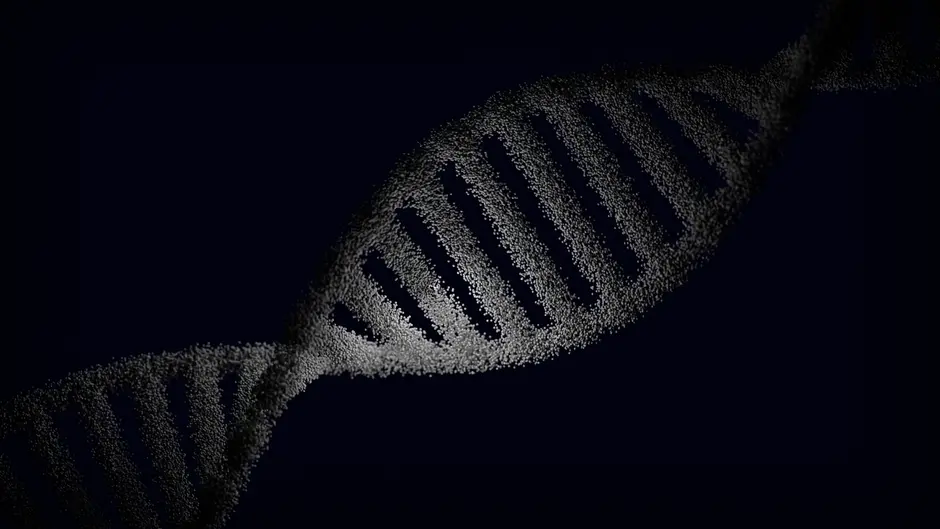
Venture into the microscopic universe of life's fundamental blueprint. How does DNA, a molecule invisible to the naked eye, orchestrate the breathtaking complexity of every living organism? This isn't just about storing genetic data; it's about pioneering the most sophisticated, efficient, and resilient information system known. We delve deep into the core mechanics that elevate DNA beyond a mere molecule, transforming it into an unparalleled biological database.
Forget conventional hard drives and cloud servers. DNA's architecture represents the pinnacle of data storage, combining unparalleled density, unwavering integrity, and dynamic accessibility. We will dissect the ingenious structural designs, the intricate error-correction protocols, and the elegant regulatory mechanisms that empower DNA to not only preserve billions of years of evolutionary history but also to constantly adapt and drive the future of biological innovation. Understand how this master molecule ensures the precise transmission of heritable traits, powering the intricate dance of information from its source to its ultimate manifestation. Prepare to revolutionize your understanding of genetic information, uncovering the secrets that make DNA the ultimate guardian and engine of life itself.
Ingenious Architecture: Encoding Life's Blueprint
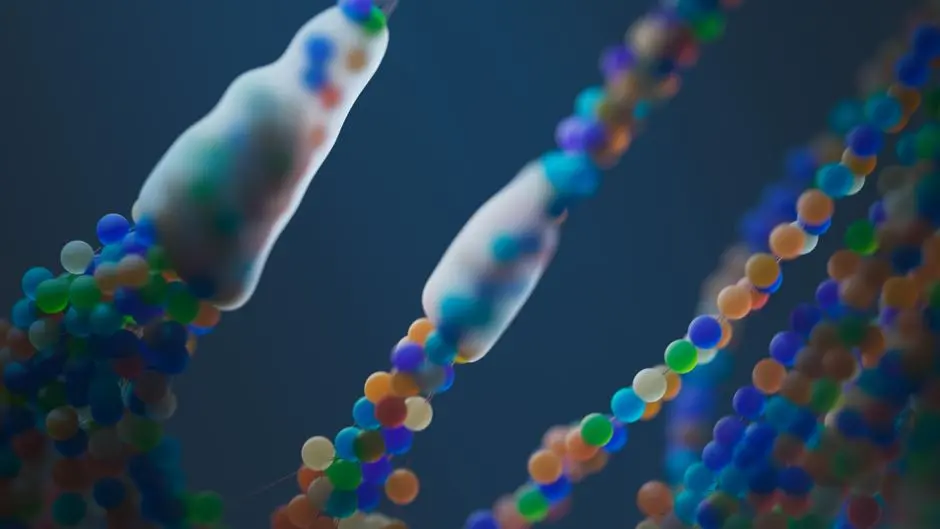
We initiate our exploration by dissecting DNA's fundamental architecture, a masterclass in information density and stability. The double helix, far from a simple twisted ladder, is a precisely engineered structure comprising two polynucleotide strands coiled around a central axis. Each strand forms a backbone of alternating deoxyribose sugars and phosphate groups, conferring immense structural integrity and chemical stability. This phosphodiester linkage renders the molecule resilient to degradation, crucial for long-term data preservation across generations. Attached to each sugar is one of four nitrogenous bases: Adenine (A), Guanine (G), Cytosine (C), and Thymine (T).
The genius lies in the complementary base pairing: Adenine always pairs with Thymine via two hydrogen bonds, and Guanine always pairs with Cytosine via three hydrogen bonds. This A-T, G-C pairing rule ensures faithful replication and provides a self-correcting mechanism during synthesis. Each base pair represents a unit of information, a 'bit' in this biological database. The sheer number of these base pairs—billions in complex organisms—allows for an astronomical storage capacity within a minuscule volume. Consider the human genome, approximately 3 billion base pairs, compressed into a nucleus merely micrometers in diameter. This unparalleled compression ratio is a hallmark of DNA's efficiency, permitting vast quantities of essential information to be compactly stored and readily accessed when needed. We construct this foundational understanding to appreciate DNA's prowess as an information repository.
Unwavering Integrity: DNA's Robust Error Correction
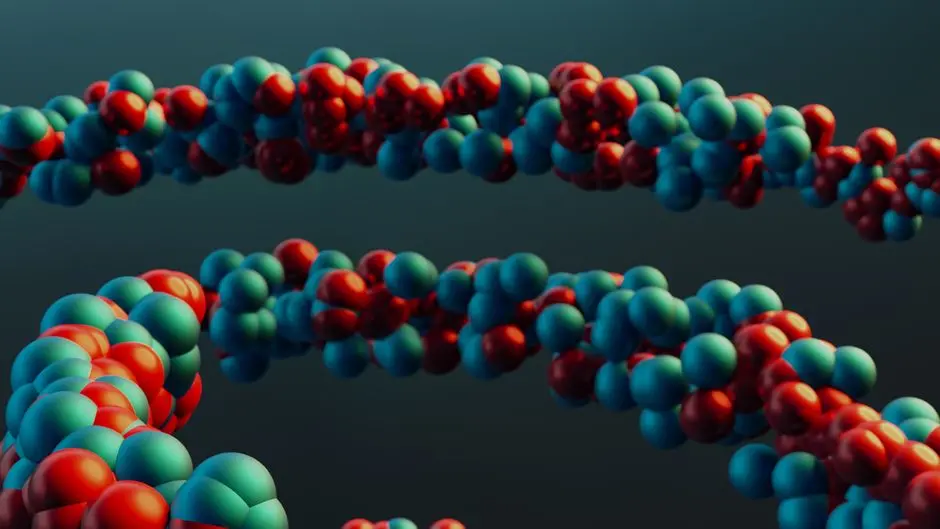
A database is only as valuable as the integrity of its data. DNA, as life's primary information system, possesses an extraordinary suite of mechanisms to maintain its sequence fidelity, countering constant threats from endogenous metabolic byproducts and exogenous environmental agents. The first line of defense is the intrinsic stability of the double helix and the specific complementary base pairing. If a mismatch occurs, the hydrogen bonding patterns are disrupted, signaling an error. DNA polymerase enzymes, critical for replication, are equipped with a 'proofreading' function, akin to an immediate spell-check. They can detect incorrectly paired nucleotides, excise them, and insert the correct ones before proceeding.
Beyond immediate proofreading, a battery of DNA repair systems operates continuously. Mechanisms like mismatch repair correct errors missed by proofreading; base excision repair targets damaged individual bases; and nucleotide excision repair removes larger distortions caused by UV radiation or chemical mutagens. Double-strand breaks, potentially catastrophic, are repaired by homologous recombination or non-homologous end-joining. These redundant and highly specialized systems collectively ensure that the error rate is incredibly low—estimated at approximately one mistake per billion base pairs per replication. This surgical precision in data maintenance underscores DNA's remarkable capability to preserve genetic information with astounding accuracy across countless cellular divisions and generations, a testament to its reliability as a biological archive.
Swift Information Retrieval: Accessing the Genetic Code
An efficient database not only stores vast amounts of data but also provides rapid and precise access to specific information when required. In DNA's case, this access is orchestrated through transcription, the process of synthesizing RNA from a DNA template. Unlike replicating the entire genome, transcription offers highly regulated, localized access to specific genes. RNA polymerase enzymes, guided by promoter sequences, initiate transcription at precise genomic locations, effectively 'querying' the database for specific protein blueprints or functional RNA molecules. This targeted access minimizes resource expenditure and prevents unnecessary data processing.
The speed of RNA synthesis is remarkable; RNA polymerase can synthesize hundreds to thousands of nucleotides per minute, ensuring that cellular demands for specific proteins or regulatory RNAs are met promptly. Moreover, the process is highly dynamic and responsive to environmental cues and developmental programs. Regulatory proteins (transcription factors) bind to specific DNA sequences, either enhancing or repressing gene expression, acting as sophisticated access control mechanisms. This granular control allows cells to retrieve and utilize only the information pertinent to their current state and function, optimizing metabolic efficiency. We observe this system not as a static repository, but as an active, intelligent database, constantly processing and disseminating vital information to power cellular life.
Flawless Replication: Duplicating the Biological Database
The ultimate test of any database's efficiency is its ability to accurately and rapidly duplicate its entire content. DNA excels here through its semiconservative replication mechanism. This elegant process ensures that each new DNA molecule consists of one original strand and one newly synthesized strand. This inherent characteristic not only halves the number of new nucleotides required to be synthesized but also provides a template for proofreading, drastically reducing replication errors. Initiated at specific origins of replication, a complex machinery of enzymes collaborates to unwind the double helix, stabilize the separated strands, and synthesize new complementary strands.
DNA helicase unwinds the helix, DNA primase lays down RNA primers, and DNA polymerase III extends the new strands with incredible speed and accuracy. The leading strand is synthesized continuously, while the lagging strand is synthesized in shorter Okazaki fragments, later joined by DNA ligase. The coordination of these molecular machines ensures that entire genomes, encompassing billions of base pairs, are duplicated in a matter of hours, often with astonishing fidelity. This rapid and precise duplication is fundamental for cell division, growth, and reproduction, guaranteeing the uninterrupted flow of genetic information from parent to daughter cells, and from one generation to the next. We witness here the efficiency of a self-replicating information system, designed for perpetual and accurate propagation.
Dynamic Packaging and Regulation: Optimizing Data Usage
The sheer length of DNA necessitates sophisticated packaging to fit within the confines of a cell nucleus, but this packaging is far more than mere compression. It is a dynamic regulatory layer that critically influences gene expression and data accessibility. We examine how DNA is intricately wound around histone proteins, forming nucleosomes, which are then further compacted into chromatin fibers. This hierarchical organization allows for an astounding level of compaction, reducing a meter of human DNA to a few micrometers. However, the true brilliance lies in its dynamic nature.
Chromatin structure is not static; it undergoes constant remodeling through epigenetic modifications. Acetylation of histones, for instance, loosens chromatin, making underlying genes more accessible for transcription (activating data retrieval). Conversely, DNA methylation often leads to tighter chromatin, repressing gene expression (restricting data access). These reversible modifications function like sophisticated access control and resource allocation mechanisms. They allow cells to selectively 'unarchive' or 'archive' specific regions of the genome in response to developmental cues, environmental stimuli, or cellular needs. This dynamic packaging system represents a powerful layer of regulation, ensuring that the right genes are expressed at the right time and place, optimizing the cell's energetic and material resources while maintaining the integrity of the entire genetic database.
Evolutionary Adaptability: The Living, Learning Database
Unlike static digital databases, DNA is a living, evolving repository, constantly refined and updated through the crucible of evolution. This capacity for change, while preserving core information, is a critical aspect of its efficiency and long-term utility. Mutations, often perceived negatively, are the fundamental source of genetic variation, providing new 'data entries' or 'algorithm updates' for life's operating system. While DNA repair mechanisms meticulously correct most errors, a small, irreducible number of mutations persist, particularly in non-critical regions or those offering a selective advantage.
Natural selection then acts as a powerful optimization algorithm, filtering these new data points. Beneficial mutations, leading to improved survival or reproduction, are retained and amplified within populations, effectively 'committing' advantageous changes to the database. Deleterious mutations are typically purged. This iterative process of random variation and non-random selection drives biological evolution, allowing species to adapt to changing environments, overcome new challenges, and unlock novel biological functions. Thus, DNA is not merely a data storage medium; it is a dynamic, self-optimizing database that continuously learns, adapts, and innovates, embodying billions of years of successful biological engineering. This unparalleled adaptability ensures life's enduring resilience and future trajectory, making DNA the ultimate blueprint for sustained biological efficiency.
Key Takeaways
DNA's Unrivaled Storage Efficiency
DNA utilizes a double helix structure with billions of complementary base pairs (A-T, G-C) to achieve unparalleled information density. This compact molecular design, further compressed into chromatin, allows vast amounts of genetic data to be stored within minuscule cellular volumes, optimizing space and energy for life's most complex instructions.
Robust Data Integrity and Error Correction
DNA's integrity is safeguarded by intrinsic chemical stability, proofreading functions of DNA polymerases during replication, and an arsenal of sophisticated DNA repair mechanisms. These systems collectively minimize errors to an astonishingly low rate, ensuring faithful transmission of genetic information across generations and maintaining the stability of the biological blueprint.
Dynamic Access and Regulated Information Retrieval
Cells access specific genetic information efficiently through highly regulated transcription. RNA polymerase, guided by promoter sequences and transcription factors, selectively synthesizes RNA from DNA templates. This targeted retrieval mechanism prevents unnecessary data processing, optimizing resource allocation and enabling dynamic responses to cellular needs and environmental changes.
High-Fidelity Replication for Seamless Duplication
The semiconservative nature of DNA replication ensures accurate and rapid duplication of the entire genome. Each new molecule retains one original strand, serving as a template for proofreading, greatly enhancing fidelity. This process, orchestrated by a complex enzymatic machinery, is fundamental for cell division, growth, and the precise inheritance of traits.
Adaptive Evolution: The Learning Database
DNA is not a static repository but an evolving database. Mutations introduce genetic variations, and natural selection acts as an optimization algorithm, retaining beneficial changes and purging deleterious ones. This continuous process of variation and selection drives adaptation, allowing organisms to evolve, innovate, and maintain long-term resilience against environmental shifts.
FAQ
-
How does DNA's structure contribute to its storage capacity?
DNA's double helix structure, composed of billions of base pairs (A-T, G-C), allows for an extraordinarily high information density. Each base pair acts as a data unit. The compact coiling of this immense length of DNA around histone proteins into chromatin further compresses this vast dataset, fitting it within the microscopic confines of a cell nucleus while still allowing selective access.
-
What mechanisms ensure the accuracy and integrity of DNA's data?
DNA employs multi-layered systems for data integrity. The precise complementary base pairing (A with T, G with C) acts as a primary self-correction mechanism. During replication, DNA polymerases have a 'proofreading' function to correct errors on the fly. Additionally, an array of dedicated DNA repair systems (e.g., mismatch repair, base excision repair, nucleotide excision repair) continuously scan and rectify damage caused by internal and external factors, maintaining an exceptionally low error rate.
-
How is specific information retrieved from the DNA database?
Specific information is retrieved through transcription, where RNA polymerase enzymes selectively 'read' gene sequences from the DNA template to synthesize RNA molecules. This process is highly regulated by promoter sequences and transcription factors, which act as access controls, ensuring that only relevant genes are expressed at the appropriate time and in the correct cells, optimizing cellular resource allocation.
-
How does DNA efficiently replicate its entire dataset?
DNA replicates through a semiconservative mechanism, where each new DNA molecule consists of one original strand and one newly synthesized strand. This process, facilitated by an enzymatic complex including DNA helicase, primase, and DNA polymerase, ensures rapid, accurate, and high-fidelity duplication of the entire genome, critical for cell division and genetic inheritance.
-
How does DNA's packaging influence its efficiency as a database?
DNA packaging (winding around histones to form chromatin) is a dynamic regulatory mechanism, not just a storage solution. Epigenetic modifications (like histone acetylation or DNA methylation) can dynamically loosen or tighten chromatin, thereby activating or repressing gene expression. This allows cells to control access to specific genetic information, optimizing resource usage and responding to cellular needs and environmental cues.