
Unraveling the Biological Information Flow: From DNA to Cellular Function

Unlock the profound mechanisms governing life itself. Every living cell, from the simplest bacterium to the most complex human neuron, operates on an intricate flow of information. This isn't just a metaphor; it's a precise, highly regulated system where genetic instructions embedded in DNA dictate every aspect of cellular behavior and organismal traits. Ignoring this fundamental process is akin to trying to understand a supercomputer without grasping how its code is processed. We delve deep into the journey from genetic blueprint to functional protein, exposing the critical steps that ensure life's continuity and diversity. Prepare to navigate the core principles that define biological information systems, empowering your understanding of genetics, health, and the future of bio-innovation.
Mapping the Master Plan: The Central Dogma of Molecular Biology
We embark on our exploration by establishing the foundational principle of biological information flow: the Central Dogma of Molecular Biology. This concept, initially proposed by Francis Crick, articulates the primary pathway of genetic information in cells, dictating how the instructions stored in our genes are ultimately translated into the working machinery of life. It’s a unidirectional journey that fundamentally shapes all biological processes.
Understanding the central dogma of molecular biology is not merely an academic exercise; it is the cornerstone for comprehending everything from hereditary diseases to the efficacy of pharmaceuticals. This dogma defines how information flows from DNA to RNA to proteins, a critical sequence of events that underpins cellular identity and function. Picture DNA as the master archive, an invaluable repository of all the organism’s genetic blueprints. When a specific function is required, a copy of the relevant section is made in the form of RNA. This RNA molecule then serves as the direct template for constructing proteins, the dynamic workhorses of the cell.
A simple explanation of transcription and translation reveals these two core phases. Transcription is the initial step where the DNA sequence of a gene is copied into a messenger RNA (mRNA) molecule. Think of it as generating a working copy from the master blueprint. Following this, translation occurs, where the mRNA sequence is decoded to synthesize a specific protein. This intricate ballet of molecules ensures that the genetic code is accurately expressed. This flow is precisely why the central dogma is fundamental to biology; it’s the universal operating system for all known life, dictating development, metabolism, and response to environmental cues. Grasping this core principle empowers us to decipher the language of life itself, forming the basis for advanced biological understanding.
DNA: Architect of Life's Genetic Archives
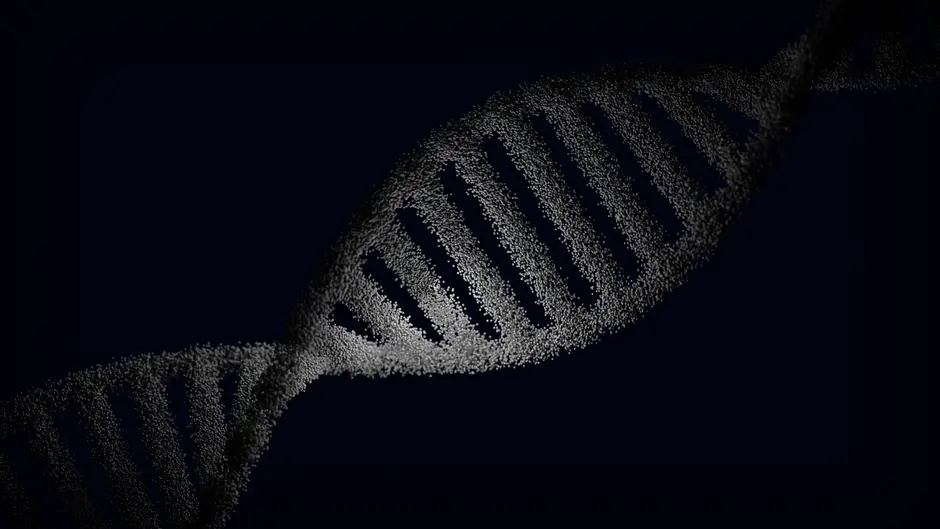
To appreciate the flow of information, we must first understand its source: DNA. This remarkable molecule is not just a chemical compound; it is the universe’s most sophisticated biological hard drive. Its structure, a double helix composed of nucleotide building blocks, allows for an extraordinary density of information storage, making it uniquely suited for its role as the genetic repository for all living organisms.
We recognize how biological information is stored in DNA molecules through the specific sequence of its four nucleotide bases: Adenine (A), Guanine (G), Cytosine (C), and Thymine (T). This linear arrangement acts as a profound genetic alphabet, spelling out instructions for the assembly of proteins and the regulation of gene expression. It’s this precise ordering of bases that explains why nucleotide sequences encode genetic instructions with such fidelity and specificity. Each 'word' or codon within this sequence typically corresponds to a specific amino acid, the building blocks of proteins, or a signal to start or stop a genetic process.
Consider what makes DNA an efficient biological database? It's its stability, immense storage capacity, and precise replication mechanisms. The double-stranded nature provides redundancy and a built-in repair system, minimizing errors. Furthermore, the compact coiling into chromosomes allows for billions of nucleotides to be stored within the microscopic confines of a cell nucleus. Understanding sequence information in genetics is paramount for interpreting the functional implications of genetic variations, identifying disease predispositions, and even tracing evolutionary lineages. This blueprint is not static; it's a dynamic, actively managed database, continually accessed and faithfully copied, ensuring the perpetuation of life's intricate designs.
Transcription: Crafting the Messenger RNA
With DNA established as the central archive, we now pivot to the crucial process of transcription. This is the stage where specific genetic information, held within a DNA gene sequence, is faithfully copied into a molecule of messenger RNA (mRNA). This mRNA then acts as the intermediary, carrying the genetic instructions from the nucleus, where DNA resides, to the ribosomes in the cytoplasm, where proteins are synthesized.
The process initiates when enzymes, primarily RNA polymerase, bind to specific promoter regions on the DNA, signaling the start of a gene. The double helix unwinds locally, exposing the nucleotide sequence. RNA polymerase then synthesizes an RNA strand by pairing complementary RNA nucleotides to the DNA template strand. For instance, an 'A' on the DNA template directs a 'U' (uracil) on the RNA, 'T' directs 'A', 'G' directs 'C', and 'C' directs 'G'. This selective copying ensures that only the necessary genetic information is transcribed at any given time, providing a remarkable level of control over cellular activities.
We observe examples of gene expression in living organisms across all biological domains. In humans, the transcription of the insulin gene in pancreatic cells is a prime example, leading to the production of insulin protein vital for glucose regulation. Similarly, the genes for hemoglobin are transcribed in red blood cell precursors. This selective activation is critical for cell specialization and organ function. Importantly, how cells preserve genetic information during transcription involves sophisticated proofreading mechanisms by RNA polymerase, though not as rigorous as DNA replication. Nevertheless, this careful copying ensures that the vast majority of mRNA molecules accurately reflect the genetic blueprint, safeguarding the integrity of the subsequent protein synthesis.
Translation: From Genetic Code to Functional Protein
Having produced the messenger RNA (mRNA) molecule through transcription, the next pivotal stage in the biological information flow is translation. This intricate process transforms the nucleotide sequence of mRNA into the specific amino acid sequence of a protein, finally bringing the genetic instructions to life as functional molecules. It's where the abstract code becomes concrete cellular machinery.
Translation occurs on ribosomes, complex molecular machines found in the cytoplasm. The mRNA molecule threads through the ribosome, and its genetic code is read in three-nucleotide units called codons. Each codon typically specifies a particular amino acid. Transfer RNA (tRNA) molecules act as crucial adaptors, each carrying a specific amino acid and possessing an anticodon that can base-pair with a complementary mRNA codon. As the ribosome moves along the mRNA, tRNAs sequentially deliver their amino acids, which are then linked together by peptide bonds, forming a growing polypeptide chain.
This entire cascade is a sophisticated illustration of how biological systems store and process information. The mRNA holds the transient, decoded information from DNA, and the ribosomal machinery, along with tRNAs and various protein factors, effectively 'processes' this information, converting it from one molecular language (nucleotides) to another (amino acids). It’s a highly efficient system designed for accuracy and speed. Thus, why DNA can be viewed as an information system becomes strikingly clear, as it not only stores information but also provides the templates for its processing into active components. This complex interplay of molecular components ensures that the cell can synthesize the vast array of proteins required for its structure, enzymatic activities, signaling, and regulation, all derived from the initial genetic blueprint.
Heredity: Perpetuating the Genetic Legacy
The continuous flow of biological information from DNA to function is not confined to a single generation; it is a legacy faithfully passed down through heredity. This transmission of genetic material from parents to offspring is the very essence of life's continuity, ensuring that the blueprints for cellular functions and organismal traits are maintained across time. Without accurate inheritance, evolution itself would cease.
We meticulously study how genetic information passes from one generation to another through the processes of DNA replication and cell division. Before a cell divides, its entire DNA content is duplicated with remarkable precision, ensuring that each daughter cell receives a complete and identical set of genetic instructions. In sexually reproducing organisms, genetic information is recombined from two parents, introducing diversity while maintaining the species' genetic integrity. This precise duplication and distribution mechanism is fundamental to all forms of life.
When we ask what happens during DNA inheritance? we consider the segregation of chromosomes during meiosis and mitosis. During sexual reproduction, each parent contributes half of their genetic material, packaged within gametes (sperm and egg). The fusion of these gametes forms a zygote with a unique combination of genes, which then develops into a new organism. This is a simple explanation of hereditary traits in biology, where characteristics like eye color, height, or susceptibility to certain diseases are passed down. The profound importance of why accurate genetic transmission matters cannot be overstated. Errors in DNA replication or chromosome segregation can lead to genetic mutations, developmental disorders, or even conditions like cancer. Maintaining fidelity in this transmission is paramount for healthy development and species survival, highlighting the relentless biological imperative for precision.
Biology Meets Computation: The Digital Code of Life
As we deepen our understanding of biological information flow, the parallels between biology and computing become strikingly clear. The cell, with its precise regulatory networks, molecular machines, and intricate information processing, functions remarkably like a sophisticated biological computer. Recognizing this intersection forges new avenues for scientific inquiry and technological advancement, pushing the boundaries of what is possible in life sciences.
Exploring what parallels exist between biology and computing? reveals DNA as a storage medium, genes as programs, proteins as molecular machines, and cellular pathways as logic gates. Both systems rely on precise instructions, data storage, retrieval, and processing to achieve complex outcomes. This perspective underpins the entire field of bioinformatics. The introduction to biological information processing emphasizes how cells actively interpret environmental signals, make decisions, and execute responses based on their genetic programming and real-time inputs, mirroring computational algorithms. This is not passive chemistry; it's active computation.
Moreover, how genetic sequences resemble digital code is a concept that resonates deeply with computer scientists. The discrete nature of nucleotides (A, T, C, G) and their specific ordering can be directly mapped to binary code or other digital representations. This allows for computational analysis of genomes, predictive modeling of protein structures, and simulation of cellular dynamics. For future innovators, understanding these core biological principles for data scientists in biotech is no longer optional. It’s fundamental. A data scientist in biotech must grasp not just the data, but the biological context—how genes interact, how proteins fold, and how cells communicate—to derive meaningful insights and develop truly transformative solutions. We are leveraging the digital paradigm to unlock biological secrets.
Interdisciplinary Frontiers: Powering the Future of Life Sciences
The journey from DNA to function is not merely a descriptive pathway but a dynamic system ripe for interdisciplinary exploration. The insights gained from understanding biological information flow are rapidly transforming fields beyond traditional biology, fueling innovations in medicine, biotechnology, and even artificial intelligence. This convergence is where the most profound breakthroughs of our era are currently being forged, requiring a holistic understanding across diverse disciplines.
For aspiring professionals, knowing basic biology concepts every bioinformatician should know is non-negotiable. Bioinformatics is not just about crunching numbers; it's about interpreting biological data within its proper context. This requires a solid grasp of genetics, molecular biology, and cell biology to design effective algorithms, analyze genomic sequences, and predict protein functions. Similarly, why understanding cells and DNA matters in computational biology cannot be overstated. Computational models are only as good as the biological realities they represent. A deep appreciation for cellular mechanisms ensures that algorithms are biologically plausible and yield actionable insights, rather than merely statistical correlations.
Furthermore, how biological knowledge supports AI in life sciences is a rapidly expanding domain. AI models, particularly in drug discovery, personalized medicine, and synthetic biology, are dramatically enhanced by integrating expert biological understanding. This fusion accelerates the identification of therapeutic targets, optimizes genetic engineering, and predicts disease trajectories with unprecedented accuracy. These are foundational biology for interdisciplinary research imperatives. We see examples of inheritance patterns in living organisms studied through genetic algorithms and population genetics, yielding insights into disease prevalence and evolution. By integrating deep biological knowledge with advanced computational methods, we are not just observing life; we are actively engineering its future, pushing the boundaries of what living systems can achieve.
Key Takeaways
The Central Dogma: Life's Core Instruction Set
The central dogma describes the flow of genetic information: DNA → RNA → Protein. DNA stores the master blueprint, RNA acts as a messenger, and proteins perform cellular functions. This process, involving transcription and translation, is universal and fundamental to all life.
DNA: The Ultimate Genetic Database
DNA stores biological information through the precise sequence of its nucleotide bases (A, T, C, G). Its double-helix structure provides stability, vast storage capacity, and efficient replication, making it an ideal biological database that encodes all genetic instructions.
From Gene to Action: Transcription and Translation
Transcription copies specific DNA genes into mRNA molecules, acting as a working draft. Translation then decodes this mRNA sequence on ribosomes, using tRNA to assemble amino acids into functional proteins. This regulated flow ensures specific genes are expressed as needed.
Heredity: Ensuring Life's Continuity
Genetic information is accurately replicated and transmitted from parents to offspring, a process known as heredity. This ensures the continuity of species and the passing on of traits. Accurate genetic transmission is crucial to prevent mutations and maintain healthy development.
Biology as an Information System
Biological systems parallel computational ones: DNA is a data storage medium, genes are programs, and cellular processes are information processing algorithms. Understanding these parallels is vital for bioinformatics, computational biology, and applying AI in life sciences, bridging foundational biology with advanced technology.
FAQ
-
What is the primary role of DNA in biological information flow?
DNA serves as the stable, long-term genetic archive of the cell. It contains all the instructions (genes) necessary for an organism's development, survival, and reproduction. Think of it as the master blueprint from which all other instructions are derived.
-
How does RNA act as an intermediary in this process?
RNA, specifically messenger RNA (mRNA), acts as an intermediate messenger. It carries a copied segment of genetic information from the DNA in the nucleus to the ribosomes in the cytoplasm, where protein synthesis occurs. This protects the original DNA while allowing its information to be utilized.
-
What is the difference between transcription and translation?
Transcription is the process of copying a gene's DNA sequence into an RNA molecule. It's like rewriting a section of the master blueprint into a working draft. Translation is the process where the genetic code in the mRNA molecule is read and used to synthesize a specific protein. This is akin to building the final product from the working draft.
-
Why is the central dogma considered 'central' to biology?
The central dogma is fundamental because it describes the universal pathway of genetic information flow in nearly all known living organisms. It explains how genetic instructions are expressed to create the proteins that carry out virtually all cellular functions, thus dictating an organism's traits and survival. It's the core operational principle of life.
-
How is biological information preserved and passed on?
Biological information is preserved through DNA replication, a highly accurate process that duplicates the entire genome before cell division. It is passed on through heredity, where replicated DNA is distributed to daughter cells during mitosis or, in the case of sexual reproduction, recombined and transmitted to offspring via gametes, ensuring the continuity of genetic traits across generations.