
> Basic Biology Concepts > Introduction to Biological Information Systems > Forge Genetic Precision: Navigate the Perils of Imprecise Transmission
Forge Genetic Precision: Navigate the Perils of Imprecise Transmission

Every living cell operates on a meticulously crafted blueprint: its DNA. This complex molecular code dictates the very essence of life, from a bacterium's metabolism to the intricate neural networks of the human brain. But what if this blueprint, passed from one generation to the next, were riddled with errors? The consequences would be catastrophic, jeopardizing the integrity of every biological process and undermining the continuity of life itself. We embark on a critical exploration of why unwavering accuracy in genetic transmission isn't merely a biological ideal, but an existential imperative.
This deep dive will uncover the profound mechanisms ensuring fidelity and the devastating implications when they falter. We will reveal how life's incredible resilience and adaptability are intrinsically linked to the precise replication and distribution of genetic material, a foundational principle that underpins the entire journey of biological information from DNA to functional outcomes. Join us as we dissect the molecular ballet of inheritance, illuminating why every nucleotide counts in the grand tapestry of life. We conquer the challenge of understanding this fundamental process, equipping you with insights into the very bedrock of biological success.
The Blueprint's Integrity: Why Replication Fidelity is Non-Negotiable
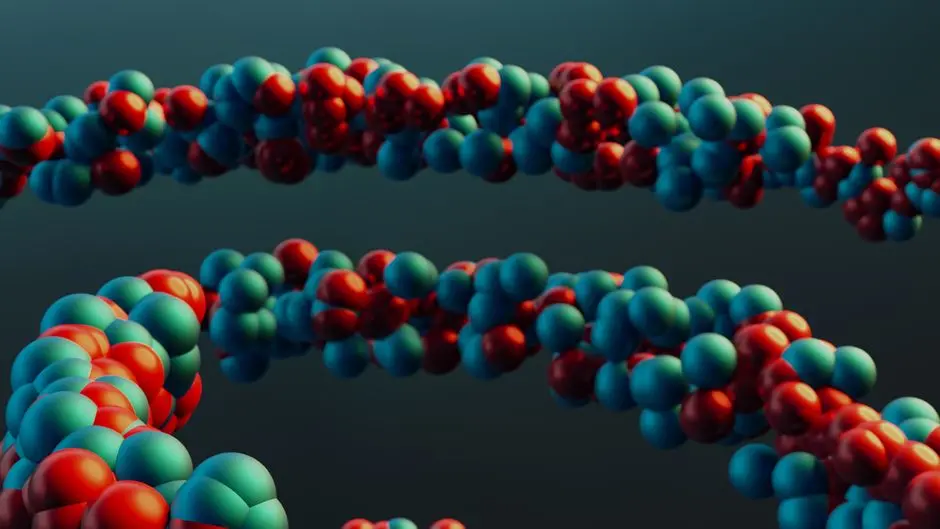
We initiate our conquest by scrutinizing DNA replication, the foundational process that guarantees the faithful transmission of genetic information. The double helix, unraveling like a meticulously planned strategic map, serves as a template for two new strands. This isn't a casual duplication; it's an operation of staggering precision. The primary architects are
DNA polymerases, enzymes that synthesize new DNA strands by adding nucleotides complementary to the template. Their prowess is remarkable, but not infallible. A classic error rate, approximately one mismatched base pair per 100,000 nucleotides, might seem alarming, yet biological systems deploy formidable defenses.
Our cells activate a layered defense system. First, DNA polymerases possess an intrinsic
proofreading capability. They act as vigilant sentinels, immediately detecting and excising incorrectly paired nucleotides before proceeding. This dramatically reduces errors to about one in 10 million. Second, post-replication
mismatch repair systems scan the newly synthesized DNA. These systems identify and correct remaining errors, distinguishing the new strand from the old (often by methylation patterns on the template strand). This final sweep hones the accuracy to an astonishing one error per 109 to 1010 base pairs. We optimize this understanding: any deviation from this near-perfect fidelity at the replication stage creates a ripple effect, potentially forging a permanent mutation in the germline or somatic cells, dictating the very fate of the organism.
From Code to Function: The Cascading Impact of Transcriptional and Translational Accuracy
Beyond replication, the integrity of genetic information hinges on its precise expression, a two-step process: transcription and translation. First,
transcription converts a DNA sequence into an RNA molecule.
RNA polymerase, while generally accurate, operates with slightly less fidelity than DNA polymerase, typically making one error per 10,000 to 100,000 nucleotides. While many RNAs are transient, errors in crucial mRNA sequences can set the stage for dysfunctional proteins.
The ultimate showdown for genetic accuracy occurs during
translation, where mRNA's nucleotide sequence is decoded into a specific amino acid sequence to build a protein. This relies on the
genetic code, a universal set of rules where three-nucleotide sequences (
codons) specify particular amino acids. Transfer RNAs (
tRNAs) act as molecular adaptors, bringing the correct amino acid to the ribosome based on the mRNA codon. An error here – a single base substitution, insertion, or deletion – can unleash devastating consequences. A
point mutation in the mRNA might lead to a different amino acid (missense mutation), a premature stop codon (nonsense mutation), or no change at all (silent mutation). However,
frameshift mutations, caused by insertions or deletions not in multiples of three, are particularly insidious, irrevocably altering the downstream amino acid sequence and almost invariably yielding a non-functional or severely truncated protein. We conquer this challenge by understanding that protein functionality, the very engine of cellular life, is entirely predicated on this precise, sequential information transfer. Each misstep in this cascade can dismantle cellular machinery, impacting everything from enzyme activity to structural integrity.
The Evolutionary Tightrope: Balancing Stability and Variation
While our focus champions genetic accuracy, we must acknowledge a critical paradox:
mutation, the very source of transmission errors, also fuels evolution. These spontaneous changes in the DNA sequence are the raw material for
genetic variation. Without them, populations would be genetically uniform, incapable of adapting to changing environments, and natural selection would have no traits to act upon. We forge this understanding: evolution walks a tightrope, requiring enough mutation to generate diversity but not so much that it destabilizes the species.
The vast majority of mutations are neutral or deleterious.
Deleterious mutations reduce an organism's fitness, hindering its survival or reproduction. These are typically purged from the population by
natural selection. For instance, mutations causing severe developmental defects or loss of essential protein function are often rapidly eliminated. Only a tiny fraction of mutations confer a survival advantage, allowing organisms to better adapt to new pressures – perhaps resistance to a pathogen, or enhanced nutrient utilization. This delicate balance underscores the existential importance of high-fidelity genetic transmission. If error rates were significantly higher, the accumulation of harmful mutations would overwhelm the beneficial ones, leading to what geneticists term a
mutational meltdown, driving species to extinction. We optimize our perspective: life thrives not by eliminating all error, but by controlling its frequency and ensuring robust mechanisms to correct the most damaging ones, thus preserving a stable genetic core while allowing for crucial evolutionary innovation.
Cellular Defenses and Human Health: The Cost of Compromised Transmission
The implications of inaccurate genetic transmission manifest profoundly in human health, ranging from debilitating
inherited genetic disorders to the pervasive threat of
cancer. Our cells deploy sophisticated
DNA damage response (DDR) pathways, a network of proteins designed to detect, signal, and repair DNA lesions before they become permanent mutations. These pathways represent a crucial layer of defense, a biological rapid-response team.
When these defense mechanisms are overwhelmed or compromised, the consequences are dire. Consider cancer: it is fundamentally a disease of uncontrolled cell growth driven by the accumulation of somatic mutations. Mutations in
tumor suppressor genes (like p53, often called 'the guardian of the genome') remove critical brakes on cell division, while mutations in
oncogenes (like RAS) press the accelerator. Each aberrant cell division is a roll of the genetic dice, potentially pushing the cell closer to malignancy. Similarly, errors in germline cells, those that give rise to sperm and egg, are passed down to offspring, causing
hereditary diseases such as cystic fibrosis, sickle cell anemia, or Huntington's disease. Even the process of
aging is intimately linked to the progressive accumulation of DNA damage and errors in genetic transmission over a lifetime, eroding cellular function and contributing to age-related pathologies. We déclenchons this understanding: maintaining the integrity of genetic information is not merely an abstract biological concept but a direct determinant of our health, longevity, and the continuity of healthy generations. Mastering these insights empowers us to confront and potentially mitigate the biological costs of imprecise genetic transmission.
Key Takeaways
Unwavering DNA Replication Fidelity
Genetic transmission demands near-perfect DNA replication, achieved by DNA polymerase's intrinsic proofreading and sophisticated post-replication mismatch repair systems. This ensures a remarkably low error rate (1 in 109-1010 base pairs), critical for maintaining genetic stability across generations and within an organism's lifetime. Any deviation is a direct threat to cellular and organismal integrity.
Precise Genetic Expression is Paramount
Beyond DNA replication, accuracy in transcription and translation is non-negotiable. The precise conversion of DNA to mRNA (transcription) and then to protein (translation) via the genetic code dictates protein function. Errors, especially frameshift mutations, can severely compromise protein structure and function, leading to cellular dysfunction and disease, impacting the very machinery of life.
Evolution's Delicate Balance: Mutation and Selection
While mutations introduce genetic variation essential for evolution and adaptation, the vast majority are deleterious. Life maintains a critical balance: low mutation rates preserve genomic stability, while beneficial mutations, though rare, allow species to adapt and survive. Excessive error would lead to genetic meltdown, highlighting the imperative for accurate transmission while allowing for evolutionary innovation.
Health Imperatives: The Cost of Genomic Compromise
Compromised genetic transmission directly impacts human health, causing inherited genetic disorders from germline mutations and driving diseases like cancer through somatic mutations. Cellular DNA damage response pathways actively repair errors, but their failure leads to disease and contributes to aging. Maintaining genomic integrity is a fundamental determinant of health and generational continuity.
FAQ
-
Why isn't a single DNA replication error always harmful?
Not all DNA replication errors are harmful because of the redundancy of the genetic code and the location of the error. A 'silent mutation' might occur where a base change still codes for the same amino acid, having no impact on the resulting protein. Also, errors in non-coding regions of DNA might not affect gene expression or function. Additionally, many errors are efficiently corrected by proofreading and repair mechanisms before they can cause damage.
-
How do cells primarily correct errors during DNA replication?
Cells employ a multi-layered correction system during DNA replication. First, DNA polymerases have a 'proofreading' function, immediately checking newly added nucleotides and removing incorrect ones. Second, post-replication mismatch repair systems scan the newly synthesized DNA for remaining errors, identifying and correcting them by distinguishing the new strand from the template strand, often through methylation patterns.
-
What are the main consequences of transcription or translation errors?
Errors during transcription (DNA to RNA) can lead to faulty mRNA, while errors during translation (RNA to protein) can result in an incorrect amino acid sequence. These errors can produce non-functional proteins, misfolded proteins, or truncated proteins. Such dysfunctional proteins can disrupt vital cellular processes, impede enzyme activity, alter cell structure, and ultimately contribute to disease or cellular dysfunction.