
> Basic Biology Concepts > Introduction to Biological Information Systems > Mastering Biological Information Processing: Core Concepts Unveiled
Mastering Biological Information Processing: Core Concepts Unveiled

We are forging an essential path to understanding life itself. Each cell is a sophisticated information processing factory, a marvel of logic and efficiency. Uncover the mysteries behind how organisms encode, transmit, and utilize vital data for their survival and reproduction. This article doesn't just skim the surface; it plunges you into the heart of the molecular mechanics that govern all biological functions, from the most intimate DNA strand to the most complex cellular networks.
We dismantle the systems that direct growth, development, and environmental response, revealing how nanometer-scale encoded information generates entire organisms. Prepare to navigate the intricate architectures where every gene, every protein, plays a precise role in the symphony of life. We explore the crucial mechanisms of biological information flow from DNA to function, offering an insider's perspective on the natural optimization strategies that define our existence. This journey will transform your perception of biology, arming you with a surgical understanding of the informational processes that animate all living things.
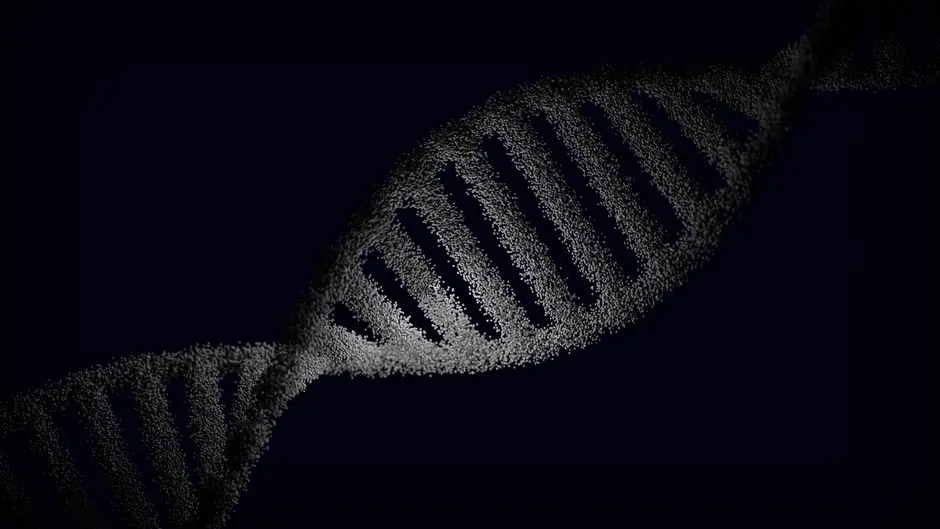
Deciphering Life's Code: The Foundations of Biological Information
We initiate our exploration by establishing a foundational understanding of biological information. What precisely constitutes 'information' in a biological context? It is more than just data; it is structured knowledge, encoded within molecular components, capable of directing processes and generating function. We identify three primary carriers of this vital information:
- DNA (Deoxyribonucleic Acid): The ultimate archive, storing the complete genetic blueprint of an organism in its nucleotide sequence. Its double-helical structure ensures robust storage and replication fidelity.
- RNA (Ribonucleic Acid): A versatile intermediary, translating the archived DNA instructions into functional directives. Various RNA types—mRNA, tRNA, rRNA, and regulatory RNAs—each possess specific information-carrying and processing roles.
- Proteins: The ultimate effectors, executing the vast majority of cellular functions. Their intricate three-dimensional structures, determined by amino acid sequences, embody operational information, dictating catalytic activity, structural integrity, and signaling capabilities.
We dissect the critical distinction between structure and function. Biological information is not merely a sequence of bases or amino acids; it is the capacity of that sequence to fold, interact, and perform a specific role. Consider a common pitfall: equating information solely with genetic code. While DNA is paramount, the processing of this information involves complex layers of regulation, modification, and interaction that extend far beyond mere transcription and translation. We grasp that understanding biological information processing means comprehending how these molecular agents collectively store, transmit, and interpret the instructions necessary for life’s intricate ballet.
The Central Dogma: Engineering Information Flow from DNA to Protein
We now confront the bedrock principle governing the primary flow of genetic information: the Central Dogma of Molecular Biology. This concept, initially articulated by Francis Crick, outlines the fundamental transfers of information within cells:
- Replication: The precise duplication of DNA, ensuring that genetic information is faithfully passed from one generation of cells to the next. This process demands extraordinary fidelity, yet also allows for rare mutations—the raw material for evolution. Enzymes like DNA polymerase execute this with remarkable accuracy, proofreading to correct errors.
- Transcription: The synthesis of an RNA molecule from a DNA template. Here, the genetic information encoded in a gene is transcribed into a messenger RNA (mRNA) molecule. RNA polymerase orchestrates this, selecting the correct DNA strand and synthesizing a complementary RNA sequence. We highlight that this step is highly regulated, determining which genes are expressed and when.
- Translation: The process by which the mRNA sequence is decoded to synthesize a specific protein. Ribosomes, assisted by transfer RNA (tRNA) molecules carrying specific amino acids, read the mRNA sequence in groups of three nucleotides (codons) and assemble the corresponding polypeptide chain. This is where the linear information of the nucleic acid sequence is converted into the functional, three-dimensional structure of a protein.
We critically evaluate the 'unidirectional' nature often associated with the Central Dogma. While the primary flow is indeed DNA > RNA > Protein, we acknowledge exceptions like reverse transcription (RNA > DNA) observed in retroviruses, and direct RNA replication. These deviations underscore life's adaptability but do not negate the fundamental paradigm. Our expert perspective emphasizes that the dogma provides the essential framework for understanding how raw genetic information is systematically converted into the operational machinery of the cell, a process vital for all cellular activities.

Regulatory Choreography: Orchestrating Biological Information Control
Our journey extends beyond the simple flow of information to its sophisticated control. Biological systems do not merely process information; they regulate its expression with exquisite precision, a choreography essential for development, adaptation, and disease prevention. We uncover the multi-layered mechanisms that dictate when, where, and how genetic information is utilized:
- Gene Regulation: This encompasses a vast array of processes that switch genes on or off, modulating the quantity and timing of protein production. We focus on transcriptional regulation (e.g., transcription factors binding to promoters and enhancers), post-transcriptional regulation (e.g., mRNA stability and processing), translational regulation (e.g., microRNAs), and post-translational modifications (e.g., phosphorylation, glycosylation that alter protein activity or stability).
- Epigenetics: Beyond the DNA sequence itself, epigenetic modifications like DNA methylation and histone modifications profoundly influence gene expression patterns. These changes, often heritable, represent an additional layer of information processing, responding to environmental cues and shaping cellular identity without altering the underlying genetic code.
- Signaling Pathways: Cells constantly communicate, receiving and interpreting signals from their environment and from other cells. These intricate networks—involving receptors, kinases, and transcription factors—transmit information from the cell surface to the nucleus, triggering specific cellular responses. Errors in these pathways are common culprits in diseases like cancer.
We dissect the concept of feedback loops—positive and negative—as crucial control mechanisms. Negative feedback loops maintain homeostasis by dampening responses, while positive feedback loops amplify signals, driving processes to completion. Understanding this regulatory choreography is paramount; it reveals how life optimizes resource allocation, responds dynamically to challenges, and maintains the delicate balance required for sustained viability. This complex interplay ensures that information processing is not static, but a dynamic, adaptive system.
Beyond Molecules: Processing Biological Information with Computational Tools
We culminate our exploration by addressing the contemporary frontier: how we, as biological strategists, extract and process vast quantities of biological information using computational approaches. The sheer volume and complexity of data generated by modern genomic, transcriptomic, and proteomic technologies render manual analysis obsolete. We leverage two powerful interdisciplinary fields:
- Bioinformatics: This discipline develops and applies computational tools for the management, analysis, and interpretation of biological data. We employ bioinformatics for tasks such as sequence alignment (e.g., identifying homologous genes), phylogenetic tree construction (tracing evolutionary relationships), protein structure prediction, and genomic annotation. It transforms raw sequence data into meaningful biological insights.
- Systems Biology: Moving beyond individual molecules, systems biology aims to understand biological systems as a whole, focusing on the interactions between components. It constructs mathematical models to simulate and predict the behavior of complex networks, such as metabolic pathways or gene regulatory networks. This holistic approach is critical for understanding emergent properties that cannot be deduced from studying components in isolation.
We acknowledge a common error: mistaking data aggregation for true information processing. The challenge lies not just in collecting data, but in formulating hypotheses, building predictive models, and ultimately deciphering the functional logic encoded within the data. Our expert advice emphasizes the integration of wet-lab experimentation with computational analysis. We advocate for a robust understanding of statistical methods and programming languages (e.g., Python, R) as indispensable tools for any aspiring biological information architect. This fusion of biology and computation unlocks unprecedented capabilities to understand, predict, and even engineer biological systems, propelling us into an era of data-driven biological discovery.
Key Takeaways
Core Principles of Biological Information
We establish biological information as structured knowledge encoded in DNA, RNA, and proteins, driving cellular functions. DNA stores the blueprint, RNA acts as an intermediary, and proteins execute tasks based on their 3D structures. The challenge lies in comprehending how sequences translate into functional activity.
Mechanisms of Information Transfer
The Central Dogma outlines the fundamental flow: DNA replication, transcription (DNA to RNA), and translation (RNA to protein). While primarily unidirectional, we acknowledge crucial exceptions like reverse transcription. This framework reveals how genetic instructions become the cell's operational machinery.
Regulation and Control
Beyond simple flow, biological systems meticulously regulate information use. Gene regulation, epigenetics, and complex signaling pathways orchestrate gene expression, cellular identity, and communication. Feedback loops, both positive and negative, ensure dynamic adaptation and homeostasis, optimizing resource allocation and response to environmental cues.
Future of Information Processing
We leverage bioinformatics for managing and analyzing vast biological data, from sequence alignment to protein structure prediction. Systems biology provides a holistic view, modeling complex interactions to understand emergent properties. Integrating computational tools with experimental biology is paramount for data-driven discovery and engineering biological systems.
FAQ
-
What defines biological information?
Biological information is the organized data encoded within biological molecules (primarily DNA, RNA, and proteins) that guides the development, function, and reproduction of an organism. It's not just a sequence, but the capacity of that sequence to perform specific functions or direct processes within a living system.
-
Is biological information processing similar to computer processing?
While both involve encoding, transmitting, and decoding, biological information processing is vastly more complex, parallel, and often analog. It operates in a noisy, dynamic environment, utilizing molecular interactions rather than electrical signals, and its 'memory' and 'logic gates' are distributed throughout the cellular machinery. Computers are digital and serial; biological systems are often analog and highly parallel.
-
What is the 'Central Dogma' and why is it important?
The Central Dogma describes the primary flow of genetic information: DNA is replicated, transcribed into RNA, and then translated into protein. It's crucial because it outlines the fundamental pathway by which genetic instructions are converted into the functional molecules that execute nearly all cellular processes, forming the bedrock of molecular biology.
-
How do cells 'read' and 'interpret' biological information?
Cells read information through specific molecular interactions. For instance, enzymes (like DNA polymerase, RNA polymerase) recognize specific DNA sequences. Ribosomes read mRNA codons. Receptors recognize signaling molecules. Interpretation involves a cascade of biochemical reactions that lead to a specific cellular response, effectively translating molecular recognition into biological action.