
> Basic Biology Concepts > Introduction to Biological Information Systems > Mastering Genetic Sequence Data: Decoding Life's Instructions
Mastering Genetic Sequence Data: Decoding Life's Instructions

The very essence of life, its complexity and breathtaking diversity, is encoded within sequences. These intricate strings of nucleotides and amino acids dictate every cellular function, every inherited trait, every subtle nuance of an organism. Yet, to truly leverage this biological treasure, we must first master its language.
This deep dive into understanding sequence information in genetics equips you with the foundational expertise to navigate the genomic landscape. We embark on a journey from the fundamental structure of DNA to the sophisticated interplay of regulatory elements, revealing how life's directives are meticulously stored and expressed. Discover the power of decoding these sequences, from identifying disease-causing mutations to engineering novel biological systems.
This article does not merely describe; it empowers. It builds your capacity to interpret the molecular blueprints that define existence, illuminating the critical process of how biological information flows from DNA to function. Forge ahead with us, as we unlock the profound implications of genetic sequencing, transforming raw data into profound biological insight.
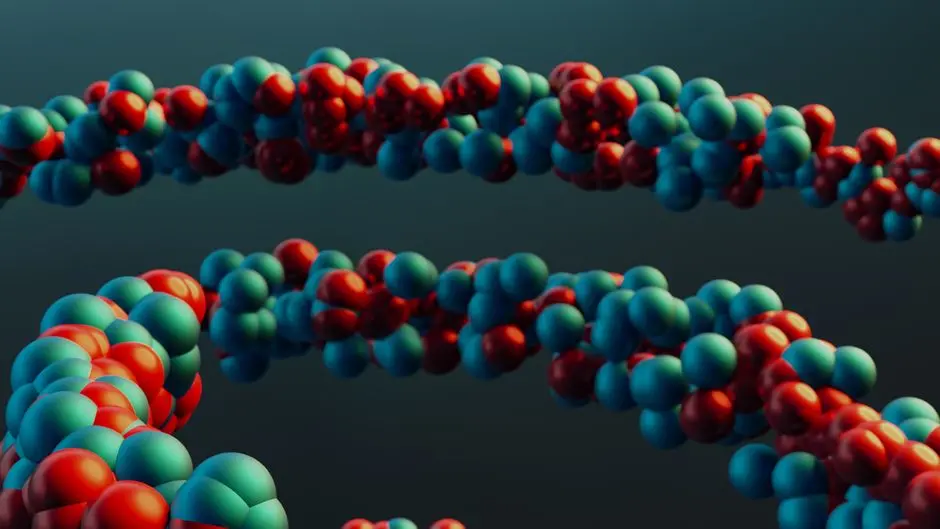
Forge the Blueprint: DNA, RNA, and the Central Dogma
We initiate our conquest of genetic information by grounding ourselves in its fundamental storage mechanism: the nucleic acid sequence. At the core,
DNA (Deoxyribonucleic Acid) stands as the robust, double-stranded helix, the primary repository of an organism's genetic instruction set. Each strand comprises a sequence of four nucleotide bases: Adenine (A), Guanine (G), Cytosine (C), and Thymine (T). The order of these bases is not arbitrary; it is the definitive code of life. This sequence fidelity is paramount; even a single base alteration can cascade into profound biological consequences.
RNA (Ribonucleic Acid), in its various forms (mRNA, tRNA, rRNA), acts as the crucial intermediary and executor of these instructions. Unlike DNA, RNA is typically single-stranded and utilizes Uracil (U) instead of Thymine. The dynamic interplay between DNA and RNA orchestrates the central dogma of molecular biology, a foundational principle:
- Replication: The meticulous process where DNA faithfully duplicates itself, ensuring genetic continuity across generations. We replicate the entire genomic library.
- Transcription: The selective copying of specific DNA segments (genes) into messenger RNA (mRNA) molecules. We transcribe only the relevant chapters.
- Translation: The intricate process where mRNA sequences are decoded by ribosomes to synthesize specific proteins, the workhorses of the cell. We translate the message into functional tools.
Understanding these stages is not merely academic; it is the strategic imperative for comprehending how static sequence information translates into dynamic cellular function. The precision of each step dictates the accuracy of the final protein product, an undeniable truth we leverage for biotechnological advancement. We demand fidelity in this information transfer to maintain biological integrity.
Decode the Message: Unraveling the Genetic Code's Nuances
To truly master sequence information, we must delve into the mechanism by which nucleotide sequences translate into the language of proteins. This is where the
Genetic Code emerges as our Rosetta Stone. It is a set of rules dictating how a sequence of three nucleotides, known as a
codon, specifies a particular amino acid or a termination signal during protein synthesis. With four possible bases, there are <strong>43 = 64 unique codons</strong>.
Key characteristics of this code are critical for our interpretation:
- Triplet Nature: Information is read in non-overlapping groups of three bases. A change in the reading frame—a
frameshift mutation—is often catastrophic because it alters every subsequent codon. - Degeneracy (Redundancy): Most amino acids are specified by more than one codon. For instance, six different codons can specify Leucine. This redundancy offers a protective buffer against certain point mutations. We recognize this as a built-in robustness in the biological system.
- Universality: The genetic code is remarkably consistent across nearly all life forms, from bacteria to humans, underscoring our shared evolutionary heritage. We exploit this universality in genetic engineering.
- Start and Stop Codons: AUG typically signals the start of translation (and encodes Methionine), while UAA, UAG, and UGA serve as stop signals, halting protein synthesis.
Common pitfalls arise when interpreting mutations. A
point mutation (single base change) can be
synonymous (silent, due to degeneracy),
missense (codes for a different amino acid), or
nonsense (introduces a premature stop codon). We must meticulously analyze the position and type of mutation, discerning its potential impact on protein structure and function. Our objective is not just to observe, but to precisely predict the consequences of these minute alterations, transforming raw sequence data into actionable biological understanding.

Master Regulatory Logic: Beyond Coding Sequences to Gene Control
Our understanding of sequence information must extend far beyond merely coding regions. A substantial portion of the genome, once dismissed as 'junk DNA,' harbors crucial
regulatory sequences and
non-coding RNAs that dictate the intricate dance of gene expression. We now recognize that these elements are not passive; they are the conductors of the genomic orchestra, determining when, where, and how intensely genes are activated or silenced.
Crucial regulatory elements include:
- Promoters: DNA sequences immediately upstream of a gene, acting as binding sites for RNA polymerase and transcription factors, initiating transcription.
- Enhancers: Distal DNA sequences that can dramatically boost gene expression, often looping to interact with promoters.
- Silencers: Similar to enhancers but actively suppress gene transcription.
- Introns and Exons: Introns are non-coding sequences within genes that are spliced out from mRNA, while exons are the coding segments retained.
Alternative splicing of exons generates multiple protein isoforms from a single gene, exponentially expanding protein diversity.
Furthermore, the world of
non-coding RNAs (ncRNAs) adds another layer of regulatory complexity.
MicroRNAs (miRNAs), for example, are short sequences that fine-tune gene expression by silencing mRNA.
Long non-coding RNAs (lncRNAs) exhibit diverse functions, from chromatin remodeling to scaffolding regulatory complexes. We also confront the dynamic field of
epigenetics, where chemical modifications to DNA (e.g., methylation) or histones can alter gene expression without changing the underlying DNA sequence. A common error is to focus solely on protein-coding genes; we must expand our analytical scope to include these powerful regulatory levers. Integrating this knowledge unlocks a holistic view of gene regulation, allowing us to pinpoint the true control nodes within the genome.

Leverage Genomic Data: Advanced Sequencing and Bioinformatic Strategies
The revolution in
sequencing technologies has fundamentally transformed our ability to capture and analyze sequence information. From the pioneering days of Sanger sequencing, which meticulously elucidated individual fragments, we have advanced to
Next-Generation Sequencing (NGS) platforms. These high-throughput methods simultaneously sequence millions to billions of DNA fragments, generating petabytes of raw data. We now perform whole-genome sequencing (WGS), whole-exome sequencing (WES), and RNA sequencing (RNA-seq), each providing a unique window into the genomic and transcriptomic landscape.
However, raw sequence data is merely the starting point. The true power lies in its interpretation, a domain governed by
bioinformatics. We deploy sophisticated computational tools and algorithms for:
Sequence Alignment: Comparing a newly sequenced read against a reference genome to identify its origin and variations (e.g., BLAST, Bowtie).
Variant Calling: Pinpointing single nucleotide polymorphisms (SNPs), insertions, deletions (indels), and structural variants (e.g., GATK, FreeBayes).
Gene Annotation: Identifying and labeling genes, regulatory elements, and other functional regions within the sequence.
Functional Prediction: Inferring the potential biological impact of identified variants or novel sequences.
These tools empower us to translate complex genomic data into meaningful biological insights, driving progress in diverse fields:
Diagnostics: Identifying genetic predispositions or disease-causing mutations.
Personalized Medicine: Tailoring treatments based on an individual's unique genomic profile.
Drug Discovery: Pinpointing therapeutic targets and assessing drug efficacy.
Synthetic Biology: Engineering novel genetic constructs for desired biological outcomes.
A critical best practice is stringent data quality control and a multi-faceted analytical approach. We avoid over-reliance on single tools, integrating diverse computational strategies to ensure robust and verifiable conclusions from the vast ocean of genomic information.
Optimize Interpretation: Strategic Insights for Sequence Analysis Excellence
Navigating the complex realm of genetic sequence information demands not only technical proficiency but also strategic foresight. We must anticipate challenges and implement robust methodologies to transform data into definitive biological action. Here, we outline insider tips and best practices, alongside common pitfalls to rigorously avoid.
Common Pitfalls to Avoid:
Ignoring Non-Coding Regions: A classic error is to solely focus on protein-coding sequences. Crucial regulatory elements (promoters, enhancers), ncRNAs, and epigenetic modifications in non-coding DNA profoundly influence gene expression and disease, yet are often overlooked. We broaden our scope to capture the full picture.
Lack of Contextual Interpretation: A genetic variant is rarely an isolated event. Its impact depends on the specific cellular context, tissue type, and even the individual's lifestyle. Avoid interpreting variants in a vacuum; integrate clinical, transcriptomic, and proteomic data.
Overlooking Data Quality Control: Impure samples, low sequencing depth, or inaccurate base calling can lead to spurious variants. Rigorous quality metrics (e.g., Phred scores, read depth, coverage uniformity) are non-negotiable before any analysis. We validate our inputs with surgical precision.
Reliance on Single Databases/Algorithms: No single database is exhaustive, and no algorithm is infallible. Cross-reference findings across multiple public databases (e.g., ClinVar, dbSNP, Ensembl) and employ orthogonal computational methods to confirm variant calls and functional predictions.
Misinterpreting Variants of Unknown Significance (VUS): Classifying VUS is a persistent challenge. Avoid definitive statements without strong functional evidence or segregation within affected families. We demand empirical validation, not just statistical association.
Strategic Best Practices:
Multi-Omics Integration: Combine genomic data with transcriptomics (RNA-seq), proteomics (mass spectrometry), and metabolomics to achieve a systems-level understanding. The sum is greater than its parts.
Functional Validation: Whenever feasible, complement computational predictions with experimental validation (e.g., CRISPR-Cas9 gene editing, reporter assays, gel shift assays) to confirm the biological effect of a sequence alteration.
Collaborative Expertise: Leverage interdisciplinary teams comprising bioinformaticians, geneticists, clinicians, and wet-lab biologists. This collective intelligence accelerates discovery and minimizes blind spots.
Dynamic Knowledge Update: The field evolves rapidly. Continuously update your knowledge of new sequencing technologies, bioinformatic tools, and genetic databases. What was cutting-edge yesterday may be standard today. We commit to perpetual learning and adaptation.
By meticulously adhering to these strategies, we transcend mere data processing to achieve true biological enlightenment, forging a path towards more accurate diagnostics, targeted therapies, and groundbreaking discoveries.
Key Takeaways
Core Information Flow: DNA to Function
Genetic sequence information is meticulously stored in
DNA, transcribed into
RNA, and translated into
proteins. This
Central Dogma defines the fundamental blueprint of life, with DNA acting as the stable archive and RNA as the dynamic messenger and functional agent. We must master this flow to comprehend biological systems.
Decoding Life's Language: The Genetic Code
The
Genetic Code translates
triplet codons (three nucleotides) into specific amino acids or stop signals. Key features include its
degeneracy (redundancy for robust error tolerance), near
universality across species, and the precise roles of
start and stop codons. Understanding these aspects is crucial for interpreting
mutations and their potential impact.
Beyond Genes: Regulatory Sequences and Non-Coding RNAs
A significant portion of genetic information resides outside protein-coding genes.
Regulatory sequences (promoters, enhancers, silencers, introns) and
non-coding RNAs (miRNAs, lncRNAs) orchestrate gene expression with precision.
Epigenetic modifications further fine-tune this regulation without altering the underlying DNA sequence. A holistic view requires analyzing these powerful control elements.
Harnessing Sequence Data: Technologies and Bioinformatics
Next-Generation Sequencing (NGS) enables high-throughput genetic analysis, generating vast datasets.
Bioinformatics tools are indispensable for
sequence alignment,
variant calling, and
functional annotation. These technologies drive advancements in personalized medicine, disease diagnostics, drug discovery, and synthetic biology, transforming raw data into actionable insights.
Strategic Analysis: Avoiding Pitfalls and Ensuring Excellence
Effective sequence analysis demands rigorous quality control, contextual interpretation, and avoidance of common pitfalls like overlooking non-coding regions or relying on single tools.
Best practices include multi-omics integration, functional validation, collaborative expertise, and continuous knowledge updates. We commit to a meticulous, multi-faceted approach to unlock the full potential of genomic information.
FAQ
-
What is the primary difference in information storage between DNA and RNA?
DNA primarily functions as the stable, long-term archive of genetic information, typically in a double-stranded helix. Its base Thymine (T) contributes to its stability. RNA, conversely, is generally a single-stranded, more transient molecule that acts as an intermediary or functional component, with Uracil (U) replacing Thymine.
-
How does degeneracy of the genetic code protect against mutations?
The degeneracy (or redundancy) of the genetic code means that multiple codons can specify the same amino acid. This provides a buffer, as a single nucleotide change (a point mutation) might still result in the original amino acid being coded, thus having no impact on the resulting protein's function. This is known as a synonymous or silent mutation.
-
Why are non-coding sequences increasingly important in genetics?
Non-coding sequences, once considered 'junk DNA,' are now known to be critical regulatory elements. They include promoters, enhancers, silencers, and sequences for non-coding RNAs (like miRNAs and lncRNAs) that precisely control when, where, and how genes are expressed. Mutations in these regions can profoundly impact gene regulation and contribute to disease, often more subtly than mutations in coding regions.
-
How has Next-Generation Sequencing (NGS) transformed our understanding of genetic information?
NGS technologies have revolutionized genetics by enabling the rapid, cost-effective sequencing of entire genomes or specific regions at unprecedented scales. This has led to an explosion of genomic data, facilitating comprehensive discovery of genetic variations, identification of disease-causing mutations, and deep insights into gene regulation, personalized medicine, and evolutionary biology that were previously unimaginable.