
> Basic Biology Concepts > Introduction to Biological Information Systems > Master DNA's Code: Life's Biological Information Store
Master DNA's Code: Life's Biological Information Store
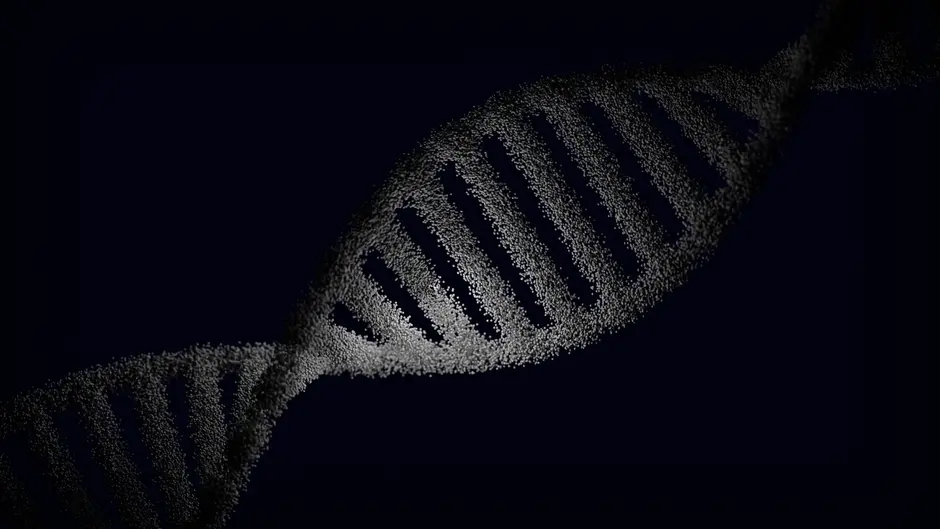
We stand at the precipice of understanding life's most profound secret: how its intricate instructions are meticulously stored within the double helix of DNA. This foundational article cuts through the complexity, empowering you to grasp the elegant architecture that underpins all biological function. We delve into the molecular mechanics, unraveling the precise methods by which DNA safeguards the hereditary blueprint, ensuring continuity across generations. Discover the fundamental principles that govern this storage, from the chemical bonds that hold the genetic code to the sophisticated packaging systems within the cell nucleus. This isn't just about memorizing facts; it's about comprehending the very essence of existence, the core mechanism that dictates how organisms develop, survive, and adapt. We must decode these processes to truly appreciate the incredible journey of biological information flow from DNA to function. Join us as we explore the bedrock of molecular biology, forging a deep understanding of DNA's indispensable role.
Unveiling the DNA Molecule: The Blueprint's Core Structure
We commence our exploration by dissecting the DNA molecule itself. This is not merely a strand; it is a meticulously engineered polymer, a deoxyribonucleic acid, built to endure and transmit life's instructions. The fundamental units are nucleotides, each comprising three critical components: a deoxyribose sugar, a phosphate group, and a nitrogenous base. Four distinct nitrogenous bases exist: adenine (A), guanine (G), cytosine (C), and thymine (T).
These nucleotides link together to form long strands, where the sugar and phosphate groups create a robust, alternating sugar-phosphate backbone. This backbone provides structural integrity, much like the frame of a formidable biological edifice. Crucially, two such strands intertwine to form the iconic double helix structure, stabilized by hydrogen bonds between complementary bases across the strands. Adenine invariably pairs with thymine (A-T), forming two hydrogen bonds, while guanine pairs exclusively with cytosine (G-C), forming three stronger hydrogen bonds. This complementary base pairing is the cornerstone of information storage and replication. It dictates that the sequence of one strand inherently defines the sequence of the other, a principle we call Chargaff's Rules. This elegant complementarity ensures that the genetic information is not only stored but can also be accurately copied, preserving the integrity of the blueprint through countless cellular divisions.
The Genetic Code: Life's Universal Language of Instruction
Having understood DNA's architecture, we now unlock how this structure translates into meaningful biological information—the genetic code. The sequence of nitrogenous bases (A, T, C, G) along a DNA strand constitutes the actual instructions. These bases are read in triplets, known as codons. Each codon typically specifies a particular amino acid, the building blocks of proteins, or a signal to start or stop protein synthesis. For instance, the codon 'ATG' signals the start of a gene and codes for methionine, while 'TAA', 'TAG', and 'TGA' are stop codons, terminating protein assembly.
The genetic code exhibits remarkable properties. First, it is non-overlapping: each base is part of only one codon. Second, it is largely universal, meaning the same codons specify the same amino acids in almost all organisms, from bacteria to humans—a profound testament to common ancestry. Third, it is degenerate or redundant: most amino acids are specified by more than one codon. For example, six different codons can specify the amino acid leucine. This redundancy acts as a buffer against potential errors (mutations), meaning a single base change might not alter the resulting amino acid, thus maintaining protein function. We leverage this understanding to engineer biological systems, precisely dictating protein outcomes. Understanding this code is paramount; it is the operating manual for every living cell.
Packaging the Blueprint: Chromosomes and Genome Organization
Storing vast quantities of genetic information within the confines of a microscopic cell nucleus presents a formidable engineering challenge. A single human cell contains approximately two meters of DNA. To manage this, DNA is elaborately packaged into structures called chromosomes. This packaging is far from random; it is a highly organized, dynamic process crucial for both protecting the DNA and regulating its accessibility.
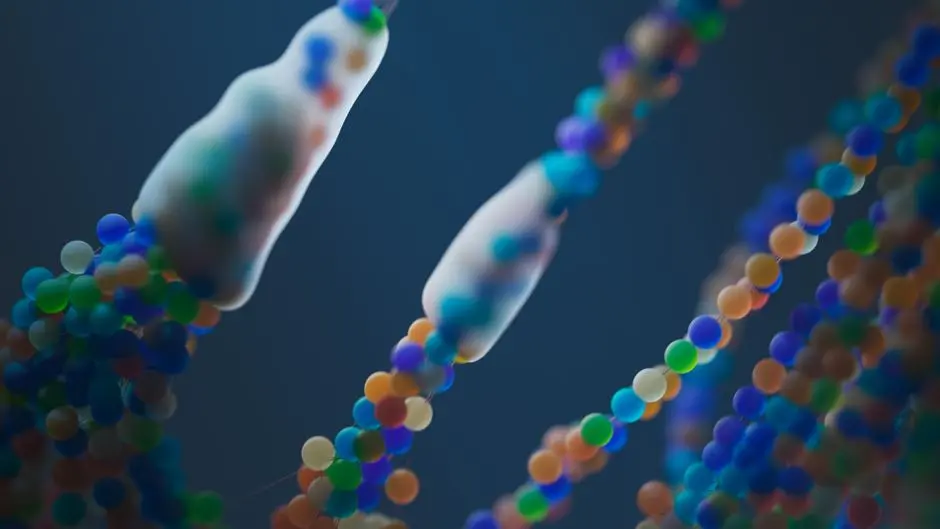
The initial level of compaction involves DNA winding around specialized proteins called histones, forming bead-like structures called nucleosomes. These nucleosomes then coil further into a tighter, thicker fiber known as chromatin. During cell division, chromatin condenses dramatically to form the visible, X-shaped chromosomes we recognize. This hierarchical packaging ensures that the entire genome—the complete set of an organism's genetic material—fits efficiently within the nucleus. Furthermore, specific regions on chromosomes, such as centromeres (essential for chromosome segregation during cell division) and telomeres (protective caps at chromosome ends), play vital roles in maintaining genomic stability. The intricate organization allows the cell to compact, protect, and selectively access specific segments of genetic information as needed, a masterclass in biological logistics.
Decoding Non-Coding Regions: The Regulatory Landscape of DNA
Our previous focus centered on coding DNA, the sequences that directly dictate protein production. However, a significant portion of the genome—often over 98% in humans—does not directly code for proteins. Historically dismissed as 'junk DNA', we now understand that these non-coding regions are profoundly instrumental in regulating gene expression and thus in the storage and retrieval of biological information. Far from being inert, these sequences represent a sophisticated regulatory landscape, a control panel that orchestrates when, where, and how much a gene is activated.
Key non-coding elements include promoters, sequences that initiate gene transcription; enhancers, which can boost gene expression from distant locations; silencers, which suppress it; and introns, non-coding segments within genes that are removed before protein synthesis. Furthermore, non-coding DNA produces functional RNA molecules, such as tRNAs (transfer RNAs) and rRNAs (ribosomal RNAs), essential for protein synthesis, and a vast array of regulatory RNAs (like microRNAs) that fine-tune gene expression. Understanding these regulatory elements is critical for deciphering the full scope of information stored in DNA beyond just protein recipes. They dictate the dynamic expression patterns that differentiate cell types and drive development, revealing the genome as an interactive, not merely passive, information archive.
Preserving the Master Plan: DNA Replication and Repair Mechanisms
The utility of biological information is only as good as its fidelity and ability to be transmitted accurately. DNA's primary function is to serve as a stable, yet replicable, repository of genetic instructions. The process of DNA replication ensures that when a cell divides, each daughter cell receives a complete and identical copy of the genetic blueprint. This process is remarkably precise and semi-conservative: each new DNA molecule consists of one original strand and one newly synthesized strand.
Key enzymes orchestrate this ballet. DNA helicase unwinds the double helix, separating the two strands. Then, DNA polymerase enzymes synthesize new complementary strands, reading the template and adding appropriate nucleotides. This enzyme also possesses a 'proofreading' function, capable of detecting and correcting mismatched bases, significantly enhancing replication accuracy. Despite this, errors can occur, leading to mutations. To counteract these potential threats to information integrity, cells are equipped with an array of sophisticated DNA repair mechanisms. These systems continuously monitor the genome for damage caused by environmental factors (e.g., UV radiation, chemicals) or replication errors, excise the damaged sections, and resynthesize the correct sequence. This constant vigilance underscores evolution's imperative for maintaining the pristine nature of the biological information stored in DNA, a testament to the molecule's central role in life's persistence.
The Dynamic Archive: Epigenetics and Information Accessibility
While the DNA sequence itself represents the fundamental level of information storage, the accessibility and expression of this information are profoundly influenced by dynamic modifications to DNA and its associated proteins, collectively known as epigenetics. These 'above the genome' modifications do not alter the underlying DNA sequence but dictate how genes are read, effectively adding another layer of information to the genetic blueprint. This epigenetic layer explains how cells with identical DNA can develop into vastly different types (e.g., a skin cell versus a neuron), each expressing a unique subset of genes.
Key epigenetic mechanisms include DNA methylation, where methyl groups are added to cytosine bases, often leading to gene silencing. Another critical mechanism involves histone modifications, such as acetylation or methylation, which can loosen or tighten DNA's grip on histones, thereby increasing or decreasing gene accessibility. These modifications are heritable across cell divisions and can even be influenced by environmental factors, providing a flexible interface between the genome and its surroundings. We realize that the true biological information stored in DNA is not static; it is a dynamic archive, constantly modulated by epigenetic tags that control its expression. Optimizing our understanding of epigenetics opens new avenues for health intervention and manipulating biological outcomes, moving beyond the simple sequence to the full spectrum of information potential.
Key Takeaways
DNA Structure: The Foundation of Information Storage
DNA is a double helix composed of nucleotides (sugar, phosphate, base). The four bases are Adenine (A), Guanine (G), Cytosine (C), and Thymine (T). Complementary base pairing (A-T, G-C) between two strands ensures stable and replicable information storage. The sugar-phosphate backbone provides structural integrity.
The Genetic Code: Instructions in Triplets
Biological information is encoded in the sequence of bases. These are read in triplets called codons, each specifying an amino acid or a start/stop signal for protein synthesis. The code is non-overlapping, largely universal, and degenerate (redundant).
Chromosomal Organization: Efficient DNA Packaging
To fit meters of DNA into a cell, DNA is tightly packaged. It wraps around histones to form nucleosomes, which further coil into chromatin and then condense into chromosomes. This organization protects DNA and regulates gene accessibility.
Non-Coding DNA: The Regulatory Command Center
Most DNA is non-coding but critical for regulation. Elements like promoters, enhancers, and introns control when and where genes are expressed. Non-coding RNAs (tRNAs, rRNAs, microRNAs) also play vital regulatory roles, adding layers to information storage.
Replication and Repair: Maintaining Information Integrity
DNA replication (semi-conservative) ensures accurate copying of the genetic blueprint during cell division, primarily by DNA polymerase. Robust DNA repair mechanisms continuously monitor and correct errors or damage, preventing harmful mutations and preserving genomic stability.
Epigenetics: Dynamic Information Accessibility
Epigenetic modifications (e.g., DNA methylation, histone modifications) alter gene expression without changing the DNA sequence. They control information accessibility, explain cell differentiation, and are influenced by environmental factors, adding a dynamic, heritable layer to genetic information.
FAQ
-
What happens if there's an error in DNA replication and it's not repaired?
An unrepaired error in DNA replication, known as a mutation, can have various consequences. If the mutation occurs in a non-coding region, it might have no effect. However, if it occurs in a gene's coding region or a regulatory sequence, it can alter the protein produced or its expression level. This might lead to a dysfunctional protein, no protein being produced, or a protein with altered function. While some mutations can be neutral or even beneficial (driving evolution), many are harmful and can contribute to genetic diseases or cancer. Cellular repair mechanisms are crucial for maintaining genomic integrity and preventing the accumulation of such damaging changes.
-
How much of human DNA actually codes for proteins?
Surprisingly, only a very small percentage of the human genome, approximately 1-2%, actually codes for proteins. The vast majority of the human genome consists of non-coding DNA. While historically considered 'junk DNA', we now understand that these non-coding regions are profoundly important. They include sequences that regulate gene expression (like promoters, enhancers, silencers), produce functional non-coding RNAs (like tRNAs, rRNAs, microRNAs), and comprise repetitive elements. This underscores that biological information storage extends far beyond just protein recipes, encompassing intricate regulatory instructions for orchestrating gene activity.