
> Basic Biology Concepts > Introduction to Biological Information Systems > Deciphering Hereditary Traits: Your Genetic Blueprint Explained
Deciphering Hereditary Traits: Your Genetic Blueprint Explained
Unlock the profound secrets of life's continuity as we journey into the intricate world of hereditary traits. Have you ever pondered why family resemblances persist across generations, or how specific characteristics are reliably passed down? We delve into the fundamental mechanisms that govern biological inheritance, demystifying the complex interplay of genes, DNA, and environment that sculpts every living organism.
This deep dive will equip you with a foundational understanding of how traits are encoded, transmitted, and expressed, offering unparalleled insights into your own biological lineage and the diversity of life around us. We illuminate the crucial role of genetic information as we explore the intricate dance of information from DNA to function, revealing how this flow dictates everything from eye color to disease susceptibility. Prepare to forge a robust comprehension of heredity, transforming abstract biological concepts into tangible, personal knowledge. We empower you to grasp the very blueprint of life, making the invisible visible and the complex accessible.
Grasping the Fundamentals: What Exactly Are Hereditary Traits?
We begin our exploration by defining the cornerstone of biological inheritance: hereditary traits. These are the characteristics, whether physical, physiological, or behavioral, that are passed down from parents to their offspring through genetic material. Imagine a mosaic where each tile represents a trait – your eye color, the texture of your hair, your susceptibility to certain conditions, or even aspects of your metabolism. Each of these tiles is a hereditary trait, etched into your genetic code.
Understanding these traits is not merely an academic exercise; it is foundational to comprehending life itself. It explains why a dog always produces puppies, never kittens, and why offspring often bear a striking resemblance to their parents. At the heart of this transmission lies deoxyribonucleic acid, or DNA – the master molecule of life. DNA is organized into structures called chromosomes, which reside within the nucleus of almost every cell in our bodies. Segments of these chromosomes, known as genes, are the discrete units of heredity. Each gene carries the instructions for a specific trait, acting as a concise instruction manual for building and maintaining an organism.
When we speak of hereditary traits, we are ultimately discussing the expression of these genes. An individual inherits two copies of each gene, one from each parent. These copies, called alleles, can be identical or different. The specific combination of alleles determines an individual's genotype, their unique genetic makeup. The observable manifestation of this genotype – what we can see or measure – is the phenotype. We must recognize that the journey from gene to trait is rarely a straight line; environmental factors also play a critical role in shaping the final phenotype. We forge this foundational understanding to navigate the complexities ahead.
Deciphering Inheritance: Mendel's Laws and Basic Transmission
To truly grasp how hereditary traits cascade through generations, we must turn to the pioneering work of Gregor Mendel, the father of modern genetics. His meticulous experiments with pea plants in the 19th century laid the groundwork for our understanding of genetic transmission. Mendel's genius was in observing patterns and formulating principles that, even today, form the bedrock of heredity. We simplify these complex ideas into actionable insights.
Mendel's First Law: The Law of Segregation
This principle dictates that during the formation of gametes (sperm and egg cells), the two alleles for each gene separate from each other, so that each gamete carries only one allele for each trait. When fertilization occurs, the offspring receives one allele from each parent, restoring the pair. This explains why offspring inherit a blend of characteristics, not an exact replica of either parent.
Mendel's Second Law: The Law of Independent Assortment
This law states that the alleles for different genes assort independently of one another during gamete formation. In simpler terms, the inheritance of one trait (e.g., eye color) does not influence the inheritance of another trait (e.g., hair texture), provided their genes are on different chromosomes or far apart on the same chromosome. This independent shuffling ensures genetic variation, a vital engine of evolution.
Dominant and Recessive Alleles
A crucial concept emerging from Mendel's work is the distinction between dominant and recessive alleles. A dominant allele expresses its trait whenever it is present, masking the effect of a recessive allele. A recessive allele only expresses its trait when two copies are present. For instance, if an individual inherits one allele for brown eyes (dominant) and one for blue eyes (recessive), they will typically have brown eyes. Only with two blue-eye alleles will blue eyes manifest. We understand these rules to predict and interpret patterns of inheritance.

Beyond Mendel: Exploring Complex Inheritance Patterns
While Mendel's laws provide a powerful foundation, biological reality often presents more nuanced scenarios. Many traits do not conform to simple dominant-recessive patterns, demanding a deeper understanding of genetic interactions. We navigate these complexities to forge a complete picture of heredity.
Incomplete Dominance
In some cases, neither allele is completely dominant over the other, resulting in a blended phenotype in heterozygotes. Consider a flower where a red allele (R) and a white allele (W) combine to produce pink flowers (RW). The offspring displays an intermediate trait, a clear departure from simple Mendelian inheritance.
Codominance
Here, both alleles are fully expressed simultaneously, with neither masking the other. A classic example is human blood type (ABO system). An individual with alleles for both A and B blood types (AB) expresses both A and B antigens on their red blood cells. Both traits are distinctly present, not blended.
Polygenic Traits
Many of the most common and complex traits, such as height, skin color, and even intelligence, are determined by the interaction of multiple genes, not just one. These are known as polygenic traits. Each gene contributes a small additive effect, creating a continuous spectrum of phenotypes rather than distinct categories. This explains the wide range of variation we observe in human populations.
Environmental Influence
Furthermore, the environment profoundly impacts how genes are expressed. While a person's genetic potential for height is inherited, factors like nutrition and health during development significantly influence their actual adult height. We dissect this gene-environment interplay, recognizing that heredity is not destiny but a dynamic interaction. We optimize our understanding by embracing these multifaceted interactions.
The Molecular Blueprint: DNA, Genes, and Protein Synthesis
To truly comprehend hereditary traits, we must venture into the molecular realm, where the instructions for life are meticulously encoded and executed. We transition from observable traits to the microscopic machinery that produces them. The entire process hinges on the central dogma of molecular biology: DNA makes RNA, and RNA makes protein. These proteins are the workhorses of the cell, carrying out virtually all biological functions and ultimately dictating an organism's traits.
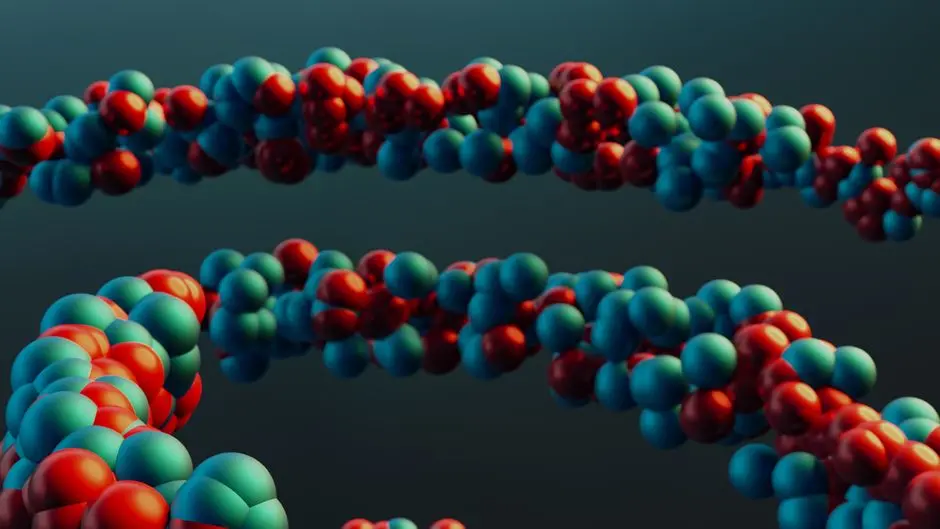
Our genetic material, DNA, resides primarily in the cell nucleus, a double helix structure composed of four nucleotide bases: Adenine (A), Guanine (G), Cytosine (C), and Thymine (T). The specific sequence of these bases along a gene forms the genetic code – a precise set of instructions for building a particular protein. Think of it as a biological recipe book, where each gene is a recipe.
The journey from gene to trait begins with transcription, where the DNA sequence of a gene is copied into a messenger RNA (mRNA) molecule. This mRNA then travels out of the nucleus to the ribosomes in the cytoplasm. Here, during translation, the mRNA sequence is read in three-base increments called codons. Each codon specifies a particular amino acid, the building blocks of proteins. These amino acids are linked together in the order dictated by the mRNA, folding into complex three-dimensional structures – the functional proteins. These proteins then perform specific roles, such as enzymes catalyzing reactions, structural components forming tissues, or signaling molecules coordinating cellular activities, thereby giving rise to a hereditary trait. We reveal how this molecular precision underlies all biological characteristics, from the color of your eyes to the functionality of your immune system.
Mutations and Heredity: When the Blueprint Changes
While the process of genetic information transfer is remarkably precise, it is not infallible. Occasional changes in the DNA sequence, known as mutations, introduce variations into the genetic blueprint. These mutations are a driving force of evolution and can have profound impacts on hereditary traits. We scrutinize the nature of these genetic alterations and their biological consequences.
Mutations can range from a single nucleotide change (point mutation) to large-scale chromosomal rearrangements. They can arise spontaneously due to errors during DNA replication or be induced by environmental factors like radiation or certain chemicals (mutagens). Not all mutations are detrimental; some are neutral, having no discernible effect, while others can be beneficial, providing new adaptive traits. However, many mutations are deleterious, leading to altered or non-functional proteins that manifest as genetic disorders or diseases. For instance, a single point mutation in the gene encoding hemoglobin can lead to sickle cell anemia, a severe hereditary blood disorder.
When mutations occur in germline cells (sperm or egg), they are inheritable, meaning they can be passed on to subsequent generations. This is how new alleles are introduced into a population's gene pool, contributing to genetic diversity. This diversity is crucial for a species' long-term survival, enabling adaptation to changing environments. Understanding mutations is critical for fields like personalized medicine, where genetic screening can identify predispositions to certain diseases or predict responses to medications. We leverage this knowledge to unlock future biological optimization. We must recognize that the stability and occasional plasticity of our genetic code shape the tapestry of life. We are poised to apply these insights for advanced biological applications.
Key Takeaways
Hereditary Traits Defined
Hereditary traits are characteristics passed from parents to offspring via genetic material. They are encoded in DNA, organized into chromosomes and genes. Genes dictate specific traits, with alleles being different versions of a gene. Genotype is the genetic makeup, while phenotype is the observable expression influenced by both genes and environment.
Mendelian Inheritance
Gregor Mendel established foundational laws: the Law of Segregation (alleles separate during gamete formation) and the Law of Independent Assortment (different genes assort independently). Traits are expressed via dominant alleles (mask recessive ones) or recessive alleles (expressed only when two copies are present).
Complex Inheritance Patterns
Beyond simple Mendelian genetics, traits can exhibit incomplete dominance (blended phenotype, e.g., pink flowers), codominance (both alleles fully expressed, e.g., AB blood type), and polygenic inheritance (multiple genes influencing a trait, e.g., height). Environmental factors also profoundly shape phenotype.
Molecular Basis of Heredity
DNA contains the genetic code for proteins. The central dogma explains this flow: DNA → RNA → Protein. Transcription copies DNA to mRNA, which then undergoes translation at ribosomes to synthesize specific proteins. These proteins execute cellular functions and ultimately manifest as hereditary traits.
Role of Mutations
Mutations are changes in the DNA sequence that introduce genetic variation. They can be spontaneous or induced. Germline mutations are inheritable and contribute to genetic diversity, driving evolution. While some mutations are neutral or beneficial, many are deleterious, causing genetic disorders.
FAQ
-
What is the primary difference between genotype and phenotype?
The genotype refers to an organism's complete set of genes, its unique genetic makeup. It is the underlying genetic code. The phenotype, conversely, is the observable expression of those genes – the physical traits, physiological characteristics, and behaviors that result from the genotype's interaction with the environment. Think of genotype as the blueprint and phenotype as the constructed building.
-
Can environmental factors alter hereditary traits?
Yes, absolutely. While genes provide the foundational instructions for traits, environmental factors can significantly influence their expression. For example, a person may inherit genes predisposing them to a certain height, but their nutrition and overall health during development will determine their actual adult height. Similarly, exposure to sunlight influences skin pigmentation, despite genetic predispositions.
-
How are new hereditary traits introduced into a population?
New hereditary traits primarily arise through genetic mutations. These are changes in the DNA sequence that can lead to new alleles or modified gene functions. If these mutations occur in germline cells (sperm or egg), they can be passed on to offspring, introducing novel traits into the gene pool. Genetic recombination during sexual reproduction also shuffles existing genes, creating new combinations of traits.
-
Are all hereditary traits determined by a single gene?
No, many hereditary traits, particularly complex ones like height, intelligence, or susceptibility to certain diseases, are polygenic. This means they are influenced by the interactions of multiple genes, often along with environmental factors. Simple Mendelian traits, determined by a single gene with dominant/recessive alleles, are less common in humans but are fundamental to understanding basic genetic principles.